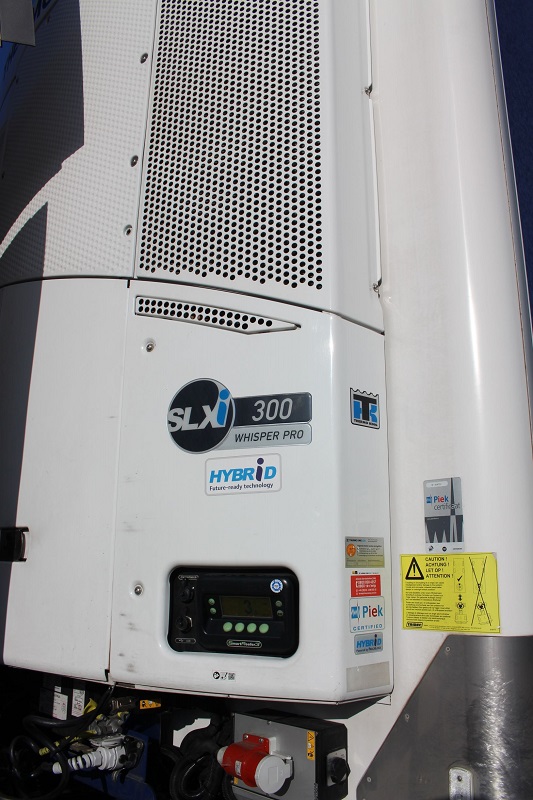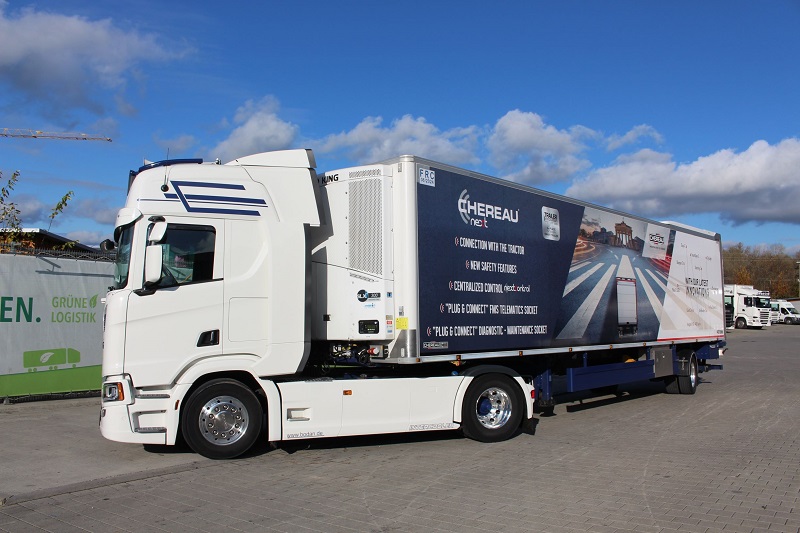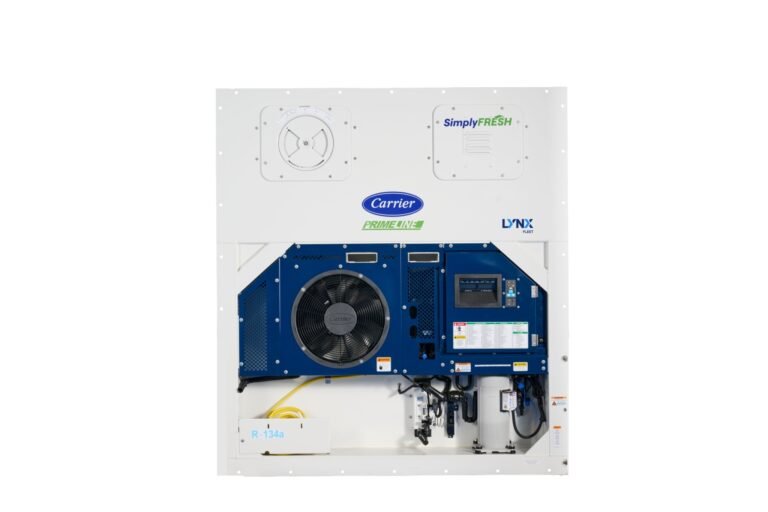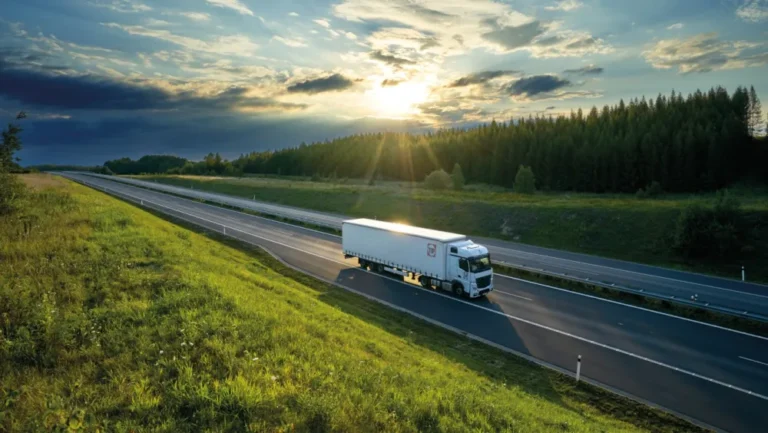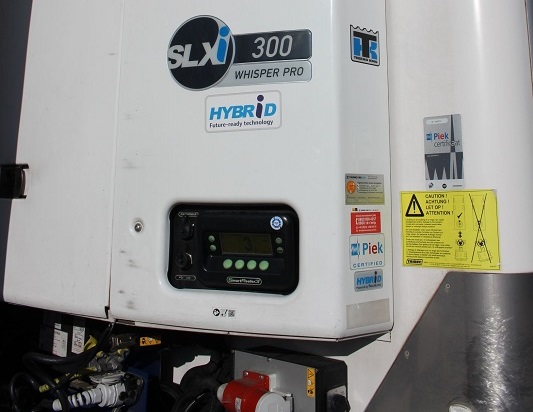
Three German transport and logistics companies specializing in moving temperature sensitive fresh food products demonstrate how they future proof their fleet economically and sustainably with Thermo King SLXi Hybrid refrigeration technology.
In 2019, Bodan GmbH, Brocker Logistik and Jens Thomsen Spedition decided to upgrade their fleet with SLXi Hybrid, the industry’s first true hybrid trailer refrigeration units offering the benefits of both diesel and electric power. Following months of operations, the companies experienced the flexibility of hybrid operations, easier access to restricted, low-emission and low-noise areas,and significant fuel savings.
“Environmentally-focused regulations, fluctuating fuel prices and the general aspiration to ‘be green’ are driving adoption of electrified solutions. Still, long-term economics is the primary concern in the logistics industry,” said Francesco Incalza, president of Thermo King Europe, Middle East and Africa. “Thermo King innovates to help our customers control their total cost of ownership while increasing efficiency and achieving important sustainability goals. We were the first to offer our European customers true hybrid refrigeration units, a technology that future proofs their operations combining the best of diesel and electric power.”
• The wholesale company Bodan GmbH supplies organic markets in southern Germany with natural products ranging from fruit and vegetables to milk and meat.Being environmentally cautious, they have always been open to sustainable innovations.
“When on the road, our SLXi Hybrid unit is always in electrical mode, which not only enables almost silent cooling, but saves fuel and reduces CO2 emissions,” – said Steffen Wolf, fleet manager at Bodan.
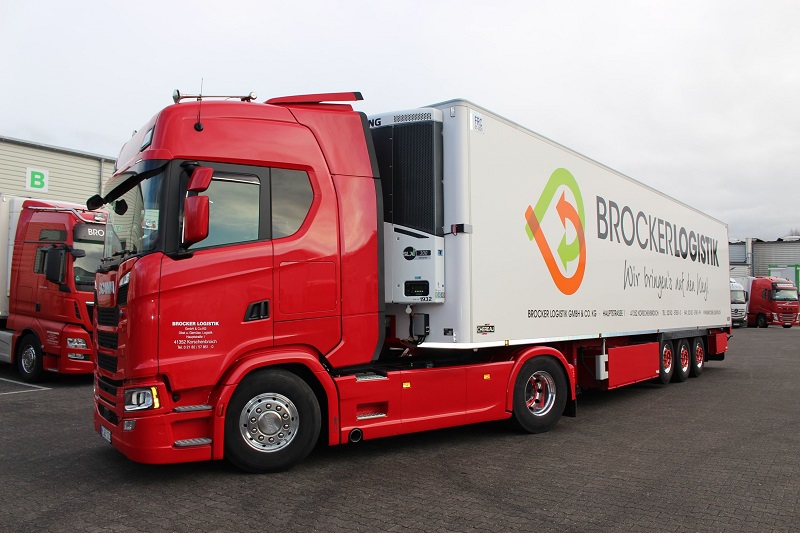
• Brocker Logistik specializes in long-haul food transport and annually runs approximately 160,000 kilometers per trailer. Modern fleet, environmental mindfulness and openness to the technical innovations has always been important for the managing director, Hans-Jürgen Brocker.They didn’t hesitate to add the SLXi Hybrid system to their fleet.
“We use the SLXi Hybrid mainly on the 600 km route between Düsseldorf and Berlin, operated once or twice a week. With set temperature between two to five degrees Celsius, it’scrucial to have stable conditions. Continuous operation of the reefer unit is very important. Using the SLXi Hybrid in electric mode is ideal for this application and we use it all the time while driving. We only use the diesel engine of the unit when parked at the loading and unloading points, in case there is no shore power connection,” – said Hans-Jürgen Brocker.
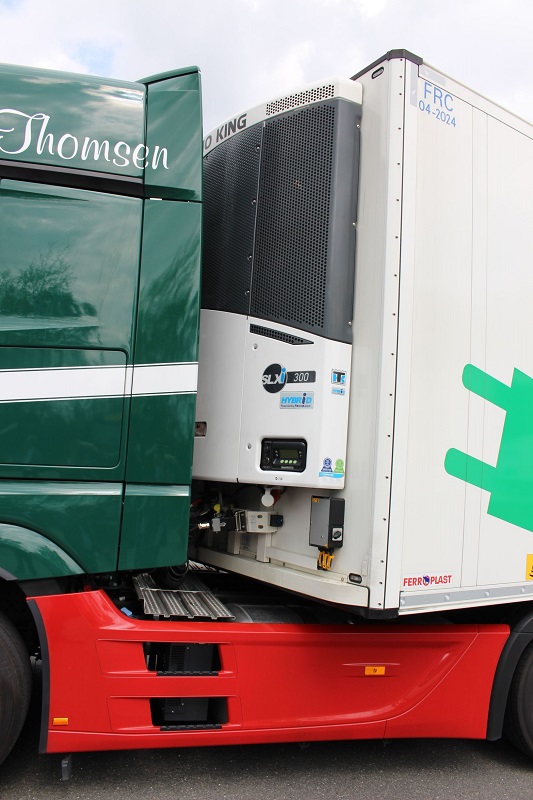
• Jens Thomsen Speditionis a family-run company specializing in food logistics, mainly fruit, vegetables, meat and dairy products. With around 300 refrigerated trailers with 200 tractors, Thomsen supplies wholesale markets and distribution centers across Germany. Their international routes go mainly to Scandinavia.
“Together with our customers and Thermo King, we regularly discuss the opportunities to make transport more economical and environmentally friendly,” said Jan Thomsen, managing director.“The new SLXi hybrid system fulfills both criteria. As soon as we heard about it, we wanted to be one of the first companies toput this innovative technology into real life operation.”
The SLXi Hybrid is fully telematics-enabled as standard, delivering full visibility of the unit and load condition with a TK BlueBox communication device and Bluetooth connectivity. Detailed monitoring of the unit’s operations has allowed the customers to quantify the fuel savings attributed to the electric mode.
All three transporters averaged a total saving of 1.5 to 2 liters per 100 km after offsetting the additional consumption of the tractor engine to generate the power. Depending on the individual cases, with optimized fleet operation parameters this translates into a return of invest.