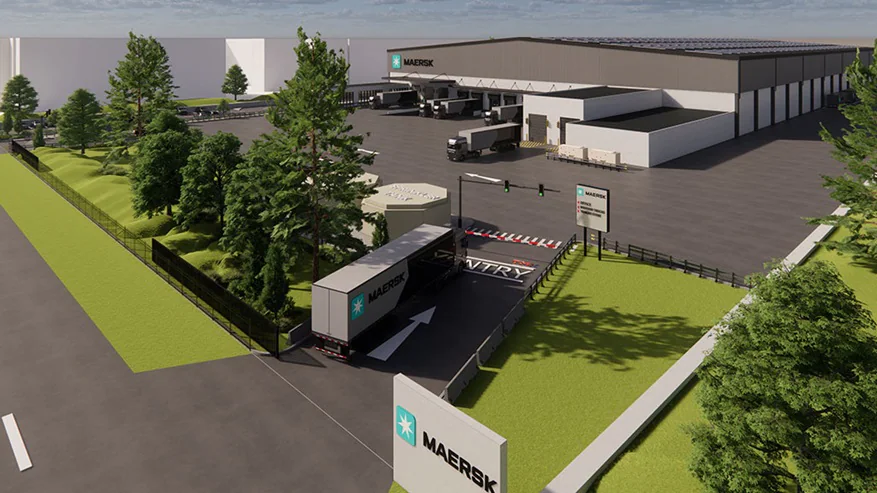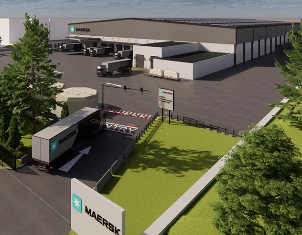
Maersk continues to integrate end-to-end cold chains with the announcement of a new 45,000 sqm cold chain facility in the Waikato District, the fourth largest region in New Zealand. By integrating the state-of-the-art cold store with the depot and intermodal connections, Maersk will provide better logistics solutions for both import and export customers, catering for their increasing needs for more efficient, tech-enabled and temperature-controlled supply chains.
Strategically located in the Ruakura Superhub, the new facility has easy access to the road network between Hamilton and Auckland. It is next to the new SH1 dual carriage way, the key transport corridor for the Waikato region. The site is also adjacent to the Ruakura Inland Port, providing a seamless link to the Ports of Tauranga and Auckland, allowing the facility to better service both the export regions and the key import markets in the North Island.
Maersk has entered an agreement with Tainui Group Holdings (TGH) for a long-term ground lease to build the facility, which will start operation in late 2023.
Upon completion, the new facility will have more than 16,000 sqm of fully convertible temperature-controlled space with temperatures ranging from -25°C to 15°C. It can provide storage for over 21,000 pallets of cold chain products. Meanwhile, through integrating the facility with the depot and intermodal solutions, Maersk can offer end-to-end storage, fulfilment, distribution and inland transportation services for customers.
“We have seen significant growing demand from exporters, importers and local processors who rely on temperature-controlled storage in the region. With the new facility in place and its close integration with Maersk’s logistics solutions, we will offer more transparency and visibility of refrigerated cargoes and help customers build more efficient and resilient supply chains,” – said Tony Mildon, Head of Reefer, Maersk Oceania.
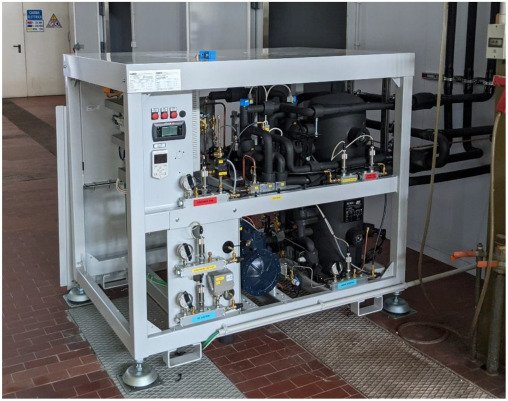
The facility will feature advanced energy management including an environmentally friendly CO2 cooling plant, solar energy, rainwater harvesting and a low carbon policy for the construction. It targets to achieve an audited 5 Star Green Star rating in New Zealand.