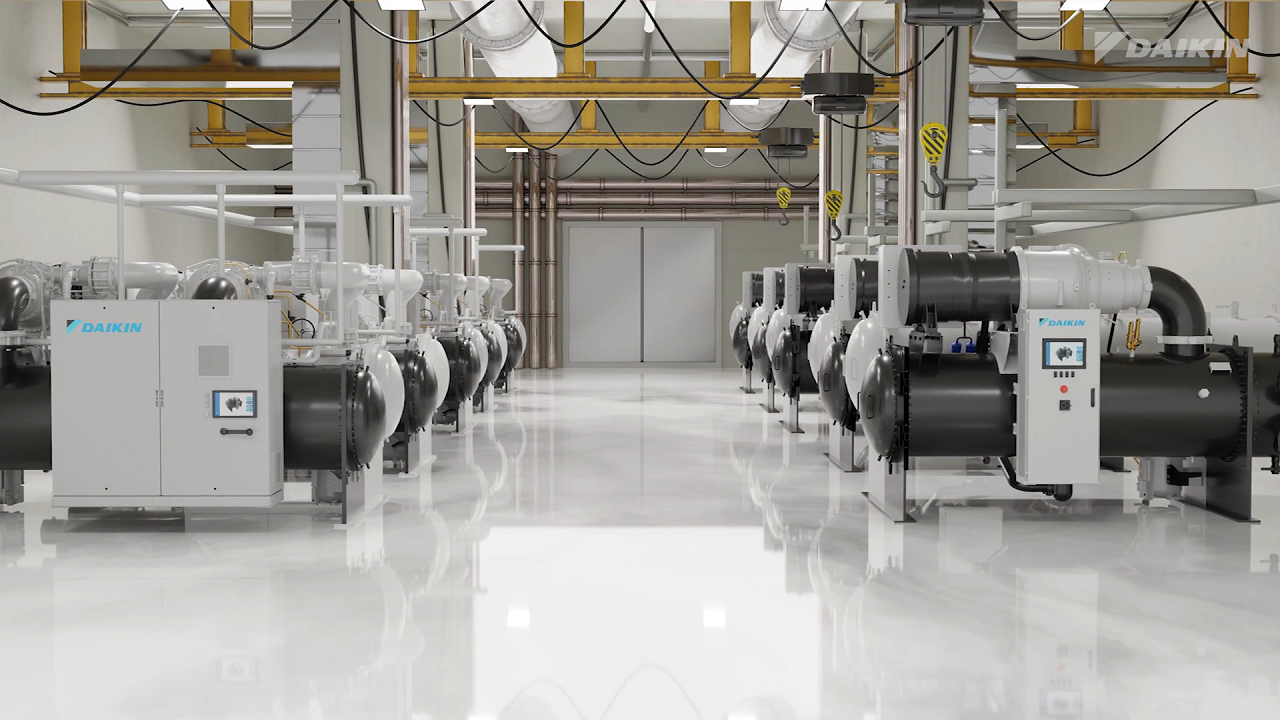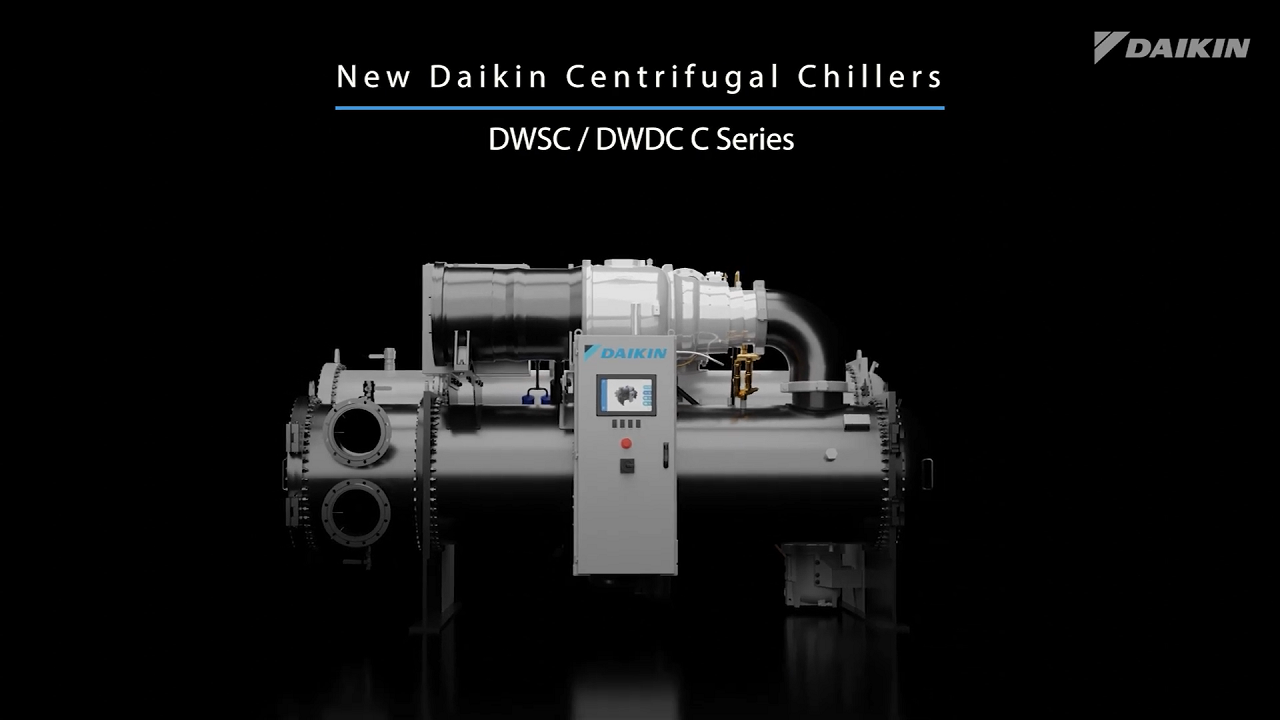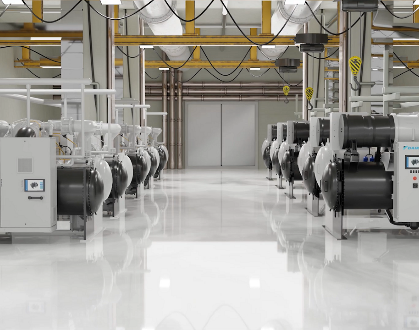
Daikin recently supplied two water-cooled centrifugal chillers from the DWSC range for an important district cooling project in Milan, Italy. The newly installed units for this project will provide cooling to a whole neighborhood in the city. An area designed to be modern, green and environmentally sustainable.
Products installed: 2x DWSC
Total cooling capacity: 5MW
The project was about providing a solution for district cooling in an area in the city of Milan that is being redeveloped to become a “contemporary neighborhood”. It is a modern urban redevelopment project aiming at transforming the area by creating a new landscape and a new place to live in the city.
The area includes residential buildings (500 houses), 10,000 sqm dedicated to shops, 30,000 sqm of offices, all in a 160,000 sqm big park, only 16 minutes away from Milan Duomo.
For this redevelopment project energy efficiency and minimized environmental impact of the whole area were main goals. For this, having an efficient cooling system not only was important to keep energy consumption low, but also to help having reduced CO2 emissions.
Besides, the possibility to control and monitor the installation in an effective way from remote was crucial, as the control room is loctaed in a different area of the city.
The units stand out not only for the high capacity provided and low energy consumption, not only thanks to the in-house developed centrifugal compressor and overall optimized unit design, but also thanks to the Daikin inverter integrated in the electrical panel of the unit.
In fact, the inverter will help to constantly adapt units’ energy consumption to the actual cooling needs of the area served by the installation, avoiding energy waist.
While the remote monitoring and control aspects were addressed with the control solution integrated in the units and DaikinOnSite (DoS), a unique service for remote monitoring and smart maintenance. The combination of the two will allow both to monitor and control the units from remote, allowing to analyze the performance, the operations of the chillers, and scheduling preventive maintenance to prevent breakdowns and ensure continuity of operations.