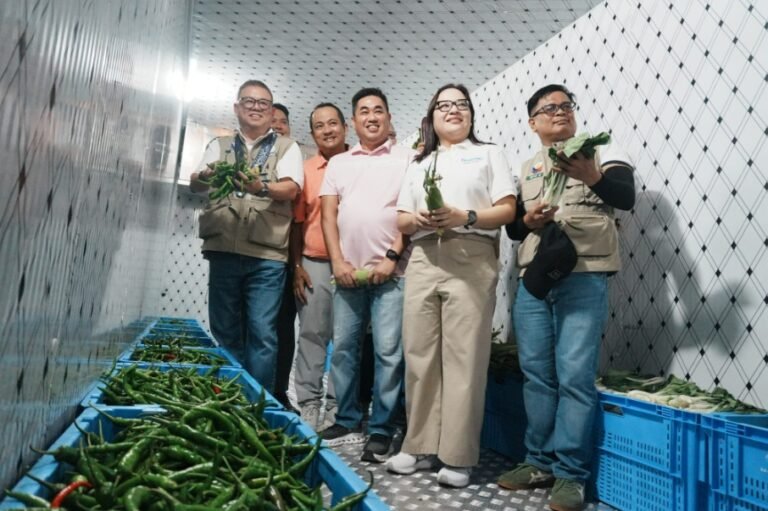
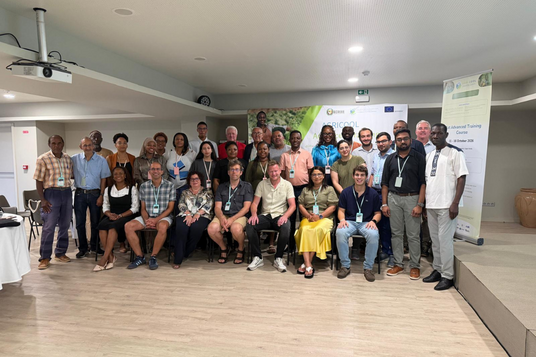
Farmers, fishers and community leaders from across Rwanda are joining sustainable cooling experts to begin an innovative training programme that will kick-start roll-out of clean cold-chain systems in Africa.
Over 100 farmers, fishers and community leaders will work with experts from the Africa Centre of Excellence for Sustainable Cooling and Cold-chain (ACES) in the launch of its flagship training and knowledge building programme, where they will learn how clean-cold technology can revolutionise their businesses.
ACES team members from Rwanda, Kenya, Uganda, the United Kingdom and the Netherlands will travel to two different locations – Rubavu District to work with farmers and Karongi District to train fishers – as well as hosting workshops in Kigali with financiers, NGOs, policymakers and farmers organizations.
ACES is a first-of-kind centre dedicated to sustainable cooling and cold-chain for food and health – accelerating deployment of sustainable end-to-end connectivity for food and health to protect quality and safety, minimise loss, and benefit communities.
ACES is also working with medical agencies to design the efficient and clean cold chain for resilient access to vaccines to meet the future demands.
In Rwanda, as an example, food loss equates to 21% of its total land use, 16% of GHG emissions, and 12% loss to its annual gross domestic product. The flagship training programme aims to provide communities with the knowledge around how to build and operate a financially sustainable cold chain and community cooling hub.
ACES will undertake collaborative research, demonstrate and test new equipment, and develop knowledge and training programmes. The programmes focus on in-country capacity building and providing community-leaders with fundamental knowledge on refrigeration, cold-chain applications, cooling hub design and the underpinning business models in order to improve existing systems from a bottom-up approach, promote new businesses and increase sustainability and resilience of supply chains.
Academic partner institutions include the University of Birmingham Centre for Sustainable Cooling; University of Rwanda, Kigali; Africa Centre for Technology Studies, Nairobi, Kenya; Heriot-Watt University, Edinburgh, UK; London South Bank University; Cranfield University, UK; and Wageningen University and Research, Netherland; along with UNEP United for Efficiency and Rwanda Environment of Management Authority.
Backed by funding from the UK Government’s Department for Environment Food and Rural Affairs (Defra), ACES also supports and facilitates development of early-stage researchers and supervised PhD research programmes. Specialized Outreach and Knowledge Establishments (SPOKEs) are being rolled-out to share knowledge, demonstrate technologies and build capacity other African markets – with the first one being developed in Kenya.
Working with its partners, ACES programmes delivered through the SPOKEs will:
- Enable communities to build key cold-chain and cooling services using sustainable technologies; and
- Support development of a strong network of skilled refrigeration engineers – supporting the transition to climate-friendly refrigerants.
Total UK funding to date for the programme is more than £16 million and, alongside ACES, includes funding to provide the technical assistance to support the development of two Centre of Excellences in India, working with the Governments of Telangana and Haryana.
For more information, contact Alice Moreau, Partner Engagements and SPOKEs Lead, UNEP U4E, alice.moreau@un.org.