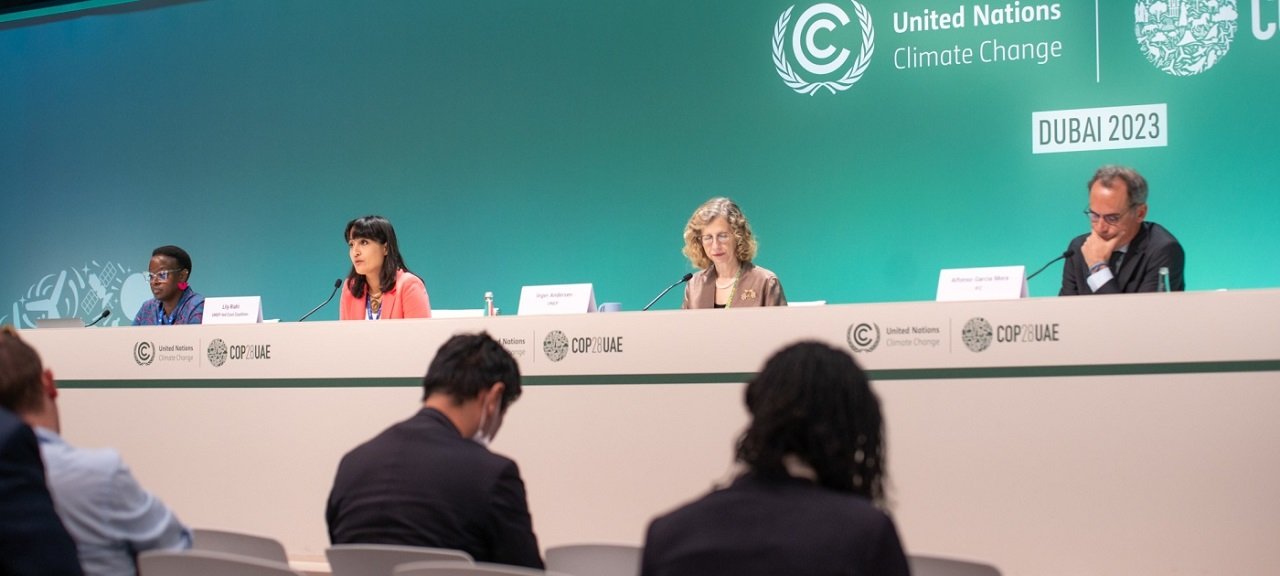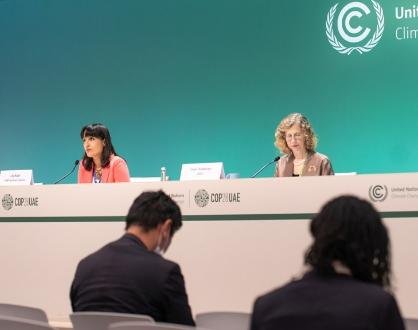
Speech Inger Andersen at COP28
What we are looking for at these climate talks are ways to slash greenhouse gas emissions in line with the 1.5°C and 2°C pathways of the Paris Agreement. We need to do this while giving every person on this planet the chance at development and a decent life, including by adapting to climate change. Sustainable Cooling, a priority of the COP28 UAE Presidency, hits every one of these points.
The cooling sector must grow to protect everyone from rising temperatures, maintain food quality and safety, keep vaccines stable and economies productive. These are all essential elements of sustainable development. But business as usual growth would double the sector’s greenhouse gas emissions by 2050, which is an outcome we must avoid.
The Global Cooling Watch report tells us we can reduce predicted 2050 cooling emissions by 60 per cent. The world can deploy nature-based and passive cooling measures such as insulation, natural shading and ventilation. Adopt higher efficiency standards, including Minimum Energy Performance Standards and labelling. Accelerate the phase-down of climate-warming hydrofluorocarbon refrigerants through the Kigali Amendment to the Montreal Protocol.
In addition to slowing climate change, following these measures, and implementing the Global Cooling Pledge, would allow low-emissions cooling to reach an additional 3.5 billion people, save US$22 trillion for end-users and the power sector, and reduce global peak load demand by between 1.5 and 2 terawatts, which is almost double the EU’s total generation capacity today. If rapid grid decarbonization were added to these actions, predicted 2050 emissions could be reduced by 96 per cent.
To deliver these benefits, governments must introduce aligned policies that support these measures. Governments have already signalled their commitment to do so through the Global Cooling Pledge. Finance also needs to rise, although the US$22 trillion in savings and the societal benefits of deep emissions cuts would make the sustainable cooling transition affordable.
The potential outcomes of a sustainable cooling transition sound almost too good to be true, but they are true. This is one of the rare cases where we should do something because the cool kids are doing it. So, I’m asking governments, the private sector and financiers to get behind the Global Cooling Pledge with real money and real action, so we can all be cool.