Heat pumps will be the most cost-effective option for decarbonized heating in all U.S. regions warmer than Madison, Wisconsin, according to a new American Council for an Energy-Efficient Economy (ACEEE) report. In the very coldest regions, hybrid systems combining cold-climate heat pumps with low-carbon fuels for heat on the coldest days could likely minimize total costs.
The study calculated the total cost of installing and operating different heating systems in homes that currently use gas furnaces or boilers. It considered only options that would largely decarbonize heating, ruling out long-term use of traditional gas.
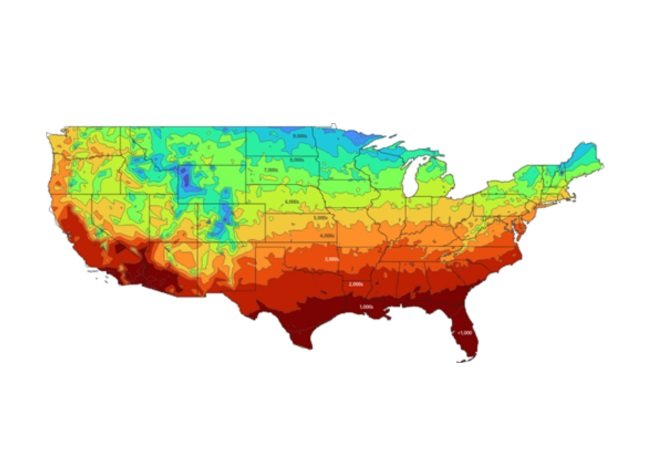
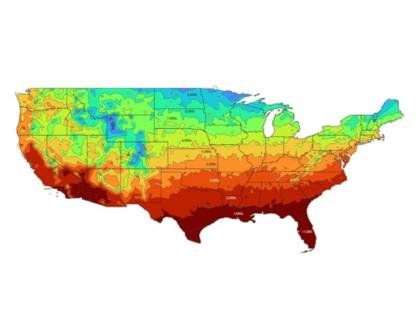
In regions with climates warmer or equivalent to Madison – those with 7,000 heating degree days (HDD) or fewer – electric heat pumps will generally be the lowest-cost option, the study found. In still colder regions, the results depended on assumptions about the future of gas distribution:
- In a scenario where gas utility pipes do not need to be replaced and most customers stay on the gas system, the lowest-cost option would generally be a hybrid system combining a cold-climate heat pump with a backup furnace fueled by biogas;
- In a scenario where gas pipes need to be replaced or many customers do not stay on the gas system, a heat pump with electric resistance backup would generally minimize costs, followed closely by a heat pump with a backup furnace fueled by propane made from biogas or ethanol and stored in a small tank on site.
The results indicate that – depending on the scenario considered – there may be technically and economically viable routes to decommission gas distribution systems in cold climates and provide backup heat via electric resistance or delivered fuels.
“Heat pumps will make sense in the vast majority of the country, while in the coldest regions, using a hybrid system with alternative fuels could slightly lower costs in many cases,” said Steven Nadel, executive director of ACEEE and lead author of the report. “The costs forecasts vary widely, but in most scenarios we looked at, the lowest-cost route for households was through full electrification or a hybrid system.”
The report finds a different solution is likely best for the smaller portion of homes that use gas boilers with radiators today. Using air-to-water heat pumps to warm existing radiators – combined with moderate home weatherization – would heat homes with the lowest overall costs, even in regions as cold as Duluth, Minnesota. While air-to-water heat pumps do not use as high temperatures as boilers, they can deliver proper heat in well-insulated and sealed homes. The technology is common in England and other European countries, though it is not yet commonly available in the United States.
The ACEEE study was based on an analysis of detailed federal data on 2,939 U.S. homes in cold climates, relying on the recent 2020 Residential Energy Consumption Survey (RECS).
A previous ACEEE study in 2022 had found that hybrid systems would lower costs in areas colder than 6,000 HDD; the new study’s finding of 7,000 HDD as a projected cutoff is due to use of newer RECS data and revisions to heating system and biogas costs.
As the United States continues to warm, fewer places will have more than 7,000 HDD.