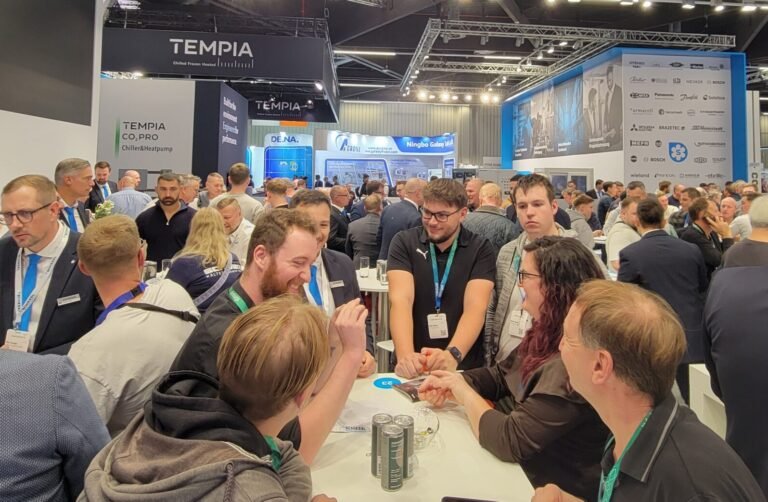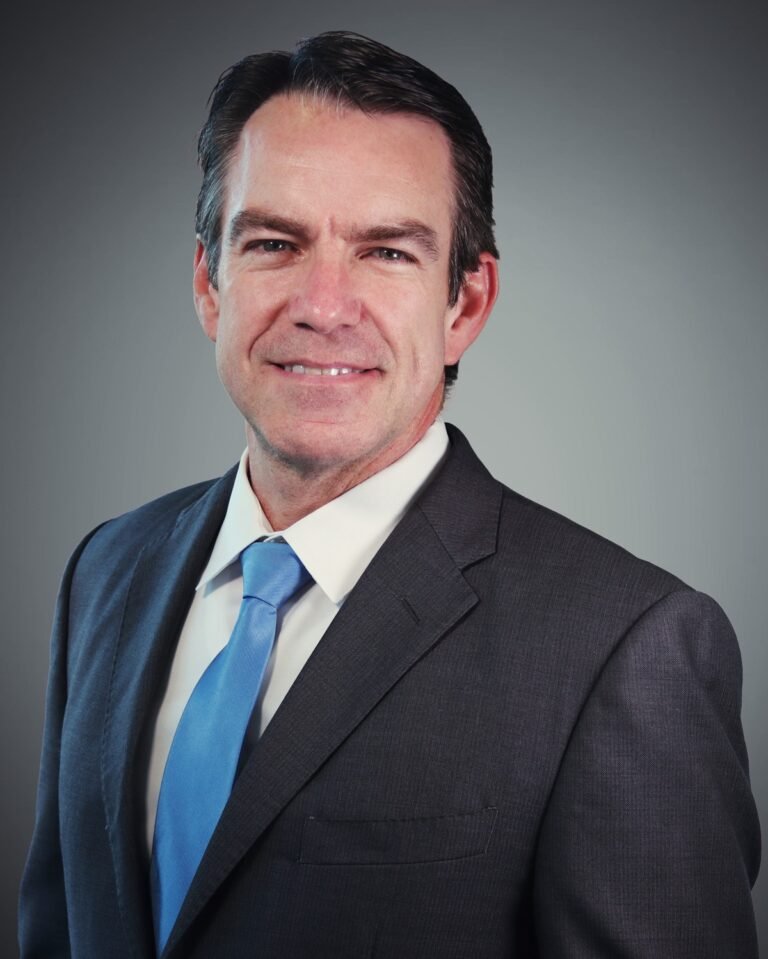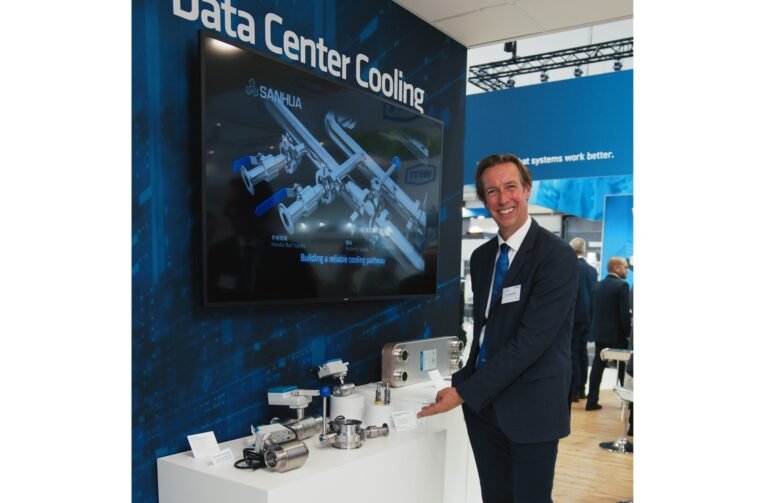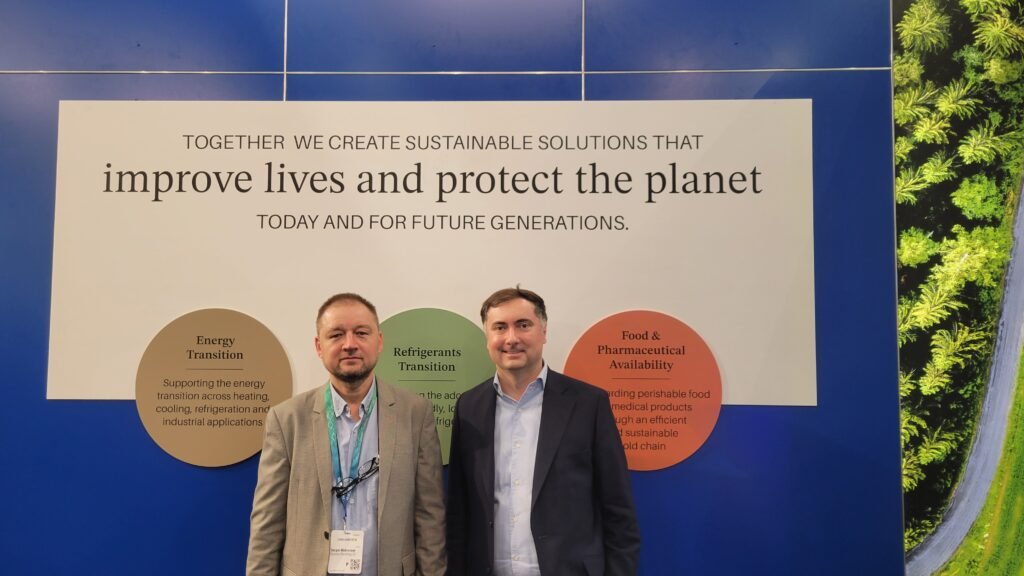
The use of CO2 in refrigeration has reached an adoption rate of roughly 36% in Europe, against about 6% in the Americas, according to Sandro Matic, President Americas at Copeland. At Chillventa 2026 in Nuremberg, Sergei Mukminov, Editor-in-Chief of Refindustry.com, spoke with Matic at the Copeland stand as he moves from leading Copeland in Europe to the Americas. The interview covers what he takes with him across the Atlantic, how Copeland reads the different regulatory timelines in the EU and the US and which refrigerants it backs by segment. We also discuss the strategy behind the acquisitions of SPH Sustainable Process Heat, Bueno Analytics and Dickson, and how manufacturers can help close the technician skills gap.
Chillventa comes as you hand over Europe to Gwen Cheramy and take on the Americas. What are you most proud of from your years leading Copeland in Europe, and what will you take with you?
If you look around our stand, you can see it. Everything the team is showcasing here reflects the last few years of hard work and shows how we are driving innovation forward. All of it links back to decarbonisation, the refrigerant transition and optimising cold chains across the world. I am very proud of that, because it is a holistic portfolio that came together, and it is very successful and impactful in the broader picture.
The Americas are a different environment and a very important business for us. We will always adjust to the local needs of our customers there. Still, I would say that many trends start in Europe and later reach other regions. Take CO2: in Europe it already has an adoption rate of roughly 36%, while in the Americas we are at roughly 6% overall. That means there is a long runway for CO2 solutions in the Americas. These are the lessons from Europe I want to take with me and adapt to the Americas market.
Europe faces a near halving of the HFC quota on 1 January 2027, while the EPA has just pushed supermarket GWP limits back to 2032. Is this one transition on two timelines or two different transitions?
First of all, at Copeland we want to stay ahead of regulatory norms. For us it is about the broader macro trends. We want to help the industry decarbonise, so the solutions we develop are truly future-ready. Here you will find many CO2 and propane applications, as well as A2L solutions, all helping the industry make a significant step change.
In some areas, as of January 2027, and especially in residential heating, there will be a significant step down on the F-gas front, and we are ready for it with the solutions we have today. In other areas, some regulation may take a little longer. However, I believe the market will adapt even sooner. Take commercial heat pumps: no regulation today requires anyone to use propane, yet many commercial heat pumps already run on it, and many industry players have followed.
So it is not only the regulatory cycle that drives sustainability-led decisions; end users drive it too, and we are showing many solutions here that help the industry move in this direction. People often discuss how we follow F-gas transitions, and they are important. But we also use each of these cycles to improve energy efficiency across all segments. For us, that is the big step forward.
We look at decarbonization holistically , from a 5 kW residential heat pump all the way up to a 10 MW industrial system, and you can see that range here on the stand. This matters because in industry, for example, about 60% of total energy consumption can be linked to heating. You have to help industry decarbonise too, not just homes. That is how you make an impact.
In our recent interview, Heatcraft argued that A2Ls are a durable answer for North America rather than a bridge. Which refrigerant is Copeland betting on for the next five to ten years, by segment and by region?
Generally, there is no one-size-fits-all solution, and I believe that applies to every region and every market we serve. Our three end markets are commercial & industrial, residential and cold chain, and in none of these is there a single answer.
In cold chain we have positioned ourselves with a very broad offering: CO2, propane and A2L solutions. Different store types may need very different solutions. Our job is to help customers find the best energy efficiency and the best applied cost, holistically.
In heat pumps, Europe is already primarily driven by propane systems. In the Americas, it is going to be more of a transition period. For really big industrial systems, it also depends on the application: in some cases ammonia is the ideal solution, in others a hydrocarbon system is the right one. We want to keep a broad view and not narrow it down to one solution, because I firmly believe that there won’t be only one.
SPH Sustainable Process Heat, Bueno Analytics and Dickson came within little more than a year. What is the logic behind this acquisition strategy, and where do you want Copeland’s business to be in five years?
These acquisitions are exciting for us because they all link back to the broader market trends: decarbonisation, energy efficiency and protecting food and pharma. With each one, the point is to bring companies into our portfolio that accelerate our broader mission.
Take them one by one. SPH is a recent acquisition in industrial heating. What is special about SPH is that it found a technical way to deliver a heat pump for temperatures up to 200°C. This need exists all over Europe: food manufacturing processes typically run between 120 and 180°C. If you want to remove the boiler, which in such a factory is typically fired by oil or gas, you need a heat pump like SPH’s that reaches those very high temperatures. With SPH we expanded our portfolio and can now cover this need fully.
Bueno specialises in AI-driven predictive maintenance and leak detection for stores. Imagine a store ecosystem with compression and controls, and Bueno as a layer on top that gives installers valuable predictive insights. It points them to the problem in the system so they can act before anything actually happens. That is extremely valuable, because it improves uptime in the store and overall energy efficiency.
So you can already see the pattern: we acquire to strengthen our core strategy. The same applies to Dickson, which specialises in environmental monitoring in healthcare. It fits very well, because we cover the full cold chain, from compression to controls. We also entered into a joint venture that added swing rotary technology to the Copeland portfolio, complementing our range in smaller capacity systems. Each step strengthens the overall portfolio and is fully aligned with our core strategy.
Looking ahead, we want to keep strengthening the business. We are very focused on building this broader ecosystem. Anything we bring into the Copeland family should help us keep having a deep impact on decarbonisation, drive energy efficiency and serve our three end markets: commercial & industrial, residential and cold chain.
New refrigerants and more complex systems raise the bar for installers and service engineers just as the technician shortage deepens on both sides of the Atlantic. Is the industry ready, and what is Copeland’s role in closing the skills gap?
It is a very important question, because much of what happens next depends on how fast the industry can scale, and we want to help it scale. For installers, one way we support them is with commissioning services that make the job simpler. If they install one of our CO2 condensing units, we provide commissioning services that simplify it for them. We have also developed AI algorithms that help with commissioning, because CO2 systems can be fairly complex. Anything that speeds this up also helps close the labour gap. That is where we are focused.
We are also strengthening our direct interaction with installers, with tools such as Copeland Mobile and Copeland Scout, which uses AI to help troubleshoot system issues, identify exactly which replacement parts are needed in which situation, and find the best way to solve technical problems. It is about taking complexity away wherever we can.
We apply the same thinking to larger systems. Take our oil-free centrifugal compressor used in data centres. Data centres are growing very rapidly; based on certain forecasts, we believe the segment will grow by 165% between today and 2030. In that situation you have to keep complexity under control. So we developed Copeland’s Aero-lift system, which is much simpler to handle than legacy technologies because it removes the complex electronics needed, for example, to drive magnetic bearings. That is how we simplify solutions so they can be applied at a much broader scale in industries that are growing fast.
Thank you, Sandro, for sharing your insights!