Esta página solo está disponible en inglés. Ir a la portada en español

×

Questa pagina è disponibile solo in inglese. Home page in italiano

×

Diese Seite ist nur auf Englisch verfügbar. Zur deutschen Startseite

×

Cette page est disponible uniquement en anglais. Aller à la page d'accueil en français

×

Electrofit Industrial Solutions and Hultsteins Collaborate for Sustainable Cold Transport

Electrofit Industrial Solutions and Hultsteins Collaborate for Sustainable Cold Transport

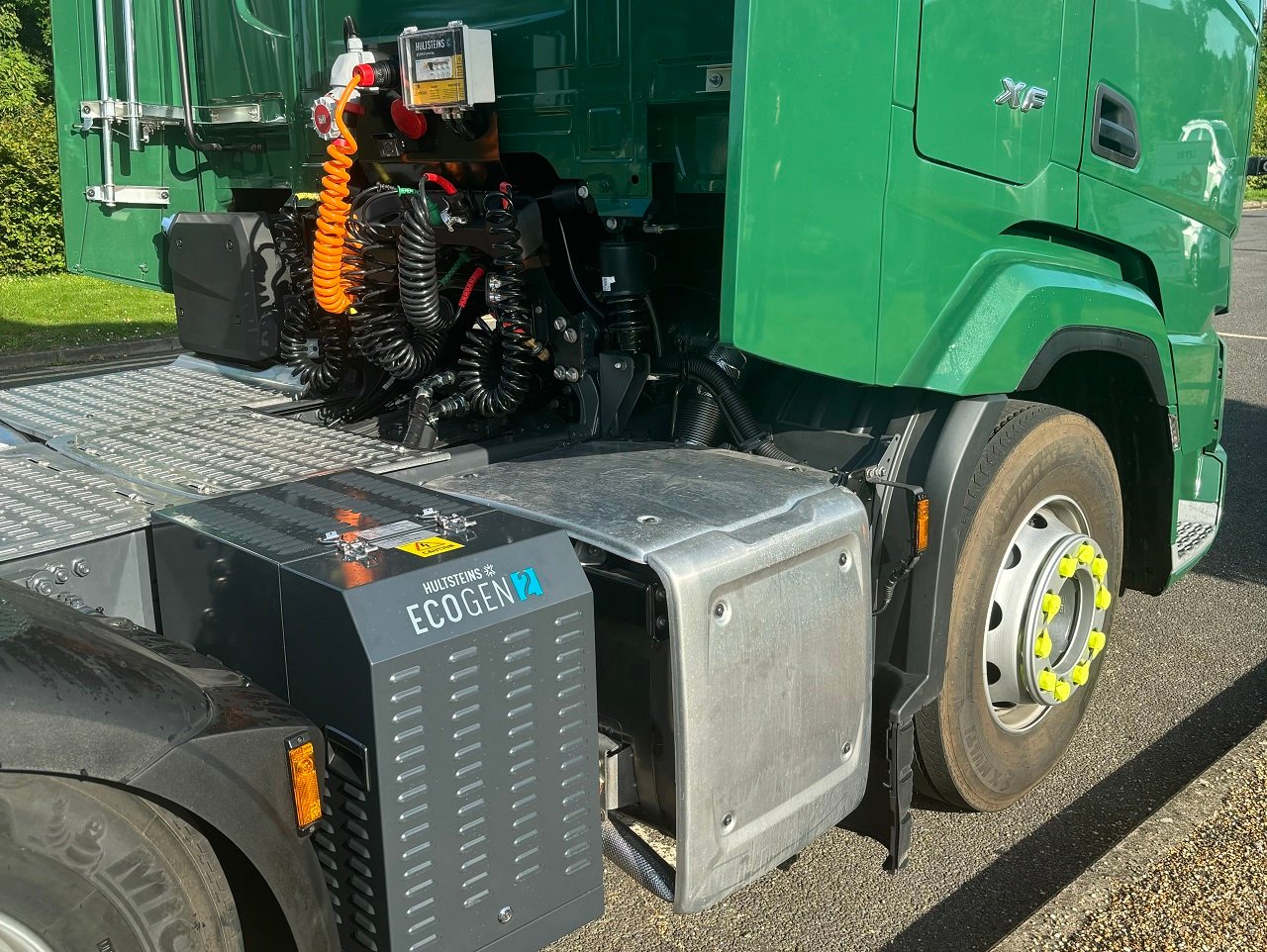
Electrofit Industrial Solutions (EIS) and Hultsteins are joining forces to enhance sustainability in temperature-controlled transport. EIS, known for combining cost-saving measures with environmental protection, and Hultsteins, a UK/Sweden manufacturer of onboard power generation systems, are set to deliver optimal solutions for clean, cold transport in the UK.

EIS specializes in energy management, waste reduction, resource optimization, and emissions control to provide significant financial savings and maintain high environmental standards. Hultsteins, pioneers in sustainable refrigeration, focus on reducing energy consumption, operational costs, and harmful emissions while maintaining low-cost and reliable transport for temperature-sensitive goods.

The collaboration aims to leverage EIS’s cost-saving and environmental expertise with Hultsteins’ advanced refrigeration technologies. EIS’s SulNOxEco™ fuel conditioner, compatible with all diesel, biofuel, and petrol types, will play a central role in reducing fuel consumption and maintenance needs. SulNOxEco™ contains natural, biodegradable ingredients that help reduce operational costs and emissions.

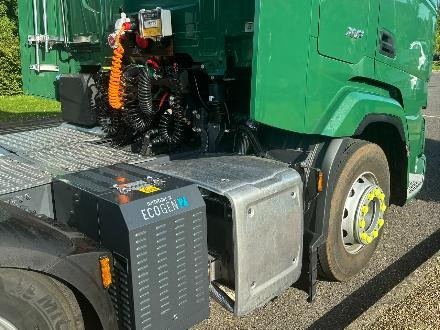
Hultsteins’ Ecogen systems and other sustainability products are expected to provide commercial vehicle operators with significant cost and carbon reduction benefits. The combination of these technologies is poised to address the high levels of diesel particulate matter (DPM) and nitrous oxide (NOx) pollution emitted by diesel units powering the UK’s refrigerated trailers.

EIS, leveraging over 35 years of expertise in forklift trucks and advanced battery technology, is conducting feasibility studies to establish a new REM (The REM Association) standard for electrically powered equipment. This initiative aims to deliver improved functionality over traditional internal combustion engine (ICE) equipment.

The partnership between EIS and Hultsteins sets a promising precedent for enhancing the sustainability of temperature-controlled transport, contributing to both cost reduction and environmental protection.

Get the daily refrigeration briefing

One email a day. Trusted by 3,000+ RACHP professionals.

More on Cold Chain

All on Cold Chain →

Insights

Secop's Solar Direct Drive (SDD) System Earns WHO PQS Approval – The Team Behind It
Article

Secop’s Solar Direct Drive (SDD) System Earns WHO PQS Approval – The Team Behind It

Partner's material In March 2026, Secop’s Solar Direct Drive Power Management Module was granted WHO PQS prequalification and officially listed in the WHO Catalogue of Prequalified Immunization Devices. The WHO IMD-PQS (Immunization Devices Performance, Quality and Safety programme) is the global benchmark for cold chain equipment used in immunisation. Being listed in its catalogue is

22 Jun 2026
Case Study - Effect of Louvers or diffusers on air flow distribution and cooling time on a meat log during Chill cycle
Tech Guide

Case Study – Effect of Louvers or diffusers on air flow distribution and cooling time on a meat log during Chill cycle

By Kushal Aurangabadkar An experimental analysis was conducted on a cooler space measuring 3.66 m × 6.096 m (12.0 ft × 20.0 ft), equipped with an ammonia refrigeration coil, five 30 cm (12 in.) fans, and five diffusers. The study measured airflow patterns, cooling rates, and heat transfer efficiency in meat storage by testing two configurations:

Kushal Aurangabadkar · 21 Jan 2026
Total Cost of Ownership (TCO) for Modular Refrigeration Systems in Life Sciences Distribution Centers
Tech Guide

Total Cost of Ownership (TCO) for Modular Refrigeration Systems in Life Sciences Distribution Centers

by Ramez Naguib, P.E. Introduction Life sciences distribution centers are under immense pressure to deliver consistent temperature control, comply with increasingly stringent regulations, and optimize operational efficiency. Traditional built-up refrigeration systems often prove cumbersome, costly, and slow to implement. In contrast, modular, factory-assembled refrigeration systems have emerged as a compelling alternative. Drawing on lessons from

Ramez Naguib · 14 Jan 2026
Everything on Cold Chain: 2,057 articles, 2 case studies, 23 insights

Most read this month

All news →