At Chillventa 2024, one of the HVACR industry’s biggest international events, Sergei Mukminov, the editor-in-chief of Refindustry.com, sat down with Andre Patenaude, Director Solution Strategy at Copeland. They discussed the current trends, opportunities, and challenges in CO2 refrigeration technologies and how global regulations and sustainability goals are shaping the industry’s future. Andre shed light on the significant challenges, including high-pressure systems, technician shortages, and the complexity of modern refrigeration systems, while also highlighting the industry’s drive toward more efficient and environmentally friendly solutions. Here’s the full interview from their conversation.
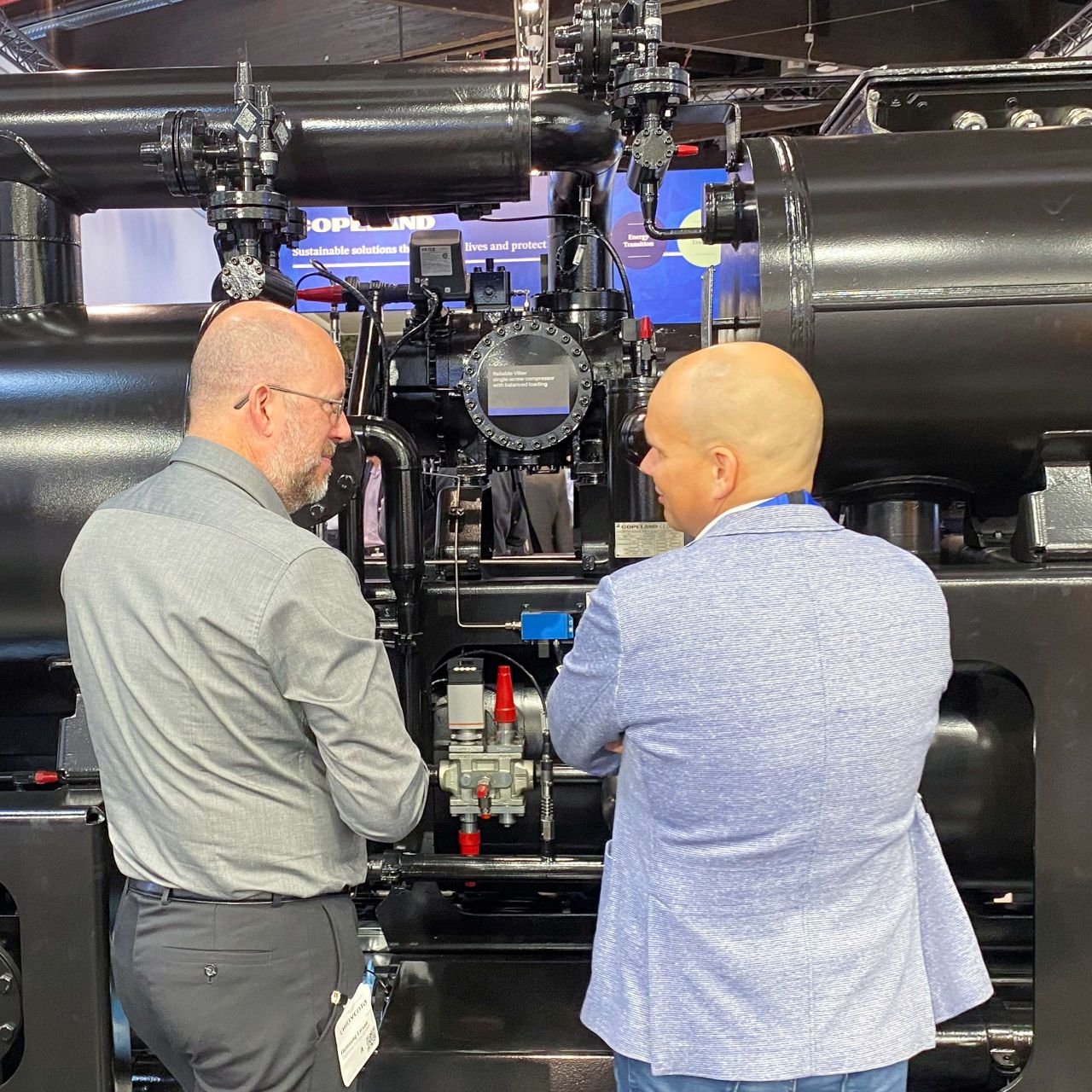
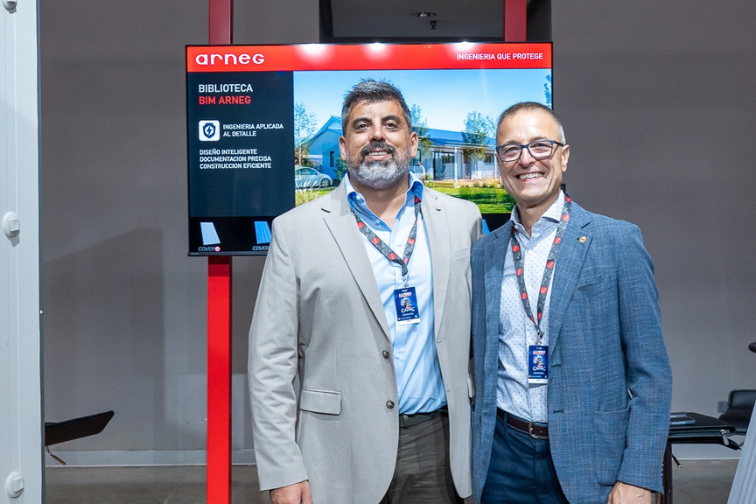
Shannon Lovett, Country Manager, on the left, and Andre Patenaude, Director Solution Strategy, on the right at the Copeland booth.
Sergei Mukminov: Andre, thank you for joining us at Chillventa 2024. You’re one of the most prominent figures influencing the global refrigeration industry, particularly through sustainable technologies and solutions. Can you share with our readers what you see as the biggest opportunities and challenges in the current landscape?
Andre Patenaude: Thank you, Sergei. I appreciate that question. One of the largest opportunities right now is the shift toward CO2 technologies, driven primarily by regulations. As we know, global refrigerant regulations are happening—they’ve already been implemented in Europe, are taking shape in North America, and are spreading around the world. The GWP (Global Warming Potential) levels have dropped to a point where retailers and system operators must adapt to meet these regulatory standards. That’s a significant driver.
But what’s also very important, and perhaps even more so, is that large retailers and end-users have ambitious sustainability targets. They’re under pressure not only to comply with regulations but also to reduce their carbon footprints for their investors and stakeholders. It’s a global imperative, both for the industry and for the planet, to mitigate global warming. Sometimes, these sustainability goals outweigh the regulatory pressures, pushing companies to adopt CO2 technologies to achieve long-term environmental benefits.
Sergei Mukminov: It seems that the pressure is both regulatory and market-driven, with sustainability targets playing a critical role. What are the key challenges the industry faces in adopting CO2 systems?
Andre Patenaude: The primary challenge with CO2 systems, without a doubt, is managing high pressures. CO2 operates at much higher pressures than traditional refrigerants. The industry has largely figured out how to handle the high side—high-pressure systems—but the challenge now lies in the low side, the liquid lines, and suction pressures. We’re talking about pressures like 30-bar low-temp and 45-bar medium-temp systems. These pressures are increasing in visibility as the industry works to reduce release events.
For example, in the event of a power outage, CO2 starts absorbing heat and pressures can quickly rise beyond the system’s pressure relief value. Retailers have experienced these situations, and some are now willing to invest more in order to increase their standstill pressures, so their systems can handle these spikes without releasing refrigerant into the atmosphere. It’s about preventing those release events, especially in higher ambient temperatures.
Sergei Mukminov: That’s interesting. So the challenge isn’t just in building high-pressure systems, but also in maintaining them safely and efficiently. Are there any other significant challenges?
Andre Patenaude: Another big challenge is high ambient efficiency. Operating CO2 systems in warmer climates requires advanced strategies like parallel compression, ejectors, and other technologies to reduce peak energy demands. Systems like adiabatic cooling and PX ejectors are helping, but they do add complexity, which is difficult for the industry to manage when many experienced service technicians are retiring, and we don’t have enough new technicians entering the field quickly enough.
In the past, refrigeration systems could be managed with mechanical controls, which most technicians were well-versed in. Now, with CO2, we’re shifting to electronic controls, and that requires retraining a lot of technicians. It’s a race against time to get enough skilled workers trained in these modern systems.
Sergei Mukminov: So we’re not just talking about technological challenges, but also workforce issues. How is the industry addressing the shortage of skilled technicians?
Andre Patenaude: It’s a big concern, especially in North America, where we only have about 10-12 years of experience with CO2 compared to Europe, which has a much longer track record. We’re working to attract younger technicians to the trade, particularly those who are tech-savvy and interested in electronics. The industry needs to adapt quickly to this changing dynamic. It’s no longer just about mechanical skills; it’s about electronics, software, and the ability to manage more sophisticated systems.
Sergei Mukminov: It sounds like both the technological landscape and the workforce are evolving. What would you say are the most important things companies need to keep in mind as they adopt CO2 systems?
Andre Patenaude: First, companies need to fully understand the regulatory environment and their own sustainability goals. They need to ask themselves, “Are we implementing CO2 systems to meet regulatory requirements, or are we doing it to meet our long-term sustainability objectives?” These goals sometimes overlap but may have different timeframes or requirements.
Second, there’s the technical side: managing the high-pressure systems and ensuring the systems can handle high ambient temperatures without efficiency losses. Finally, companies must invest in their workforce—whether it’s through training current employees or attracting new talent—to ensure they have the technical expertise required to manage these complex systems. It’s a multifaceted challenge, but the opportunities for both environmental impact and business growth are immense.
Sergei Mukminov: Andre, thank you for sharing these valuable insights with us. It’s clear that CO2 refrigeration systems represent both a challenge and an opportunity for the HVACR industry.
Andre Patenaude: Thank you, Sergei. It’s always a pleasure to speak with you. We’re committed to pushing the industry forward and helping it meet both its regulatory and sustainability challenges.