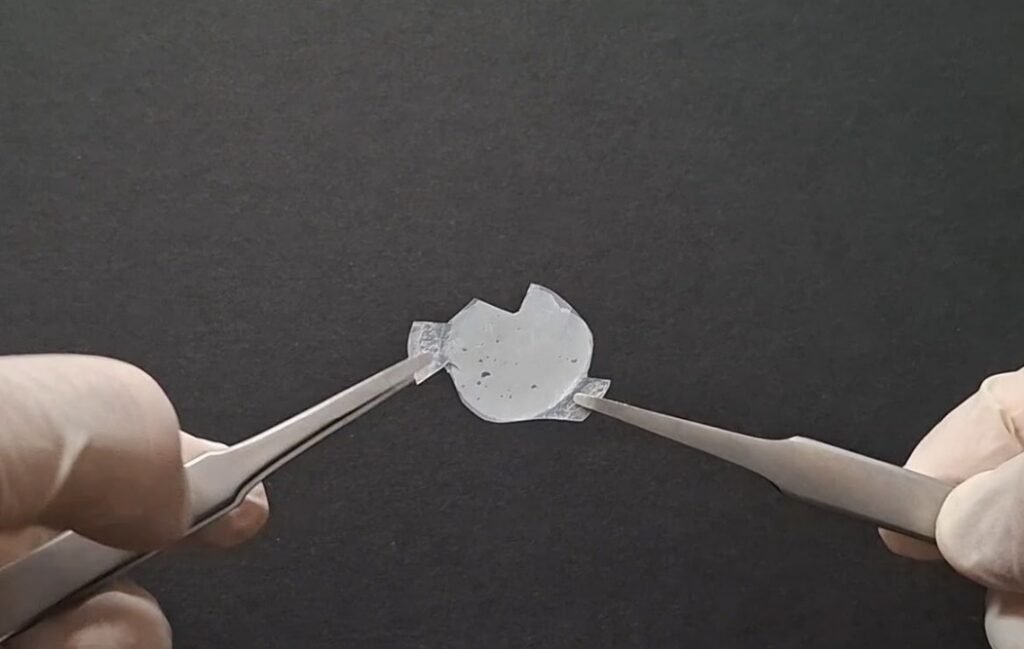
Researchers from the Functional Nanoscale Devices for Energy (FINDER) group at Spain’s Institute of Micro and Nanotechnology (IMN-CNM, CSIC) have developed a nanomaterial capable of cooling surfaces under solar radiation without consuming electricity. Under favorable conditions, the material reduced temperature by up to 12.9°C (23.2°F) compared with an uncoated reference sample.
The study, published in Nanophotonics, presents a method for producing three-dimensional nanostructures of polyvinylidene fluoride (PVDF), a polymer with a high capacity to emit heat in the infrared, using nanoporous anodized aluminum oxide (3D-AAO) templates. The approach enables precise control of the material’s internal geometry, which affects the optical properties of radiative coolers.
The technology uses passive daytime radiative cooling (PDRC). The material reflects most solar radiation while efficiently emitting accumulated heat through the atmospheric transparency window between 8 and 13 micrometers. In favorable conditions, this allows it to reach temperatures below ambient temperature without an external energy input.
Researchers produced a three-dimensional network of PVDF nanostructures by infiltrating the polymer into nanoporous alumina templates. The material was subsequently subjected to cooling processes and ultraviolet radiation treatment, which increased solar reflectance by whitening it. Outdoor tests conducted in summer 2025 showed the maximum 12.9°C (23.2°F) temperature reduction under warm, dry conditions with high solar radiation.
The researchers describe the manufacturing strategy as scalable and say the nanostructures could potentially be incorporated into building roofs and facades, electronic devices, vehicles or personal thermal-management systems. The work was funded by the ERC Consolidator Grant “COOLed” (No. 101087974).
“This manufacturing method is relatively inexpensive since it can be adapted to industrial processes and opens new avenues for designing materials that could be incorporated into building roofs and façades, electronic devices, vehicles or personal thermal-management systems, helping to reduce the need for active cooling and, consequently, energy consumption and emissions associated with the use of air conditioning,” said Cristina Vicente, project leader of “COOLed.”