Esta página solo está disponible en inglés. Ir a la portada en español

×

Questa pagina è disponibile solo in inglese. Home page in italiano

×

Diese Seite ist nur auf Englisch verfügbar. Zur deutschen Startseite

×

Cette page est disponible uniquement en anglais. Aller à la page d'accueil en français

×

Blockchain Integration Drives Growth in Global Cold-Chain Pharma Market

Blockchain Integration Drives Growth in Global Cold-Chain Pharma Market

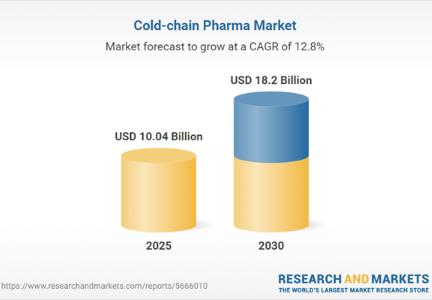
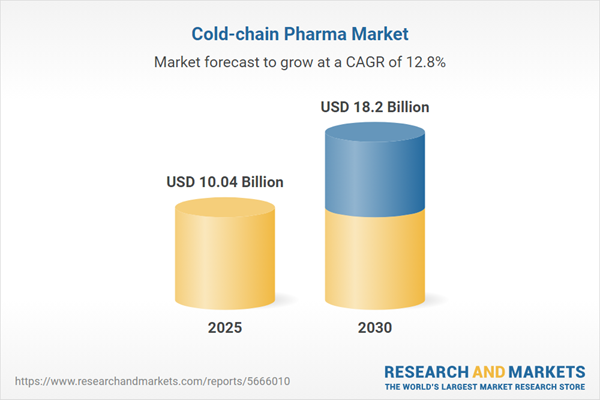
The global pharmaceutical cold-chain market is projected to grow from USD 10.04 billion in 2025 to USD 18.20 billion by 2030, according to a new report published by Research and Markets. This expansion, at a compound annual growth rate (CAGR) of 12.75%, is driven by increasing demand for biologics, vaccines, and advanced therapies that require temperature-controlled logistics.

The report highlights growing investments in blockchain-enabled tracking platforms, which enhance end-to-end supply chain visibility and regulatory compliance. These technologies are helping stakeholders mitigate temperature excursion risks and ensure secure, real-time monitoring throughout distribution.

Packaging solutions in the market include active types, such as refrigerated containers and temperature-controlled pallets, and passive types, including insulated shippers and gel packs. Temperature ranges covered span controlled ambient, refrigerated, frozen, deep frozen, and ultra frozen categories.

Distribution channels range from in-house operations to third-party logistics providers. Services include cold storage, multimodal transportation (air, rail, road, sea), and value-added offerings like repacking and shipment monitoring. The market serves a wide range of product types including biologics, small molecule drugs, diagnostics, and vaccines.

End users include hospitals, clinics, contract research organizations, and retail pharmacies. The report provides analysis across major global regions, including the Americas, Europe, the Middle East & Africa, and Asia-Pacific.

Technological advancements such as AI-powered monitoring platforms, predictive analytics, and real-time sensor arrays are increasingly adopted. The market is also responding to sustainability pressures by introducing bio-based insulation, energy-efficient refrigeration, and optimized routing.

In the United States, new tariffs on imported refrigeration equipment and packaging materials are prompting shifts toward local sourcing and modular container designs. Collaborative strategies between logistics companies and packaging suppliers are being adopted to maintain compliance and cost-efficiency under new trade conditions.

The report includes profiles of major global cold-chain logistics providers such as Americold Logistics, Lineage Logistics, Kuehne + Nagel, Deutsche Post DHL, UPS, FedEx, DB Schenker, DSV Panalpina, CEVA Logistics, and Agility.
Read More

Get the daily refrigeration briefing

One email a day. Trusted by 3,000+ RACHP professionals.

More on Cold Chain

All on Cold Chain →

Insights

Secop's Solar Direct Drive (SDD) System Earns WHO PQS Approval – The Team Behind It
Article

Secop’s Solar Direct Drive (SDD) System Earns WHO PQS Approval – The Team Behind It

Partner's material In March 2026, Secop’s Solar Direct Drive Power Management Module was granted WHO PQS prequalification and officially listed in the WHO Catalogue of Prequalified Immunization Devices. The WHO IMD-PQS (Immunization Devices Performance, Quality and Safety programme) is the global benchmark for cold chain equipment used in immunisation. Being listed in its catalogue is

22 Jun 2026
Case Study - Effect of Louvers or diffusers on air flow distribution and cooling time on a meat log during Chill cycle
Tech Guide

Case Study – Effect of Louvers or diffusers on air flow distribution and cooling time on a meat log during Chill cycle

By Kushal Aurangabadkar An experimental analysis was conducted on a cooler space measuring 3.66 m × 6.096 m (12.0 ft × 20.0 ft), equipped with an ammonia refrigeration coil, five 30 cm (12 in.) fans, and five diffusers. The study measured airflow patterns, cooling rates, and heat transfer efficiency in meat storage by testing two configurations:

Kushal Aurangabadkar · 21 Jan 2026
Total Cost of Ownership (TCO) for Modular Refrigeration Systems in Life Sciences Distribution Centers
Tech Guide

Total Cost of Ownership (TCO) for Modular Refrigeration Systems in Life Sciences Distribution Centers

by Ramez Naguib, P.E. Introduction Life sciences distribution centers are under immense pressure to deliver consistent temperature control, comply with increasingly stringent regulations, and optimize operational efficiency. Traditional built-up refrigeration systems often prove cumbersome, costly, and slow to implement. In contrast, modular, factory-assembled refrigeration systems have emerged as a compelling alternative. Drawing on lessons from

Ramez Naguib · 14 Jan 2026
Everything on Cold Chain: 2,059 articles, 2 case studies, 23 insights

Most read this month

All news →