Esta página solo está disponible en inglés. Ir a la portada en español

×

Diese Seite ist nur auf Englisch verfügbar. Zur deutschen Startseite

×

Cette page est disponible uniquement en anglais. Aller à la page d'accueil en français

×

Carrier Transicold equips UK fleet with Vector HE 17 units

Wild Water Group plans to upgrade all 24 trailers after five initial units delivered fuel-efficiency gains, added capacity and less noise.

Carrier Transicold equips UK fleet with Vector HE 17 units

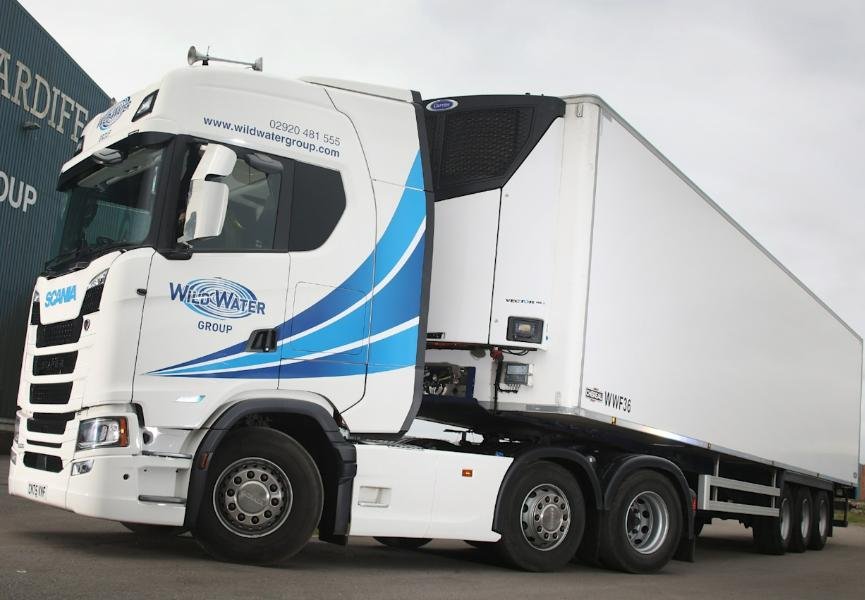
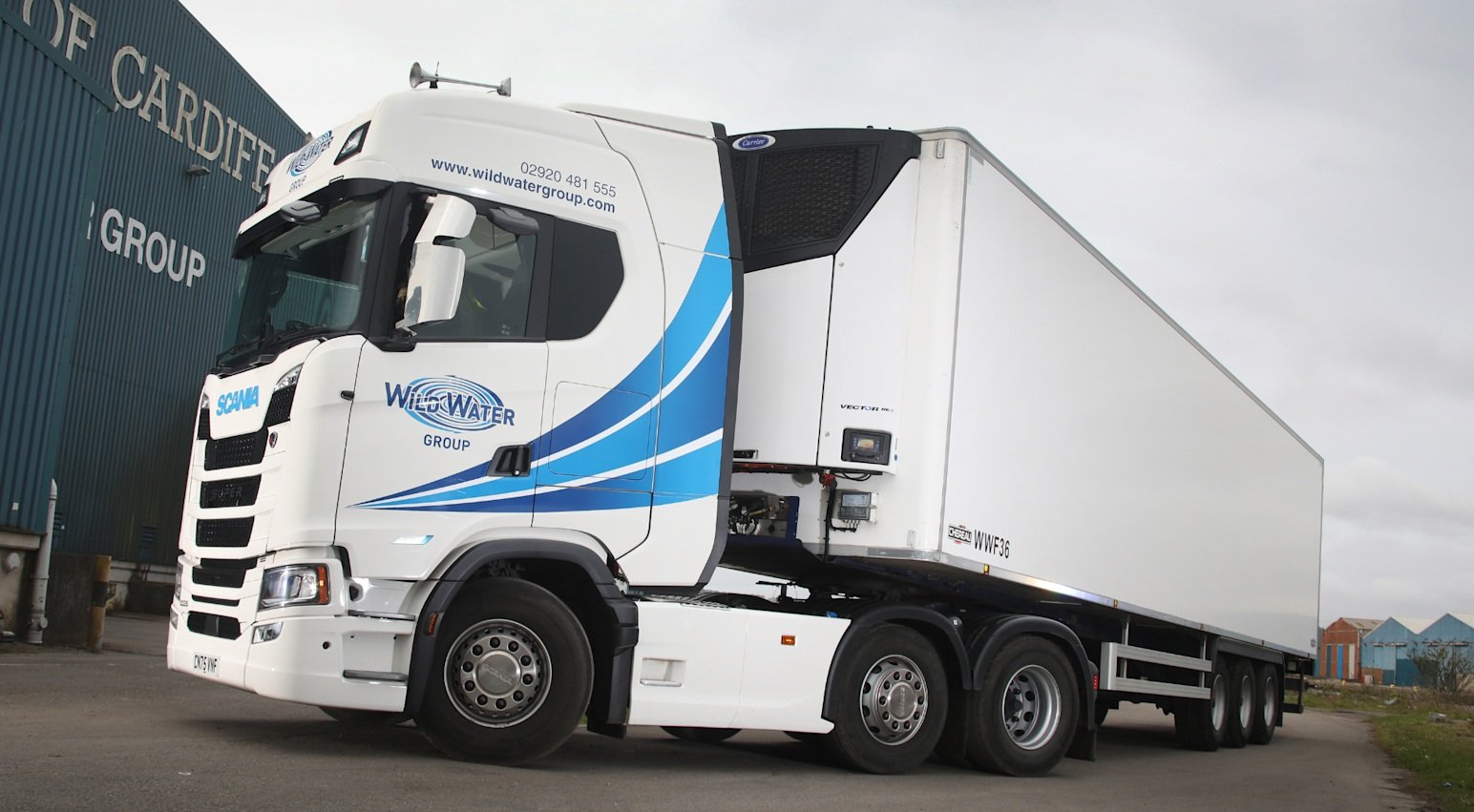
Carrier Transicold has equipped Wild Water Group’s trailer fleet with Vector HE 17 units, replacing Vector 1550 systems and delivering fuel-efficiency gains, higher cooling capacity and lower noise levels, according to the companies. After an initial deployment of five units, the Wales-based temperature-controlled warehousing and distribution provider reported performance improvements and is now planning to upgrade its full 24-trailer fleet.

The trailers are 13.6 metres long (about 44.6 ft) and supplied by Chereau. Wild Water Group said the fleet upgrade supports its efforts to modernise its UK-wide temperature-controlled distribution network.

Carrier Transicold said the Vector HE 17 uses inverter technology to adjust compressor speed to real-time cooling demand. The unit offers cooling capacity of more than 16 kW (about 54,600 BTU/h), a noise reduction of 6 dB(A) compared with the Vector 1550, and a weight of 720 kg (about 1,587 lb). The company also said the system shares a similar build architecture with the Vector HE 19 and includes E-Drive technology, which converts energy from the motor into electricity to power the unit.

E-Drive removes the mechanical transmissions used in belt-driven refrigeration systems, Carrier Transicold said, and can operate when plugged into the grid at a depot or on the road via an alternative power source such as a trailer-mounted battery pack or a tractor-driven Eco-Drive module. Wild Water Group operates seven cold stores across South Wales and Southern England.

“Fuel efficiency is a major priority for us, and the HE 17 units have delivered noticeable gains in day-to-day use,” said Jon Sutton, Transport Manager, Wild Water Group. “The reduced noise levels have also been a huge benefit for both our drivers and the communities we operate in.”
Get the daily refrigeration briefing

One email a day. Trusted by 3,000+ RACHP professionals.

More on Cold Chain

All on Cold Chain →

Insights

Secop's Solar Direct Drive (SDD) System Earns WHO PQS Approval – The Team Behind It
Article

Secop’s Solar Direct Drive (SDD) System Earns WHO PQS Approval – The Team Behind It

Partner's material In March 2026, Secop’s Solar Direct Drive Power Management Module was granted WHO PQS prequalification and officially listed in the WHO Catalogue of Prequalified Immunization Devices. The WHO IMD-PQS (Immunization Devices Performance, Quality and Safety programme) is the global benchmark for cold chain equipment used in immunisation. Being listed in its catalogue is

22 Jun 2026
Case Study - Effect of Louvers or diffusers on air flow distribution and cooling time on a meat log during Chill cycle
Tech Guide

Case Study – Effect of Louvers or diffusers on air flow distribution and cooling time on a meat log during Chill cycle

By Kushal Aurangabadkar An experimental analysis was conducted on a cooler space measuring 3.66 m × 6.096 m (12.0 ft × 20.0 ft), equipped with an ammonia refrigeration coil, five 30 cm (12 in.) fans, and five diffusers. The study measured airflow patterns, cooling rates, and heat transfer efficiency in meat storage by testing two configurations:

Kushal Aurangabadkar · 21 Jan 2026
Total Cost of Ownership (TCO) for Modular Refrigeration Systems in Life Sciences Distribution Centers
Tech Guide

Total Cost of Ownership (TCO) for Modular Refrigeration Systems in Life Sciences Distribution Centers

by Ramez Naguib, P.E. Introduction Life sciences distribution centers are under immense pressure to deliver consistent temperature control, comply with increasingly stringent regulations, and optimize operational efficiency. Traditional built-up refrigeration systems often prove cumbersome, costly, and slow to implement. In contrast, modular, factory-assembled refrigeration systems have emerged as a compelling alternative. Drawing on lessons from

14 Jan 2026
Everything on Cold Chain: 2,036 articles, 1 case study, 23 insights

Most read this month

All news →