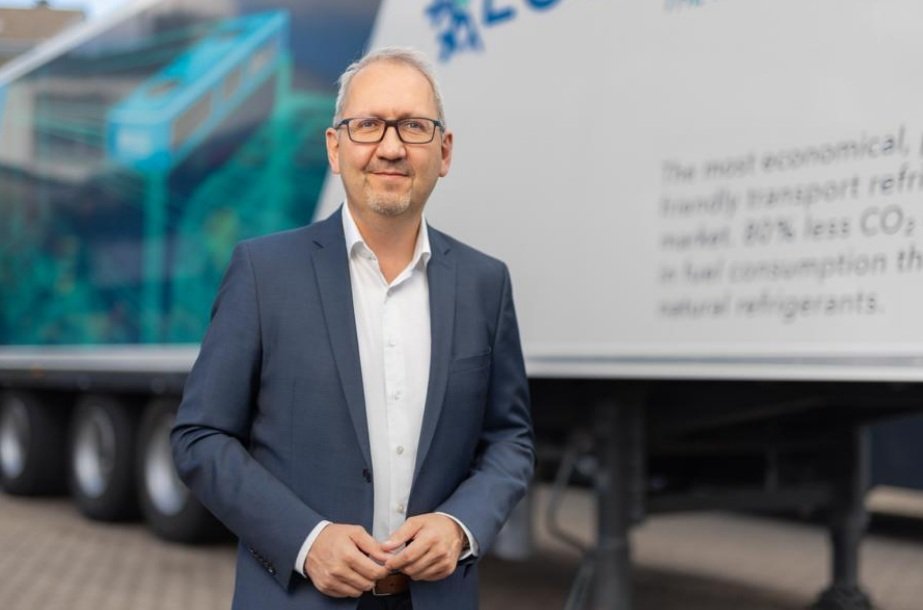
ECOOLTEC said tighter EU F-Gas rules are increasing interest in transport refrigeration systems that use natural refrigerants with very low global warming potential. The company said its fully electric TM182 unit uses CO2 (R744) and propene (R1270), and that its safety concept is based on low refrigerant charges and separating refrigeration generation from cold distribution.
According to ECOOLTEC, the flammable R1270 refrigerant circuit operates entirely outside the vehicle body, where escaping propene can mix with ambient air and dissipate. Inside the body, non-flammable CO2 distributes the cooling. The company said the R1270 and CO2 circuits run alongside each other outside the body and are thermally linked by a plate heat exchanger.
ECOOLTEC said its design uses 90 per cent less refrigerant than conventional systems. The TM182 contains 650 grammes (approx. 22.9 oz) of propene and approximately 1,100 grammes (approx. 38.8 oz) of CO2 per refrigerant circuit, with two propene circuits and two CO2 circuits in total. CTO Holger Dörre said the main issue for fleet operators, service companies, and rental and leasing firms is which technical measures manufacturers use to control potential leaks.
The company also linked the growing interest in natural refrigerants to Regulation (EU) 2024/573. Dörre said the regulation will further restrict the use of F-gases such as R452A and R410A, which he said have a GWP of more than 2,000, and phase them out completely by 2050 at the latest. ECOOLTEC added that the regulated quantity of synthetic refrigerants with high GWP is to be reduced by 95 per cent by 2030 compared with 2015, while HFC production is to be cut to 15 per cent of the 2015 baseline from 2036 onward.
“Although transport refrigeration systems are not yet affected by a premature ban on synthetic refrigerants, as is the case with numerous stationary applications, fleet operators are already facing significantly rising operating costs and limited availability of conventional refrigerants due to the F-Gas Regulation,” said Holger Dörre, CTO of ECOOLTEC. He added that the phase-down could jeopardise the operational safety of existing systems if sufficient refrigerant is no longer available for servicing.