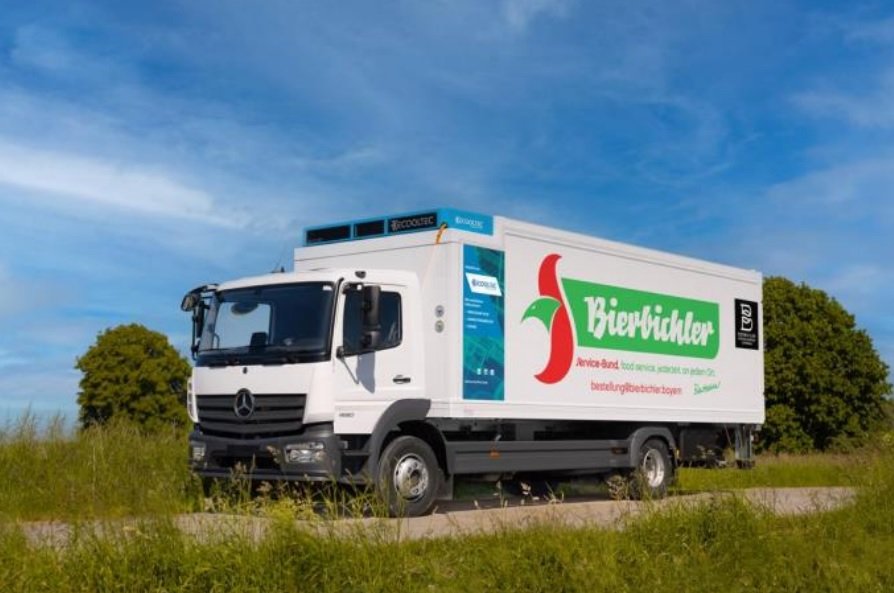
Food wholesaler Ferdinand Bierbichler reports significant CO2 savings from using the ECOOLTEC TM182 transport refrigeration system. The company estimates that its twelve refrigerated trucks equipped with the unit will save up to 780 tonnes of CO2 equivalent over an eight-year service life. Additionally, the vehicles' diesel consumption is reduced by up to two litres per 100 kilometres.
The emission reduction is primarily achieved through the use of natural refrigerants CO2 (R744, GWP 1) and propene (R1270, GWP 3), replacing the synthetic refrigerant R410A (GWP 2,088) used in other systems. With an annual leakage rate of 15%, the avoided emissions amount to 421 tonnes of CO2 equivalent over the holding period. In the event of a complete refrigerant loss, an additional 30 tonnes of CO2e per vehicle could be prevented, bringing the total potential savings to 780 tonnes over eight years.
In addition to lower emissions, the TM182 system improves energy efficiency. Unlike traditional transport refrigeration units, it operates via an alternator on the truck engine, reducing fuel consumption. According to fleet records, trucks with the TM182 require up to two litres less diesel per 100 kilometres than vehicles with conventional electrically driven refrigeration systems. This efficiency gain of about 8% results in an additional reduction of 304 tonnes of CO2 emissions over eight years across the fleet, bringing total savings to 1,075 tonnes CO2e.
Lower fuel consumption also leads to reduced operating costs. In 2024 alone, the company expects to save nearly €1,900 per vehicle, with further savings anticipated as CO2 taxation increases. Compared to diesel-powered refrigeration units, the TM182 requires 60–80% less energy. The system’s lower weight also reduces tyre wear, allowing for up to 20,000 kilometres more mileage per set of tyres.
The transition to natural refrigerants aligns with Bierbichler’s sustainability strategy. With stricter F-gas regulations limiting the availability of synthetic refrigerants and increasing their costs, natural refrigerants provide a stable, long-term alternative. They also do not contribute to PFAS pollution in the atmosphere. The low noise emissions of the system further enhance driver comfort and reduce disturbances in urban areas.