Esta página solo está disponible en inglés. Ir a la portada en español

×

Questa pagina è disponibile solo in inglese. Home page in italiano

×

Diese Seite ist nur auf Englisch verfügbar. Zur deutschen Startseite

×

Cette page est disponible uniquement en anglais. Aller à la page d'accueil en français

×

IIR and UNEP OzonAction release the French and Spanish versions of the ‘Cold Chain Technology Briefs’
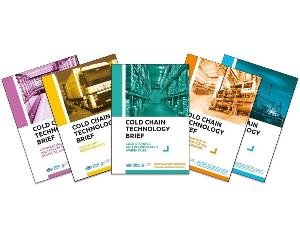
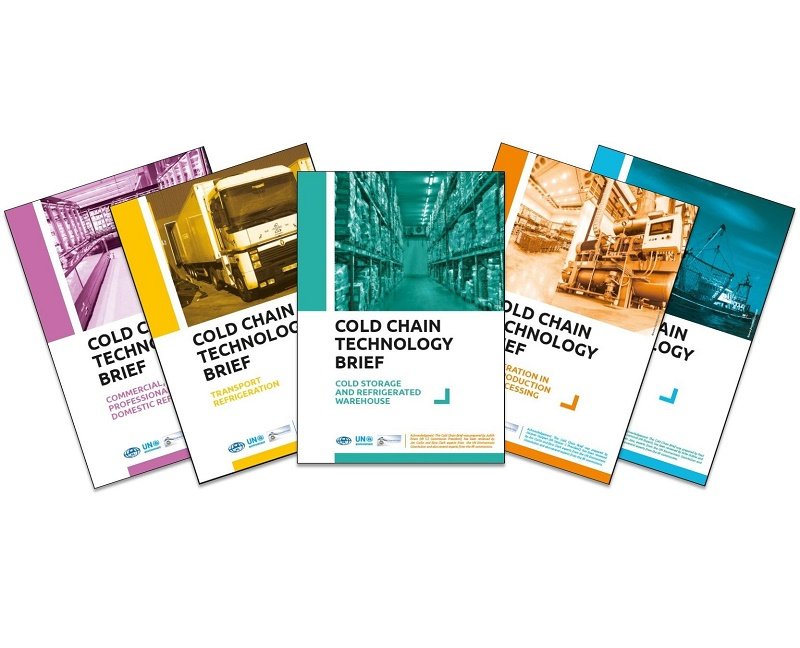
IIR and UNEP OzonAction release the French and Spanish versions of the ‘Cold Chain Technology Briefs’

As part of their cooperation to support the needs of different stakeholders in developing countries to fulfil their commitments under the Montreal Protocol, the International Institute of Refrigeration (IIR) and UNEP OzonAction today released the French and Spanish versions of their popular Technology Briefs on the Cold Chain. The set of publications includes in-depth summaries about the cold chain in several different sectors. They include descriptions of technology, refrigerant options and trends and conclude with prospects and challenges. They cover the main cold chain sub-sectors i.e. Production & Processing, Cold Storage, Transport Refrigeration, Commercial & Domestic, and Fishing Vessels.

The Cold Chain sector has been one of the key consuming sectors in many Article 5 countries since the start of the Montreal Protocol. Within the context of the Kigali Amendment, all Article-5 Parties will face an overlapped in commitments during the period of 2020-2030 where they need to eliminate the use HCFCs while starting to control and curbing the increase in demand for HFCs. The Cold Chain is a sector that will be most affected during this challenging period, noting that the majority of commercially-available technologies in most developing countries, either for commercial or industrial uses, still mostly depends on high GWP HFCs technologies which can significantly affect compliance commitments in the medium and long terms.

Get the daily refrigeration briefing

One email a day. Trusted by 3,000+ RACHP professionals.

Related news

Most read this month

All news →

Related insights

Article

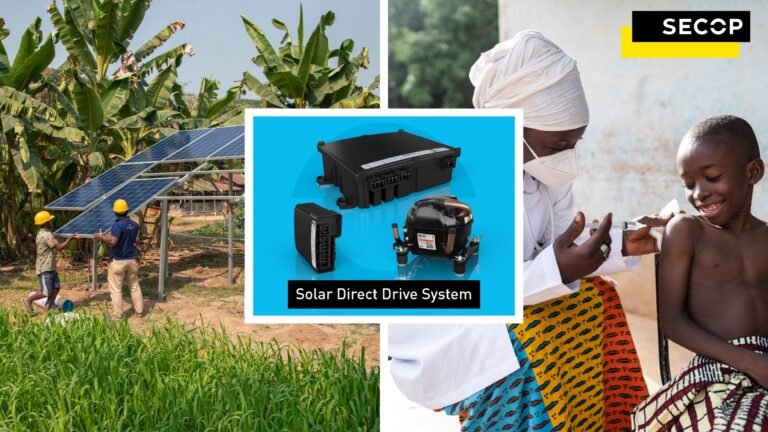
Secop’s Solar Direct Drive (SDD) System Earns WHO PQS Approval – The Team Behind It

Partner's material In March 2026, Secop’s Solar Direct Drive Power Management Module was granted WHO PQS prequalification and officially listed in the WHO Catalogue of Prequalified Immunization Devices. The WHO IMD-PQS (Immunization Devices Performance, Quality and Safety programme) is the global benchmark for cold chain equipment used in immunisation. Being listed in its catalogue is

22 Jun 2026
Tech Guide

Case Study – Effect of Louvers or diffusers on air flow distribution and cooling time on a meat log during Chill cycle

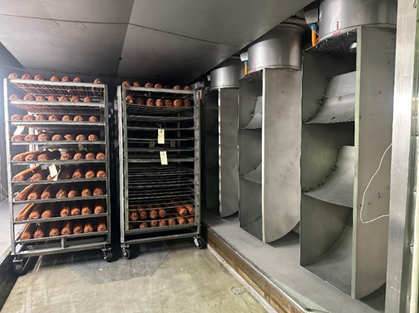
By Kushal Aurangabadkar An experimental analysis was conducted on a cooler space measuring 3.66 m × 6.096 m (12.0 ft × 20.0 ft), equipped with an ammonia refrigeration coil, five 30 cm (12 in.) fans, and five diffusers. The study measured airflow patterns, cooling rates, and heat transfer efficiency in meat storage by testing two configurations:

Kushal Aurangabadkar · 21 Jan 2026
Tech Guide

Total Cost of Ownership (TCO) for Modular Refrigeration Systems in Life Sciences Distribution Centers

by Ramez Naguib, P.E. Introduction Life sciences distribution centers are under immense pressure to deliver consistent temperature control, comply with increasingly stringent regulations, and optimize operational efficiency. Traditional built-up refrigeration systems often prove cumbersome, costly, and slow to implement. In contrast, modular, factory-assembled refrigeration systems have emerged as a compelling alternative. Drawing on lessons from

14 Jan 2026