The Cold Chain Federation has released the latest report in the Net Zero Project

The Cold Chain Federation has released the latest report in the Net Zero Project

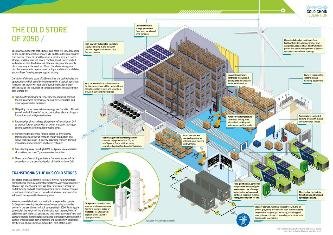
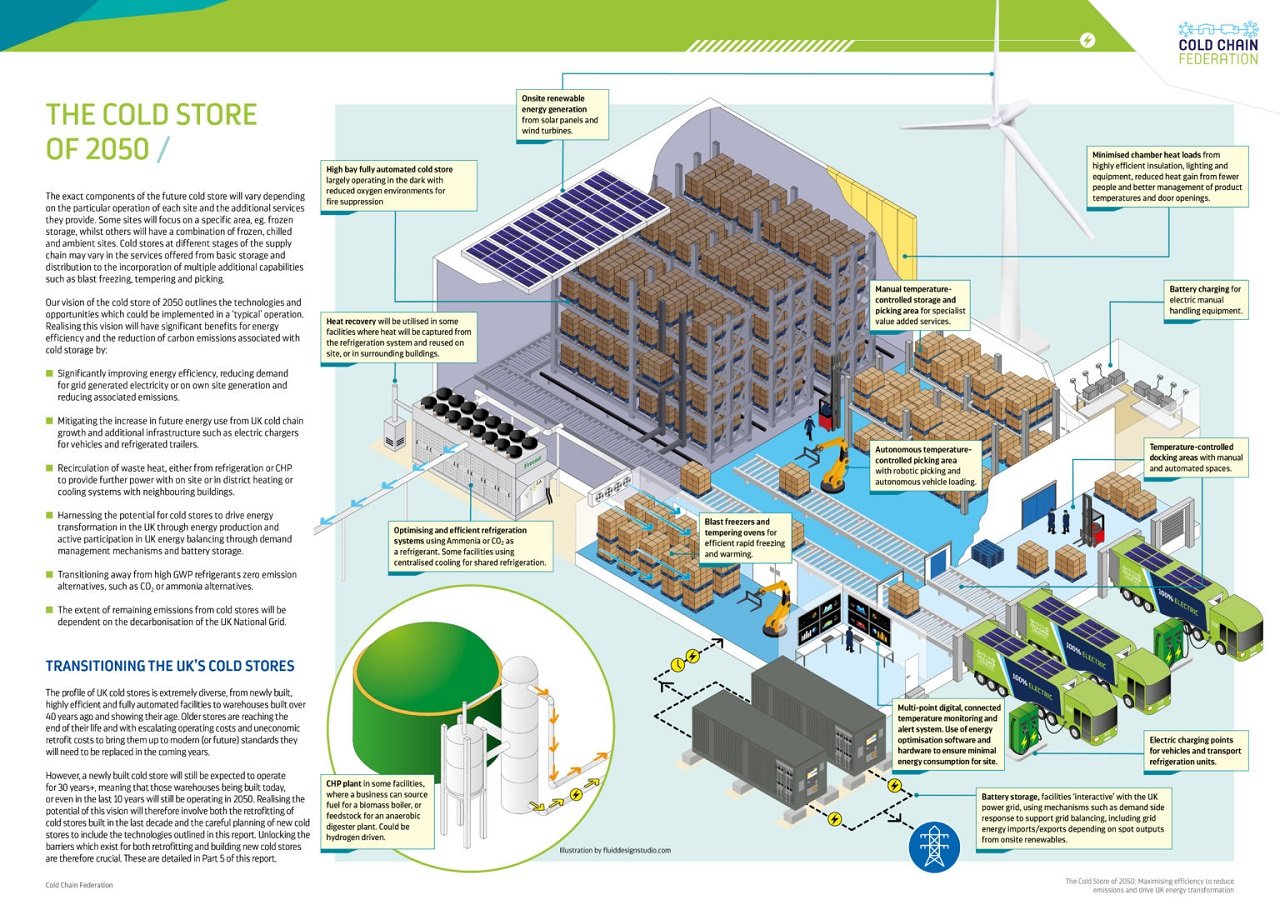
The Cold Chain Federation has released the latest report in the Net Zero Project – The Cold Store of 2050 is vision for how temperature-controlled warehouses could evolve to achieve a step change in energy efficiency whilst driving energy transformation in the UK as part of the transition towards a net zero economy by 2050. The report details the technologies which could become more widespread, the barriers to their adoption and how businesses, government and those responsible for the UK energy network will need to collaborate to ensure the opportunities and benefits detailed in this report are achieved.

Download

CLICK HERE to find out more about COLD CHAIN NET ZERO PROJECT and download parts 1, 2 and 3 of the ROAD TO NET ZERO.

Get the daily refrigeration briefing

One email a day. Trusted by 3,000+ RACHP professionals.

Related news

Most read this week

All news →

Related insights

Article

Secop’s Solar Direct Drive (SDD) System Earns WHO PQS Approval – The Team Behind It

Partner's material In March 2026, Secop’s Solar Direct Drive Power Management Module was granted WHO PQS prequalification and officially listed in the WHO Catalogue of Prequalified Immunization Devices. The WHO IMD-PQS (Immunization Devices Performance, Quality and Safety programme) is the global benchmark for cold chain equipment used in immunisation. Being listed in its catalogue is

22 Jun 2026
Tech Guide

Case Study – Effect of Louvers or diffusers on air flow distribution and cooling time on a meat log during Chill cycle

By Kushal Aurangabadkar An experimental analysis was conducted on a cooler space measuring 3.66 m × 6.096 m (12.0 ft × 20.0 ft), equipped with an ammonia refrigeration coil, five 30 cm (12 in.) fans, and five diffusers. The study measured airflow patterns, cooling rates, and heat transfer efficiency in meat storage by testing two configurations:

Kushal Aurangabadkar · 21 Jan 2026
Tech Guide

Total Cost of Ownership (TCO) for Modular Refrigeration Systems in Life Sciences Distribution Centers

by Ramez Naguib, P.E. Introduction Life sciences distribution centers are under immense pressure to deliver consistent temperature control, comply with increasingly stringent regulations, and optimize operational efficiency. Traditional built-up refrigeration systems often prove cumbersome, costly, and slow to implement. In contrast, modular, factory-assembled refrigeration systems have emerged as a compelling alternative. Drawing on lessons from

14 Jan 2026