Esta página solo está disponible en inglés. Ir a la portada en español

×

Questa pagina è disponibile solo in inglese. Home page in italiano

×

Diese Seite ist nur auf Englisch verfügbar. Zur deutschen Startseite

×

Cette page est disponible uniquement en anglais. Aller à la page d'accueil en français

×

Thermo King and GIZ Develop “Greener Reefer” for Sustainable Maritime Refrigeration

Thermo King and GIZ Develop “Greener Reefer” for Sustainable Maritime Refrigeration

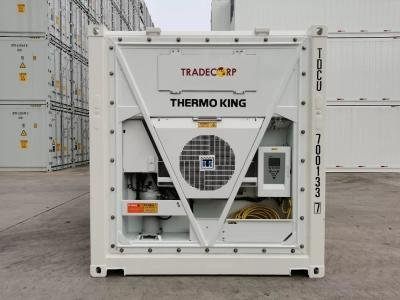
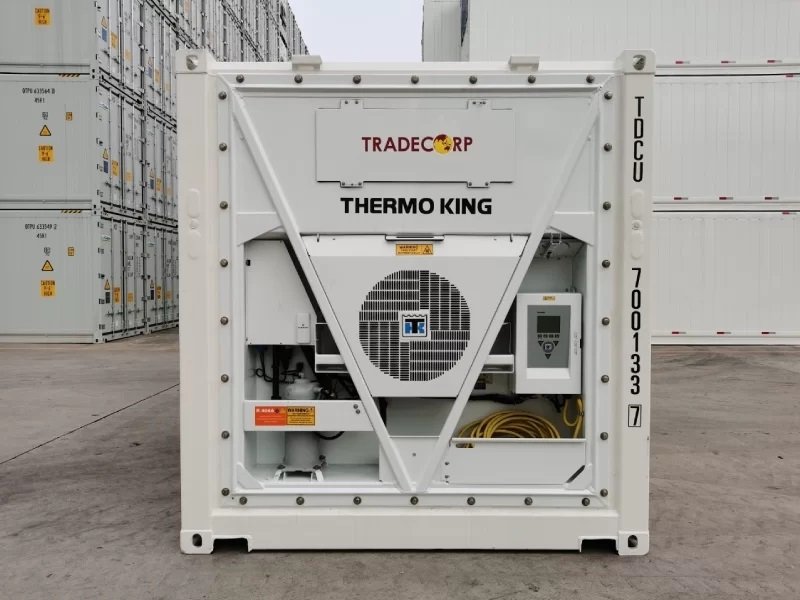
Thermo King, a brand of Trane Technologies, and Deutsche Gesellschaft für Internationale Zusammenarbeit (GIZ) GmbH have partnered to develop a sustainable refrigerated container using R290 (propane) refrigerant. The project, named “Greener Reefer,” aims to improve environmental performance in maritime transport while ensuring safety and efficiency.

Funded by the International Climate Initiative (IKI) through the German Federal Ministry for the Environment, Nature Conservation, Nuclear Safety and Consumer Protection (BMUV), the project will create a proof-of-concept intermodal container with enhanced thermal insulation and optimized reefer machinery. The use of R290, a hydrocarbon refrigerant with a Global Warming Potential (GWP) below 1 and zero ozone depletion potential, is expected to enable efficient operation with reduced energy consumption compared to other non-fluorinated refrigerants.

As part of the initiative, Thermo King and GIZ will seek third-party certification for the container, evaluate its environmental impact across its lifecycle, and establish new industry standards for sustainable refrigerated transport. The project will also engage with the Greener Reefers Transition Alliance to promote wider adoption of green technology in the shipping sector.

To support the long-term success of the “Greener Reefer,” training programs will be developed in collaboration with technical centers in Costa Rica and South Africa. These programs will equip local technicians with the necessary skills to maintain and service the new technology. Training manuals and safety guidelines will be tailored to meet regional requirements.

Additionally, the project will work with the Universidad Politecnica de Valencia to demonstrate the viability of R290 in maritime refrigeration. By advancing climate-friendly solutions, Thermo King and GIZ aim to drive industry-wide change, reducing greenhouse gas emissions and promoting sustainable shipping practices.

Get the daily refrigeration briefing

One email a day. Trusted by 3,000+ RACHP professionals.

More on Cold Chain

All on Cold Chain →

Insights

Secop's Solar Direct Drive (SDD) System Earns WHO PQS Approval – The Team Behind It
Article

Secop’s Solar Direct Drive (SDD) System Earns WHO PQS Approval – The Team Behind It

Partner's material In March 2026, Secop’s Solar Direct Drive Power Management Module was granted WHO PQS prequalification and officially listed in the WHO Catalogue of Prequalified Immunization Devices. The WHO IMD-PQS (Immunization Devices Performance, Quality and Safety programme) is the global benchmark for cold chain equipment used in immunisation. Being listed in its catalogue is

22 Jun 2026
Case Study - Effect of Louvers or diffusers on air flow distribution and cooling time on a meat log during Chill cycle
Tech Guide

Case Study – Effect of Louvers or diffusers on air flow distribution and cooling time on a meat log during Chill cycle

By Kushal Aurangabadkar An experimental analysis was conducted on a cooler space measuring 3.66 m × 6.096 m (12.0 ft × 20.0 ft), equipped with an ammonia refrigeration coil, five 30 cm (12 in.) fans, and five diffusers. The study measured airflow patterns, cooling rates, and heat transfer efficiency in meat storage by testing two configurations:

Kushal Aurangabadkar · 21 Jan 2026
Total Cost of Ownership (TCO) for Modular Refrigeration Systems in Life Sciences Distribution Centers
Tech Guide

Total Cost of Ownership (TCO) for Modular Refrigeration Systems in Life Sciences Distribution Centers

by Ramez Naguib, P.E. Introduction Life sciences distribution centers are under immense pressure to deliver consistent temperature control, comply with increasingly stringent regulations, and optimize operational efficiency. Traditional built-up refrigeration systems often prove cumbersome, costly, and slow to implement. In contrast, modular, factory-assembled refrigeration systems have emerged as a compelling alternative. Drawing on lessons from

Ramez Naguib · 14 Jan 2026
Everything on Cold Chain: 2,056 articles, 2 case studies, 23 insights

Most read this month

All news →