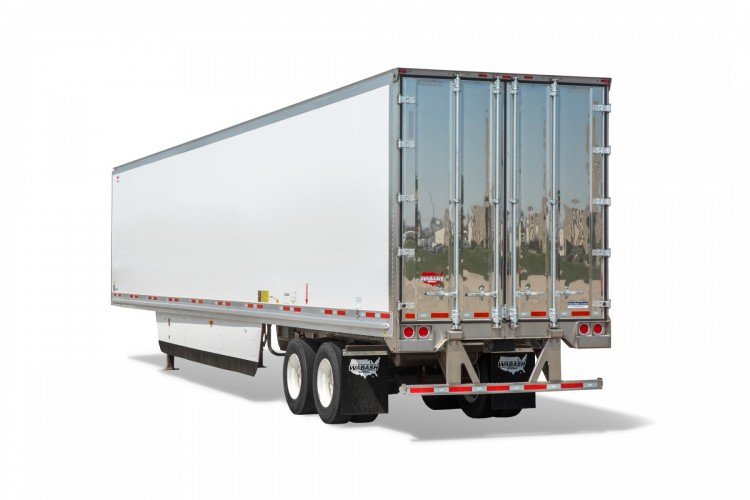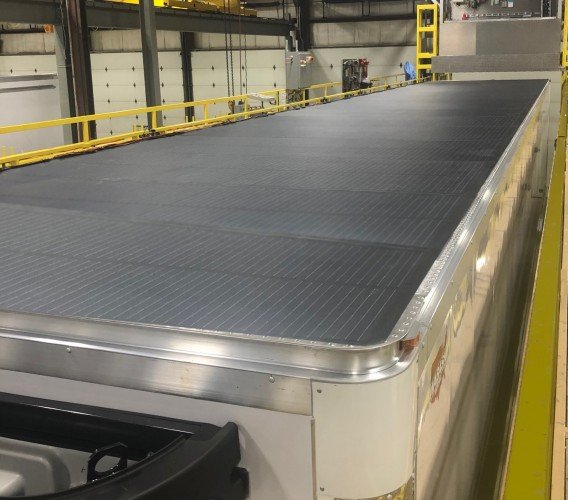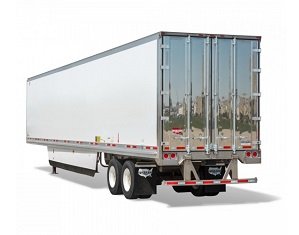
Wabash National, harnessing eNow solar power and Carrier Transicold all-electric refrigeration technologies, now offers customers the most thermally efficient, eco-friendly refrigerated haul available on the market.
First shown as a zero-emission trailer at the American Trucking Associations’ (ATA) Technology and Maintenance Council (TMC) meeting in February 2020, the Wabash MSC refrigerated trailer with solar-electric TRU is now commercially available as a road-ready solution.
Although solar-electric solutions aren’t new to the trucking industry, they haven’t been widely adopted because no manufacturer has been able to demonstrate real viability of a roadworthy solution.
“We haven’t seen high demand for zero-emission trailers for refrigerated hauls due to the location and size of batteries,” explained Robert Lane, Wabash National’s vice president, product innovations. “This is the first time a major trailer innovation has been coupled with a major TRU innovation that results in breakthrough customer value in a sustainable format. Our Molded Structural Composite (MSC) technology provides a unique platform for electric powered TRUs. The large gain in thermal efficiencies allow a customer to either downsize the batteries required to haul cargo or increase the run time on a battery setup.”
The cost to operate and maintain a diesel reefer system can total hundreds of millions of dollars for U.S. fleets. With Wabash National, eNow and Carrier Transicold, customers get a zero-emission refrigerated transportation solution that is more energy efficient and has a lower operating cost.
- The Wabash National MSC Refrigerated Trailer is the most thermally efficient, lightest and most durable reefer on the road. The company’s proprietary MSC technology sets new standards in efficiency with significant thermal performance, maximized payload capacity, corrosion resistance and the industry’s highest standard floor rating.
- The eNow Rayfrigeration System is a solar-electric power system that enables a full 12-hour route duration without employing a diesel engine to power the TRU. It can cut operating costs by over 50% compared to diesel reefers.
- Carrier Transicold’s engineless Vector 8100 unit, is a highly efficient and uniquely all-electric trailer refrigeration system that brings benefits of reduced maintenance and noise, while eliminating emissions and fuel consumption associated with traditional diesel TRUs.
“We are excited about our partnership with Wabash,” said eNow President Jeff Flath. “Our combined technologies should have a major impact in reducing operating cost.”