By: Ilana Koegelenberg
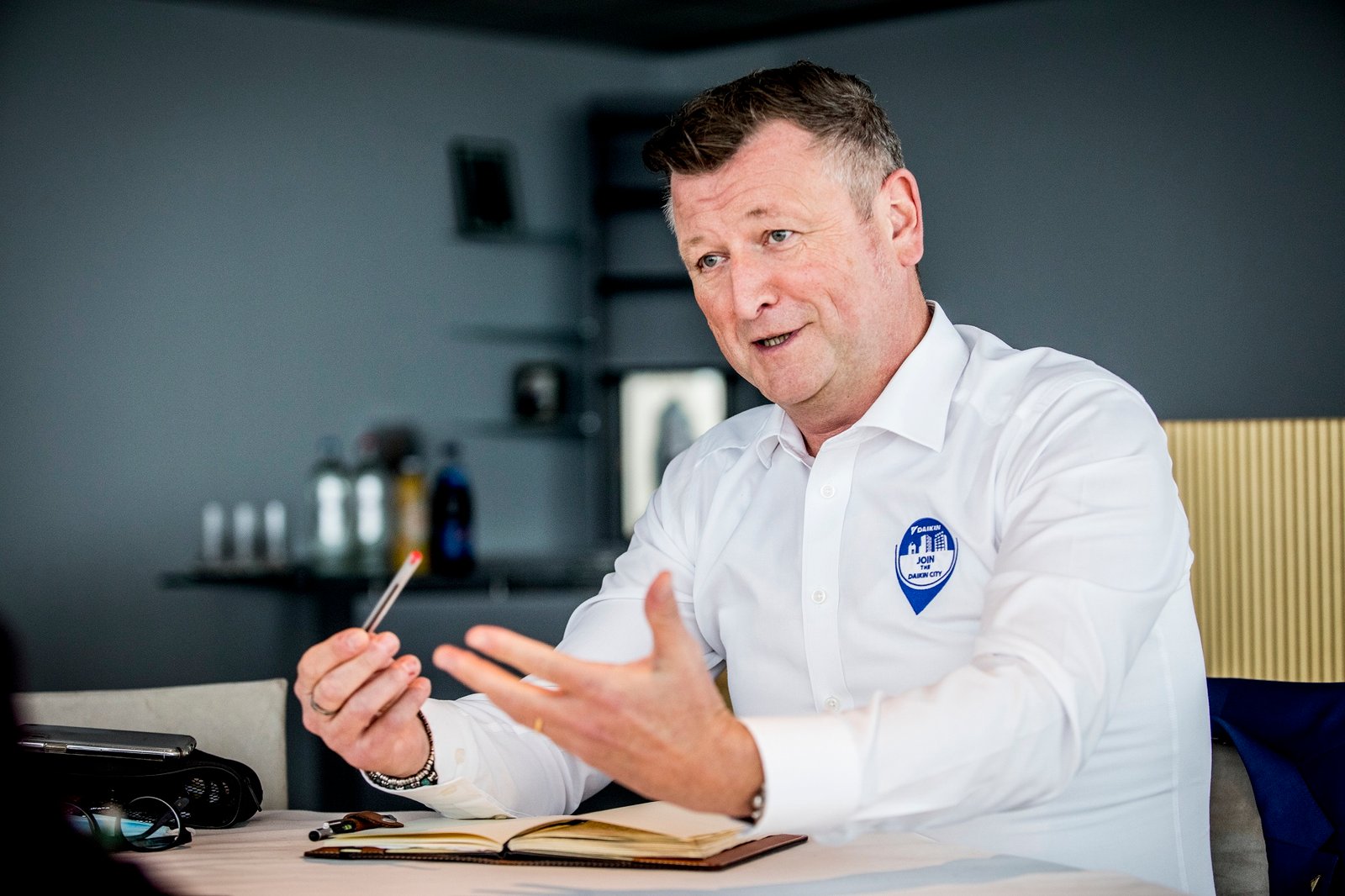
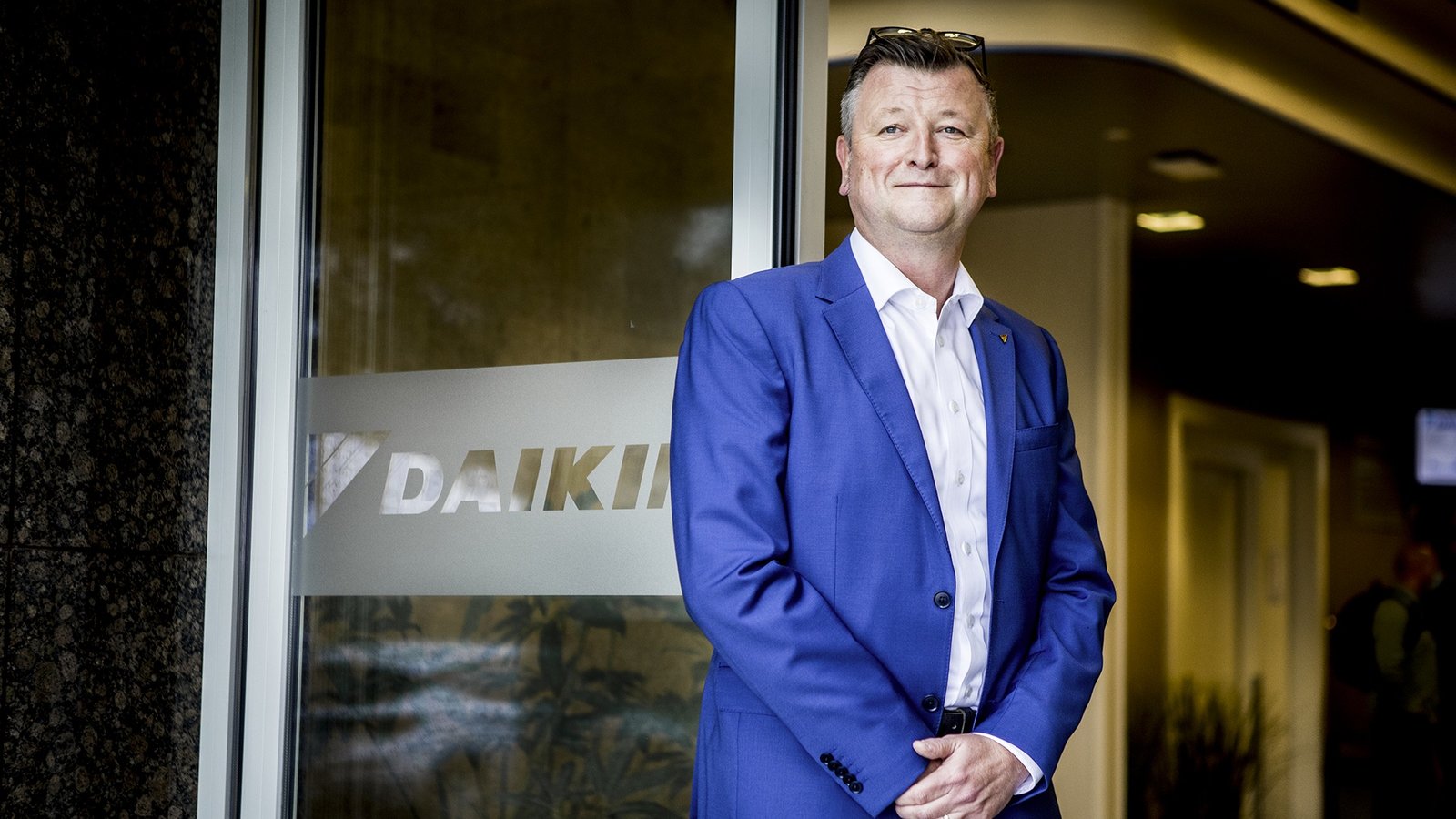
Patrick Crombez, Deputy General Manager of Daikin's Environment Research Centre and president of the European Heat Pump Association (EHPA), discusses Daikin's strategy and the evolving refrigeration and heat pump markets.
Refrigeration Industry (Ri): Could you highlight the key regions and sectors where Daikin has recently expanded, and explain the strategic thinking behind these moves?
Patrick Crombez (PC): Our strategy is to build a truly global business with balanced representation across different regions. This approach gives us a stable business outlook because market cycles in Europe, Southeast Asia, and the US often differ from each other. We're also active across the entire HVAC&R range, from heating to refrigeration and transport. This diversity helps us avoid vulnerability to fluctuations in any particular sector or region.
(Ri): What role does R&D play in Daikin's business strategy?
(PC): From the beginning, Daikin has been at the forefront of developments. We started with heat pumps in Japan back in the 1950s, and innovation has always been a constant in our company milestones. This commitment continues today – we recently launched the CO₂ Variable Refrigerant Volume (VRV), which we first attempted 20 years ago when the market wasn't ready. Now the technology is more mature and commercially viable, and the market is prepared to accept the necessary compromises with such systems.
We recently moved into a new R&D Center in Ghent, Belgium, constructed from the ground up, which triples our test capacity. This new campus is a collaborative effort with the University of Ghent, allowing us to work closely with PhD students and academics in electromechanical engineering and IT – core disciplines for our industry.
(Ri): Are there any particularly innovative R&D projects currently underway that you're excited about?
(PC): Most of our product development in Europe revolves around the refrigerant transition. We maintain that different applications require different types of refrigerants, so we'll continue developing various solutions. In most sectors, we'll offer non-fluorinated options alongside chemical variants because applications require different solutions in Europe, especially to roll out heat pumps fast enough to meet carbon targets.
The move towards non-fluorinated gases mostly leads to using A3 refrigerants, which require extensive development efforts to ensure a safe product throughout the full lifetime of the product.
(Ri): How is Daikin addressing global environmental challenges through its corporate commitments?
(PC): Globally, we have different targets for different regions. In Europe, we've completely transitioned to inverter units and now focus on switching from combustion to heat pumps as our primary target, alongside moving to low-GWP refrigerants.
However, installation restrictions still exist in many countries that would prevent people from switching to heat pumps (using highly flammable A3 refrigerants such as R290). In those cases, we would prefer to sell an R32 heat pump rather than have a fossil fuel boiler installed.
We always consider efficiency in these transitions because the lifetime efficiency of a unit has a much greater impact than the refrigerant's emission potential. Another important aspect is training – teaching people to make careful equipment selections and avoid oversizing units, which is critical for heat pumps. Controls development is our other major focus, making systems more user-friendly, intuitive, and interoperable with different networks, grid operators, and renewable energy systems.
(Ri): What do you see as the primary challenges for Daikin in the eco-friendly market?
(PC): The challenge of being active globally across all segments is that our portfolio is huge, requiring enormous maintenance work. Unlike niche operators who can focus on adapting specific products, we need to tackle everything across our vast array of equipment.
(Ri): What is Daikin's long-term vision regarding natural refrigerant (non-fluorinated) technologies?
(PC): Refrigeration is leading the way in terms of transitioning to these refrigerants, primarily in supermarkets and food retail. Many other applications are moving toward lower GWP refrigerants, but not necessarily non-fluorinated options, due to cost or other factors.
We want to offer solutions for all customer types, which requires flexibility. Some applications, like supermarkets, are rapidly adopting CO₂ or propane because there's almost no reason not to. However, this isn't necessarily the case in other sectors like transport refrigeration or split AC units, for example.
In Europe, our refrigeration portfolio is roughly half non-fluorinated and half fluorinated refrigerants, with a clear trend toward more CO₂ and propane systems. For the AC and Heating market, the majority of the range is working with R32.
The tendency towards non-fluorinated gases is primarily European; in other regions, the non-fluorinated technology isn't always as well-known or readily available. Even in the Middle East, R32 is still considered new, and they're hesitating about whether to adopt it or continue with R410A.
(Ri): What significant industry trends do you anticipate over the next five to ten years?
(PC): We're seeing a shift from focusing solely on product efficiency toward comprehensive building performance simulation, which is taking greater importance in equipment selection and building design. There is a more holistic approach these days for both commercial and residential applications.
Additionally, the simulation of performance within specific buildings is becoming much more important than simply checking the energy label of individual products. This integrated systems approach is where the industry is heading.
(Ri): In your capacity as EHPA president, what key heat pump trends are you observing across Europe?
(PC): The heat pump sector growth we saw in 2021-2022 isn't continuing. We saw a reduction in 2023 and a major collapse in 2024, with no indication that 2025 will be significantly better for residential heat pumps.
One positive development is a shift toward air-to-air systems next to air-to-water, which are less expensive and potentially more efficient. Nevertheless, the market is nowhere near moving fast enough to meet the EU Commission's targets of 30-40 million hydronic heat pumps by 2030 (which was the initial target numbers indicated by the previous commission in the Green Deal packages). Some countries even saw heat pump installations dropping while boiler installations increased last year.
The downturn began with controversy over Germany's building law, which spilled over to other countries. The political climate became averse to heat pumps, with politicians reluctant to discuss them because they were perceived as forcing people to spend more money.
A major problem remains the price difference between gas and electricity. Gas is still about four times cheaper on average in most European countries, whereas to make heat pumps economically viable, the ratio should be around 2 to 2.5. Research shows that consumers primarily consider whether they'll pay more each month rather than the return on investment.
The UK is a positive exception, with consistent market growth. Programs established by the previous Conservative government have been maintained by the Labor government, creating stability that allows the market to develop naturally, with installer companies investing in training and new companies entering the market.
(Ri) What's your assessment of natural refrigerant/non-fluorinated refrigerant adoption in European heat pumps, and why does the market vary between countries?
(PC): Germany is the only market with significant uptake of propane units, where about half of the market consists of propane monoblocks. Germany is 90% monoblocks, and of those, it is estimated that more than half use propane.
The German market differs because it's dominated by monoblocks from German manufacturers. Other countries have different competitors and more split systems. Currently, there are no air-to-water split units with propane on the market, and I don't expect any soon.
Interestingly, even in Germany, companies specializing in heat pump installations are trending toward splits because they're easier and faster to install with fewer potential errors. So while some predicted everything would move to propane monoblocks, that simply isn't happening.
(Ri): What would accelerate heat pump adoption in the retrofit market?
(PC): For new construction, heat pumps are widely accepted as the way forward in Europe, with 65-70% of new builds using them in most countries. However, the retrofit market isn't progressing as planned.
On top, Europe intended to accelerate building renovation from about 1.5% to 3-3.5%, but it's actually slowing down.
We need to distinguish between market segments that can afford the transition and those requiring support. Some countries like France and Belgium have policies requiring property energy upgrades upon sale, which either reduces property prices to account for necessary work or incentivizes owners to invest before selling.
In the Netherlands, large pension funds that own significant rental housing stock are converting to heat pumps because the economics work – the value of their properties increases and tenants pay less on their energy bills due to a favorable electricity-to-gas price ratio of about 2.5.
For market segments that cannot afford these upgrades, the revised EU Emissions Trading System (ETS 2) should generate a social fund to support them. The solution requires following these different steps with targeted incentives for different market segments rather than general incentives across the board.
(Ri): Thank you so much for the interview and sharing these valuable insights.