The European Association of Refrigeration, Air Conditioning and Heat Pump (RACHP) Contractors (AREA)
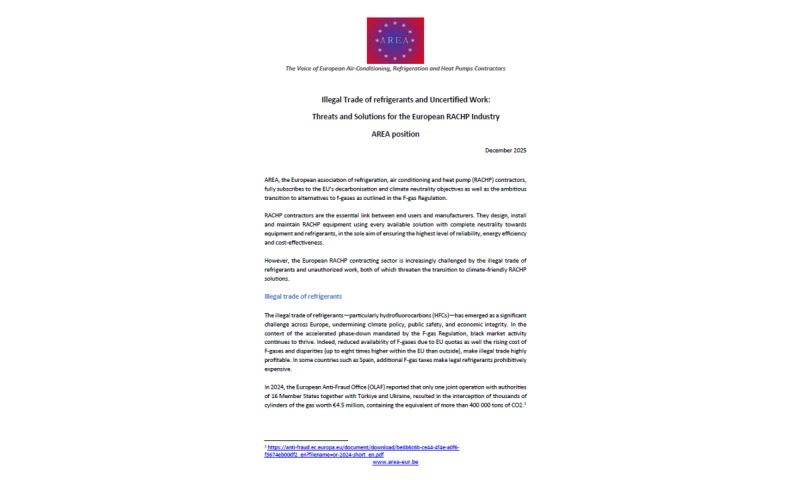
has issued a position paper warning of growing threats from the illegal trade of refrigerants and uncertified work across the EU. These practices, AREA states, undermine the F-gas Regulation, endanger public safety, and disrupt fair competition in the sector.
AREA highlights that illegal trade, particularly of HFCs, is thriving due to rising prices, limited availability from EU quotas, and cost disparities compared to non-EU markets. In some member states, like Spain, national F-gas taxes further drive demand for black-market alternatives. According to the European Anti-Fraud Office (OLAF), a joint operation in 2024 intercepted thousands of gas cylinders worth €4.5 million, equivalent to more than 400,000 tons of CO2.
The position paper outlines multiple risks: counterfeit refrigerants may be contaminated, mislabelled, or unsafe, leading to equipment failure, fire, explosion, or toxic exposure. Economically, the black market creates unfair competition and revenue loss for compliant companies. AREA calls for stricter enforcement, including national databases tracking refrigerant trade, reinforced border inspections, public awareness campaigns, and the recognition of industry associations as partners in enforcement.
The paper also addresses uncertified work, noting that many technicians using illegal refrigerants operate without valid personal or company certification. Inadequate inspections across member states allow these practices to persist, undermining energy efficiency and safety. AREA reports that uncertified contractors may undercut prices by 20–50%, harming the competitiveness of qualified professionals and slowing adoption of climate-resilient technologies.
To counteract this, AREA recommends establishing mandatory national registries of certified contractors, stronger penalties, increased inspection resources, public campaigns, and fiscal incentives promoting legal contracting.
AREA urges immediate action from EU institutions and national governments to protect the integrity of the RACHP sector and ensure a successful energy transition.