Subscribe to the daily news Sign in
En
ASHRAE Updates Refrigerant Designations and Safety ClassificationsASHRAE Updates Refrigerant Designations and Safety ClassificationsASHRAE Updates Refrigerant Designations and Safety Classifications
09 May 2025

ASHRAE Updates Refrigerant Designations and Safety Classifications

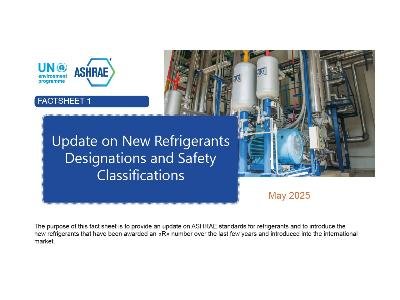
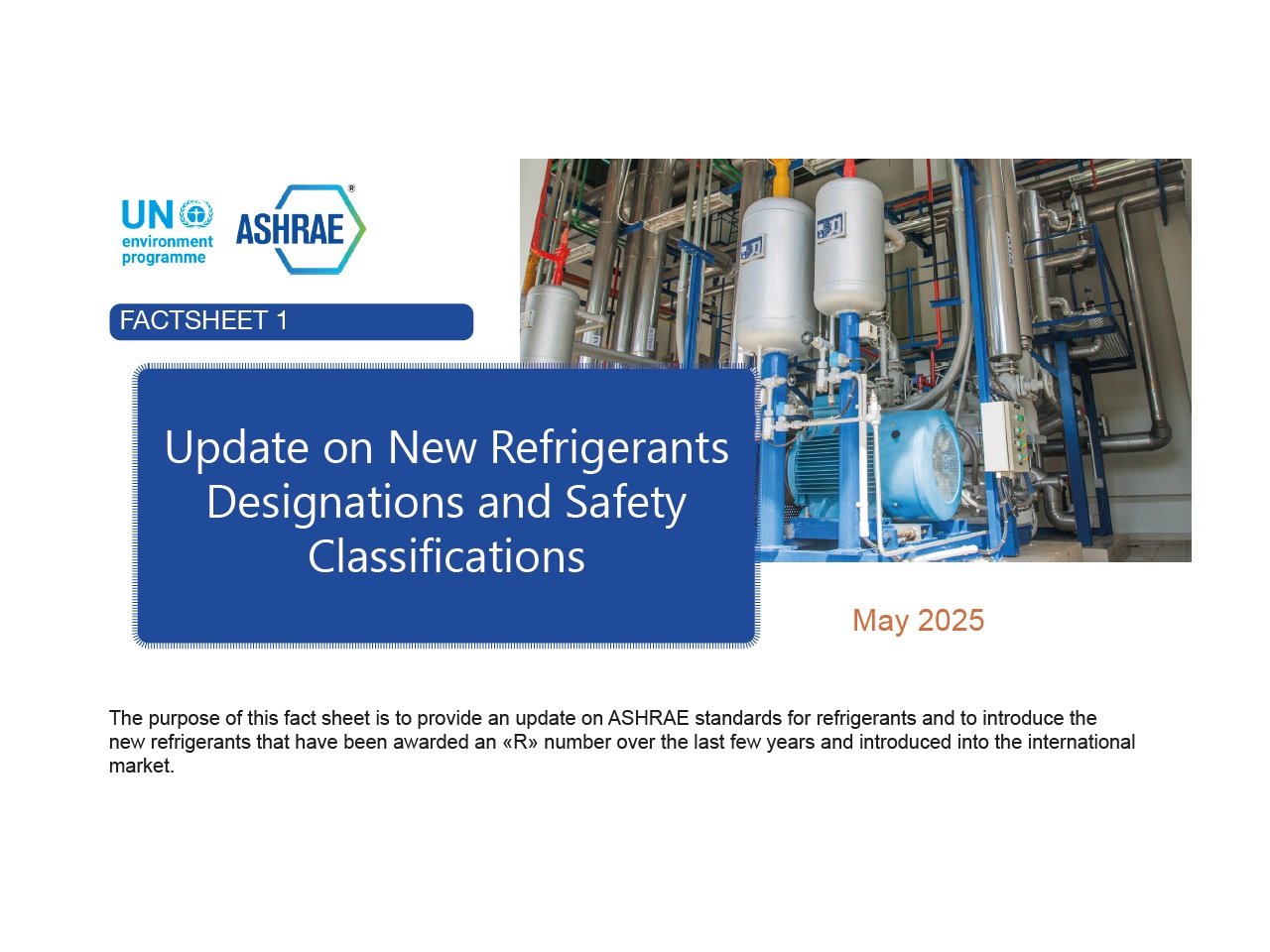
The May 2025 UNEP/ASHRAE factsheet outlines new refrigerant numbers and safety classifications under ANSI/ASHRAE Standards 34 and 15, including flammability, toxicity, and GWP data.

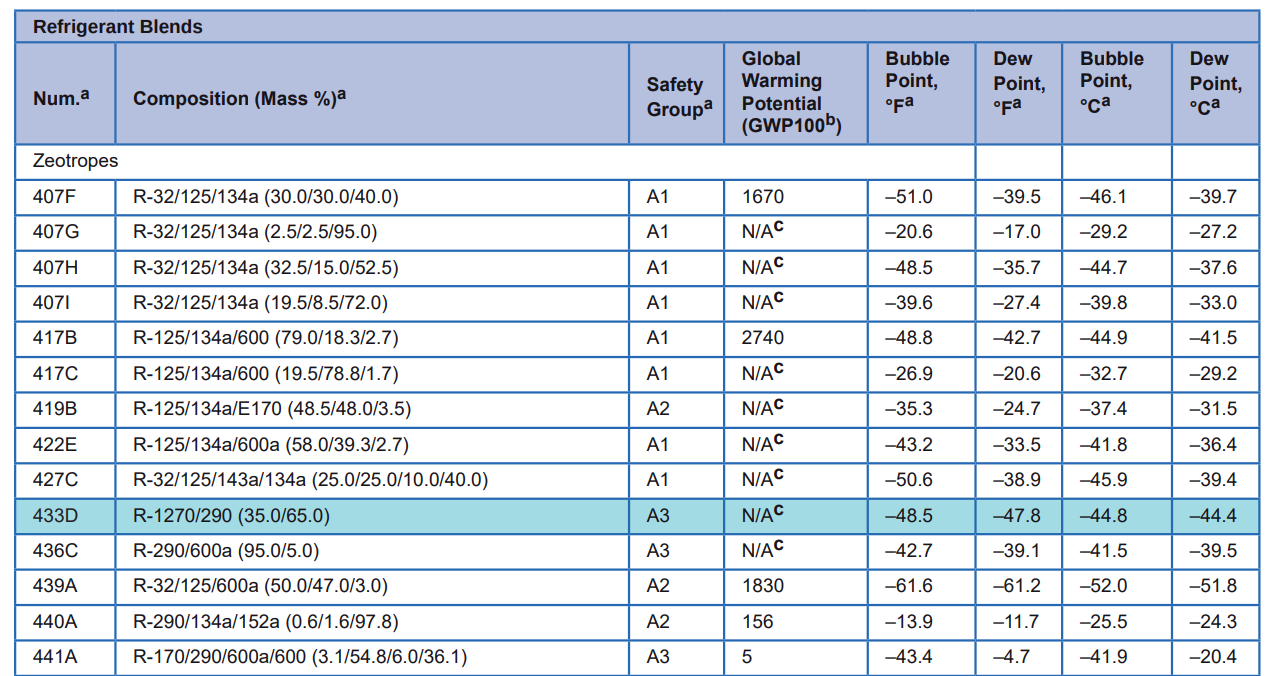
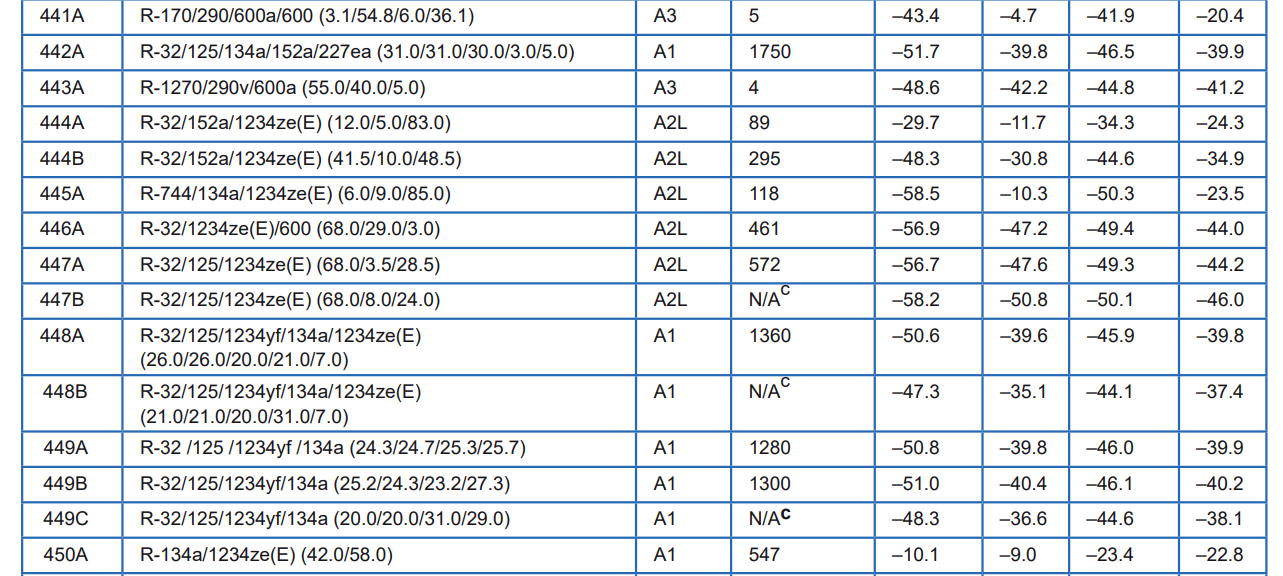
ASHRAE has released an updated refrigerant factsheet in collaboration with UNEP, detailing newly designated refrigerants and their safety classifications under Standard 34. The document includes refrigerants assigned an R-number from 2010 onward and presents critical data such as global warming potential (GWP), boiling points, and chemical compositions. These updates aim to provide HVACR professionals with standardized references for emerging refrigerants.

ASHRAE Standard 34 designates refrigerants with an R- followed by a number and categorizes them by toxicity and flammability. For example, "A1" indicates low toxicity and no flame propagation, while "A2L" represents lower toxicity with mild flammability. Zeotropic blends are numbered in the R-4xxx range and azeotropes in the R-5xxx series.

New refrigerants include compounds such as R-1233zd(E) (A1, GWP 1, boiling point 64.6°F / 18.1°C) and R-1336mzz(Z) (A1, GWP 2, boiling point 91.4°F / 33.4°C), along with low-GWP blends like R-444A (A2L, GWP 89) and R-451A (A2L, GWP 133). The list also highlights flammable natural refrigerant mixtures such as R-441A (A3, GWP 5) and R-477A (A3), supporting the industry's transition to environmentally safer options.

Standard 15 complements Standard 34 by setting safety guidelines for system design to protect people and property. It addresses risks such as pressure rupture, refrigerant leakage, and toxic exposure, especially in poorly ventilated areas.

"These refrigerant classifications are essential for engineers and system designers to make informed, compliant choices," said Mark S. Owen, Director of Publications and Education at ASHRAE.

The factsheet also reflects ongoing technical cooperation between ASHRAE and UNEP under their Memorandum of Understanding, ensuring the HVACR industry is aligned with current environmental and safety standards.
Share
Get the daily refrigeration briefing
Trusted by 3,000+ refrigeration professionals worldwide
By subscribing, you create a free Refindustry account and agree to our Terms of Service and Privacy Policy.
No spam. Only industry-relevant news.
Unsubscribe anytime.

Related news

IMPACT-F launches work on global F-gas modelling platform
The EU-funded IMPACT-F project has launched to develop an integrated web platform for assessing how cooling policies affect F-gas emissions, energy demand and decarbonisation. Coordinated by London...
09 Jul 2026
EU Safety Rules Trump F-Gas Certification for Natural Refrigerant Work
The European Commission has confirmed that occupational safety and health directives fully apply to technicians working with natural refrigerants and are not replaced by F-gas certification und...
14 Apr 2026
EU sets life-cycle GWP rules for new buildings
The European Commission has amended Annex III to Directive (EU) 2024/1275 to establish a Union framework for national calculation of life-cycle global warming potential (GWP) for new buildings. The...
08 May 2026
ASHRAE and UNEP Update Refrigerant Designations for 2026
ASHRAE and the United Nations Environment Programme have released an April 2026 fact sheet updating refrigerant designations and safety classifications under
12 May 2026
Brazil Approves HFC Consumption Reduction Program
Brazil’s Ministry of the Environment and Climate Change has announced approval of Stage I of the national Hydrofluorocarbon Consumption Reduction Program. The strategy supports implementation of th...
yesterday
A-Gas and Solstice partner on reclaimed low-GWP refrigerant blends
A-Gas and Solstice Advanced Materials have signed a strategic agreement to expand access to lower-global-warming-potential refrigerants and increase refrigerant reclamation and circularity. The agr...
08 Jul 2026