Market news, 25 July 2024



Accurate and timely data are the bedrock of the Montreal Protocol on Substances that Deplete the Ozone Layer. The data collected and reported by individual Parties to this multilateral environmental agreement are used for many purposes ranging from assessing a country's compliance to determining its eligibility for financial support. After the Protocol's Kigali Amendment entered into force on 1 January 2019, developing countries that have ratified the Amendment are facing novel challenges regarding data reporting for hydrofluorocarbons (HFCs), which are widely used as refrigerants in refrigerators and air conditioners and for manufacturing plastic foam. Those countries must report annual statistical data by substance to the UN Environment Programme (UNEP) Ozone Secretariat and are obliged to establish a licensing system to control imports and exports of HFCs by 1 January 2021. Both of those obligations rely on specific tariff codes used by Customs authorities, but at present, this is not so straightforward for HFCs and requires innovative approaches.
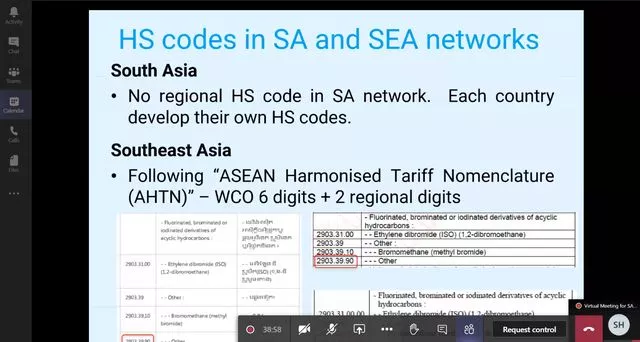
The World Customs Organization has developed the new Harmonized System (HS) customs codes that cover HFCs and blends, but those codes only enter into force in 2022. The HS codes currently being used do not account for differences in certain HFCs and HFC blends. Instead, they are categorized under broad subheadings, making it extremely challenging for countries to track commonly-traded HFCs by individual substance. How to accurately track HFCs during this interim period becomes a challenge both for the countries that already ratified the Amendment as well as others that intend to ratify it at a later date, since they too will need to start collecting annual trade statistics beginning this year in order to eventually set their legal baselines.
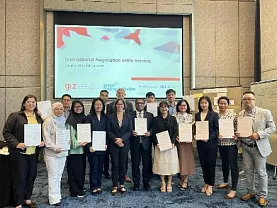
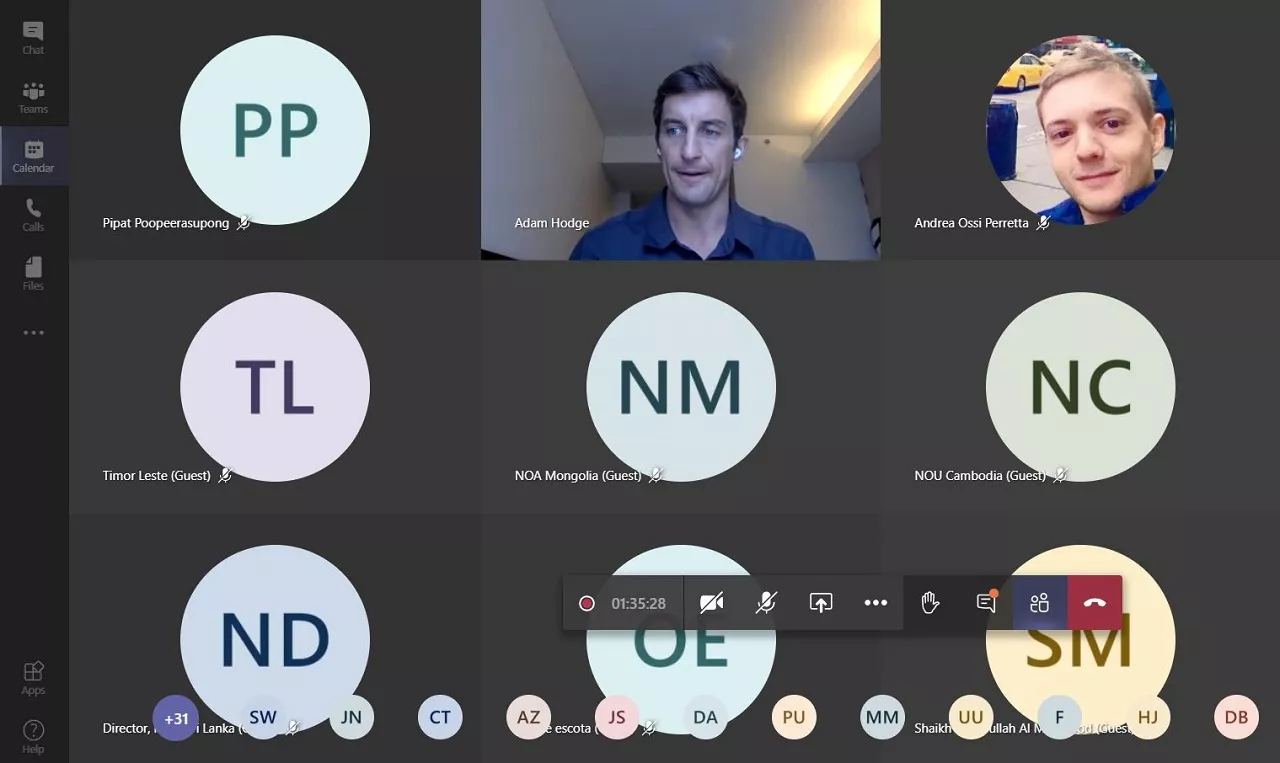
To help countries meet these data challenges, UNEP OzonAction Compliance Assistance Programme (CAP) in Bangkok convened 72 representatives of countries across Asia and the Pacific in a virtual meeting on 30 July to share experiences in updating their national licensing systems for HFCs. National Ozone Units and Customs authorities from countries in South and South-East Asia shared ideas and experiences to help determine a way forward to solve this problem before the adoption of the new HS version in 2022. Each country will have its own approach, but there have been lessons learned elsewhere that countries could consider when developing their own HS subcodes. The OzonAction team shared the Pacific Harmonized Commodity Description and Coding System for HFCs and blends as an example of a regional approach, while Malaysia shared its self-defined codes for HFCs and blends before 2022.
HFCs and blends are already imported and used widely in countries across the region. A number of them have already developed national codes, such as 8153_1Afghanistan, Bhutan, Malaysia, Maldives, Mongolia, Philippines, Sri Lanka and Thailand. During the virtual meeting, many of these countries were able to share their challenges and solutions, in addition to Malaysia on how they approached the process.
35 Years of Ozone Layer Protection
Representatives took the opportunity of the virtual gathering, which is a service provided by UNEP as an Implementing Agency of the Protocol's Multilateral Fund, to discuss an approach to this year’s World Ozone Day, which is celebrated every year on 16 September. This year marks the 35th anniversary of the Vienna Convention for the Protection of the Ozone Layer.
Participants brainstormed and shared ideas on outreach activities at both the national and regional levels. A representative from UNEP’s Asia and the Pacific Office presented ideas on the types of advocacy and outreach that has worked in the past around the region, and also highlighted the precautions and adaptation that would be needed to mark the Day amidst COVID-19 restrictions. Countries were also able to present their ideas, with Ditsy Aksella Widianingrum from Indonesia’s National Ozone Unit proposing suggestions for potential region-wide activities to mark the day.