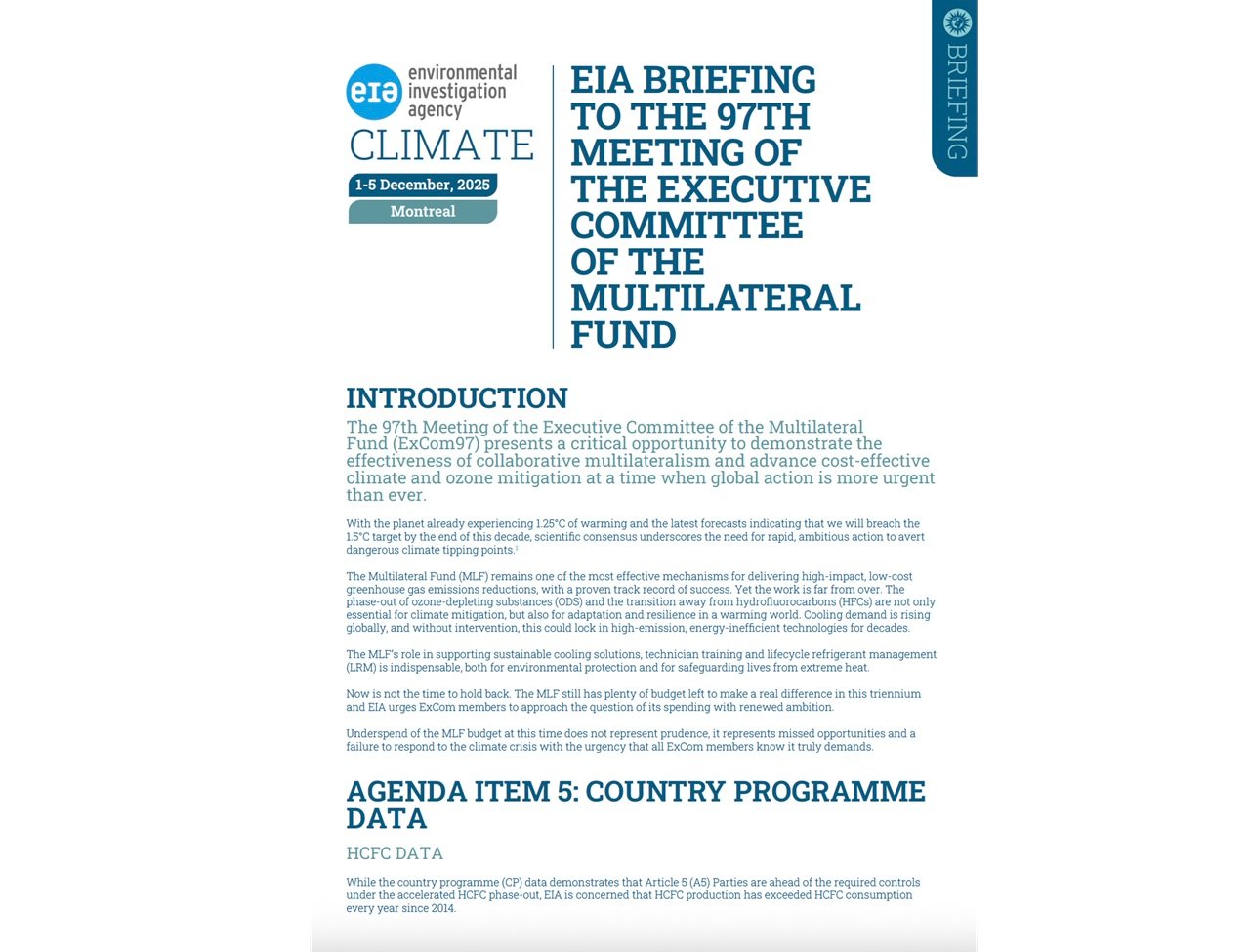
At the 97th Meeting of the Executive Committee of the Multilateral Fund (ExCom97), the
Environmental Investigation Agency (EIA) called for increased ambition in HFC phase-down targets and faster action on sustainable refrigerant transitions. The meeting, held under the Montreal Protocol framework, reviewed current progress and new proposals for climate and ozone protection projects in Article 5 countries.
The EIA highlighted the effectiveness of the Multilateral Fund (MLF) in achieving low-cost greenhouse gas reductions, particularly through the phase-out of ozone-depleting substances (ODS) and transition away from high-GWP hydrofluorocarbons (HFCs). However, it warned that rising global cooling demand could entrench the use of high-emission, inefficient technologies without further intervention.
Data presented at ExCom97 revealed ongoing overproduction of HCFCs, despite Article 5 countries being ahead of scheduled reductions. The refrigeration servicing sector remains the largest consumer of HCFCs, underlining the importance of enhanced lifecycle refrigerant management (LRM), including leakage reduction, recovery, and recycling.
Regarding HFCs, 14 countries reported 2023–2024 consumption levels exceeding their established baselines, with 11 of them surpassing by more than 25% and two by over 100%. EIA expressed concern over the continued widespread use of high-GWP refrigerants such as R-410A, despite the availability of alternatives. It also questioned reported HFC-23 byproduct emissions data, noting discrepancies in reports from major producers.
EIA raised issues with the lack of ambition in new Kigali Implementation Plans (KIPs), pointing out that most proposed 2029 targets would allow HFC consumption to increase beyond baseline levels. Only Angola, Serbia, and Guinea-Bissau proposed reductions of 1%, 5%, and 10% respectively. The organisation urged more realistic business-as-usual scenarios based on actual consumption data, and called for stronger regulatory actions, such as bans on high-GWP equipment and improved licensing systems.
In its review of Stage II HCFC Phase-out Management Plans (HPMPs), EIA welcomed proposed regulatory improvements, training initiatives, and demonstration projects promoting natural refrigerants such as R-290, ammonia, and CO2. The briefing also endorsed the establishment of regional Centres of Excellence to support Kigali implementation and sustainable cooling solutions.
“The MLF still has plenty of budget left to make a real difference in this triennium,” EIA stated. “Underspend…does not represent prudence, it represents missed opportunities and a failure to respond to the climate crisis with the urgency that all ExCom members know it truly demands”.