High GWP Refrigerants Face Soaring Prices as Natural Alternatives Offer Stability
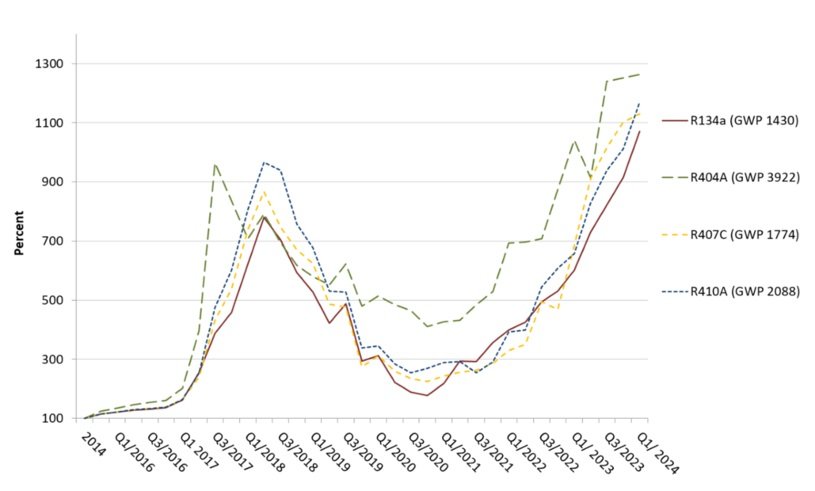
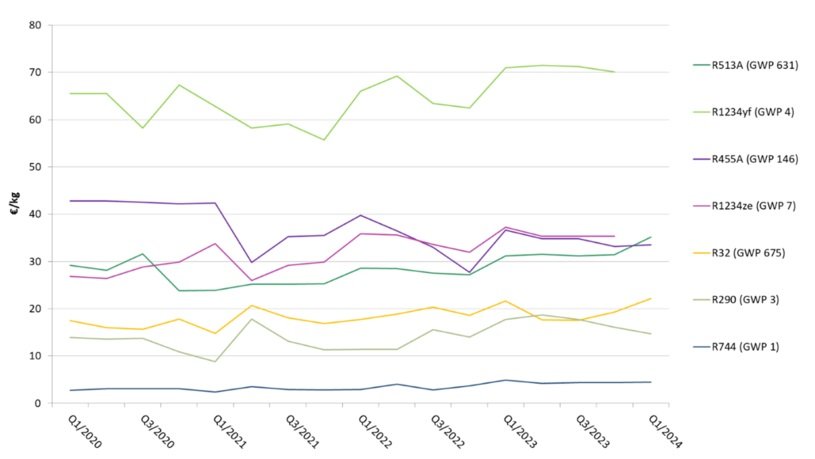
Since the implementation of the EU F-gas regulation on March 11, 2024, targeting the phase-out of hydrofluorocarbons (HFCs) in various sectors, prices of conventional refrigerants have skyrocketed by up to 1000%, according to recent reports (Figure 1). Starting from an initial price range of 3 – 5 EUR/kg in 2014, current prices for high Global Warming Potential (GWP) refrigerants range from 30 – 45 EUR/kg. In contrast, alternative refrigerants such as propane (R290) and carbon dioxide (R744) have maintained stable prices, remaining at much lower levels (~5 – 15 EUR/kg) since 2020, as noted by the German environmental consulting firm Öko-Recherche.
This significant price disparity is evident across various European suppliers. The steady increase in high-GWP refrigerant prices reflects the ongoing regulatory pressures and the phasedown schedules set by the Montreal Protocol and its Kigali Amendment.
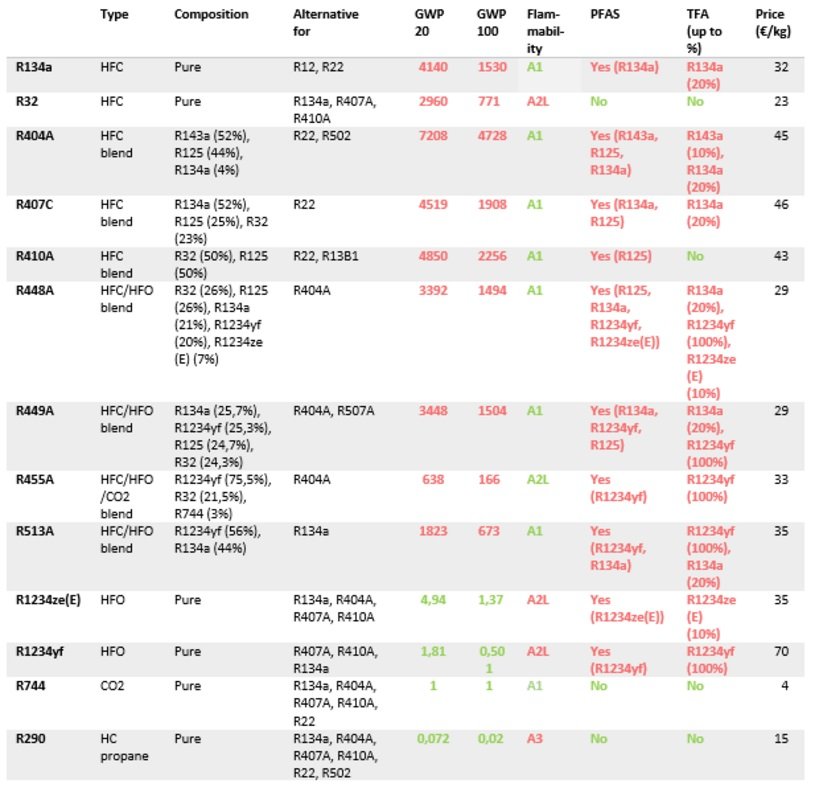
Another factor contributing to the price hikes is the impending regulation of "forever chemicals," including per- and polyfluoroalkyl substances (PFAS), currently under discussion at the EU level. Most refrigerants, except for natural alternatives like R290, R744, and R32, are known to decompose into PFAS (Table 1). Even refrigerants such as R1234yf, often considered an alternative, could see price increases due to its PFAS link.
Although these trends are currently centered in Europe, the research suggests they will influence global markets, driven by international commitments to reduce high-GWP substances. Despite the initially higher purchase price for greener refrigerants, they offer long-term cost benefits. For example, R290 is up to 10% more energy-efficient than R404A in most applications, leading to lower electricity bills and reduced environmental impact. Additionally, natural refrigerants minimize leakage rates, reducing the need for frequent refills and maintenance.
Proklima, an organization committed to supporting countries in their transition to green cooling solutions for over 25 years, continues to promote sustainable refrigerant options. Through its Greener Reefers project, Proklima encourages the use of natural refrigerants in maritime transport containers (reefers). Greener Reefers, which use refrigerants with a GWP below 11 and free of F-Gases and PFAS, represent a highly energy-efficient and environmentally friendly alternative in the refrigerated transport sector.
Source