The International Energy Agency (IEA) highlights the urgent need for energy-efficient and equitable cooling solutions, as global temperatures and incomes rise. In 2024, average global temperatures exceeded 1.5 °C above pre-industrial levels, intensifying heatwaves and driving demand for air conditioning—particularly in emerging and developing economies, which are projected to account for over 80% of cooling-related electricity demand by 2050.
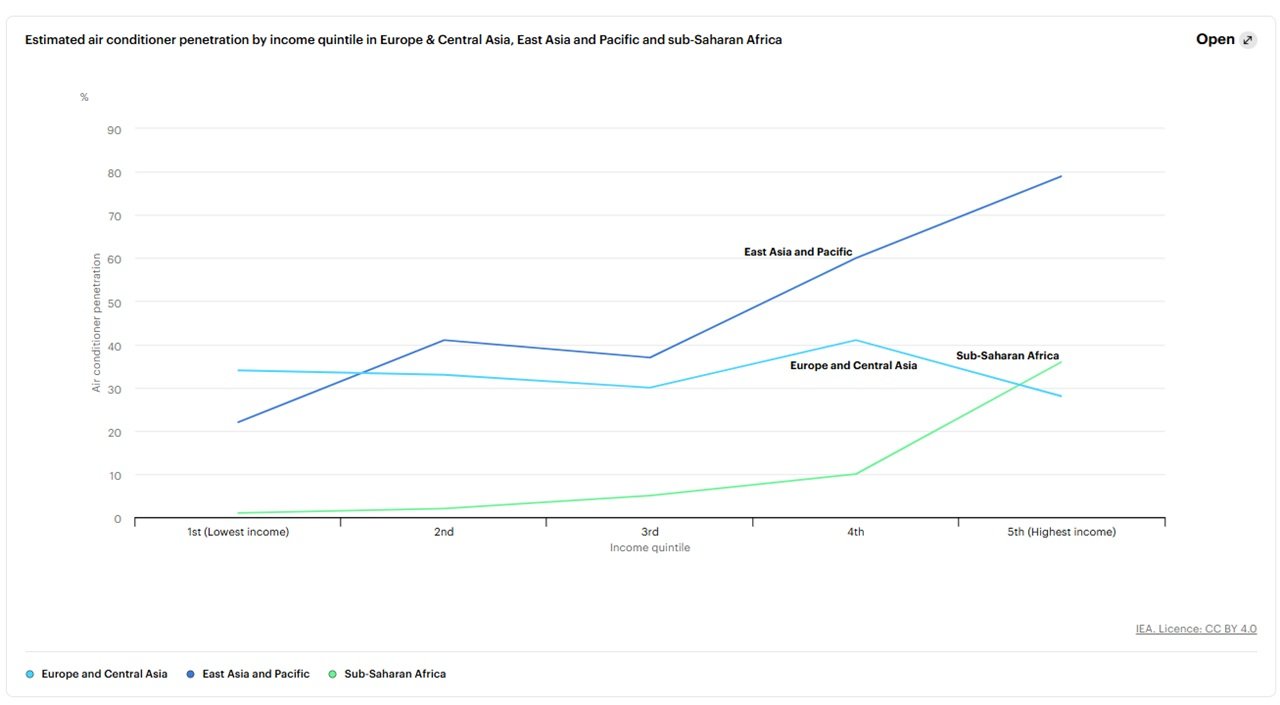
Despite growing need, cooling access remains uneven. About 3.5 billion people live in hot regions, but only 15% own air conditioners. In Southeast Asia, the air conditioner stock is expected to grow ninefold between 2020 and 2040. Indonesia could see AC ownership rise from 14% in 2023 to 85% by 2050. However, ownership varies significantly across income groups. In East Asia and the Pacific, just 25% of low-income households have an AC, compared to over 75% among the wealthiest. Sub-Saharan Africa shows even lower penetration outside the top income tier.
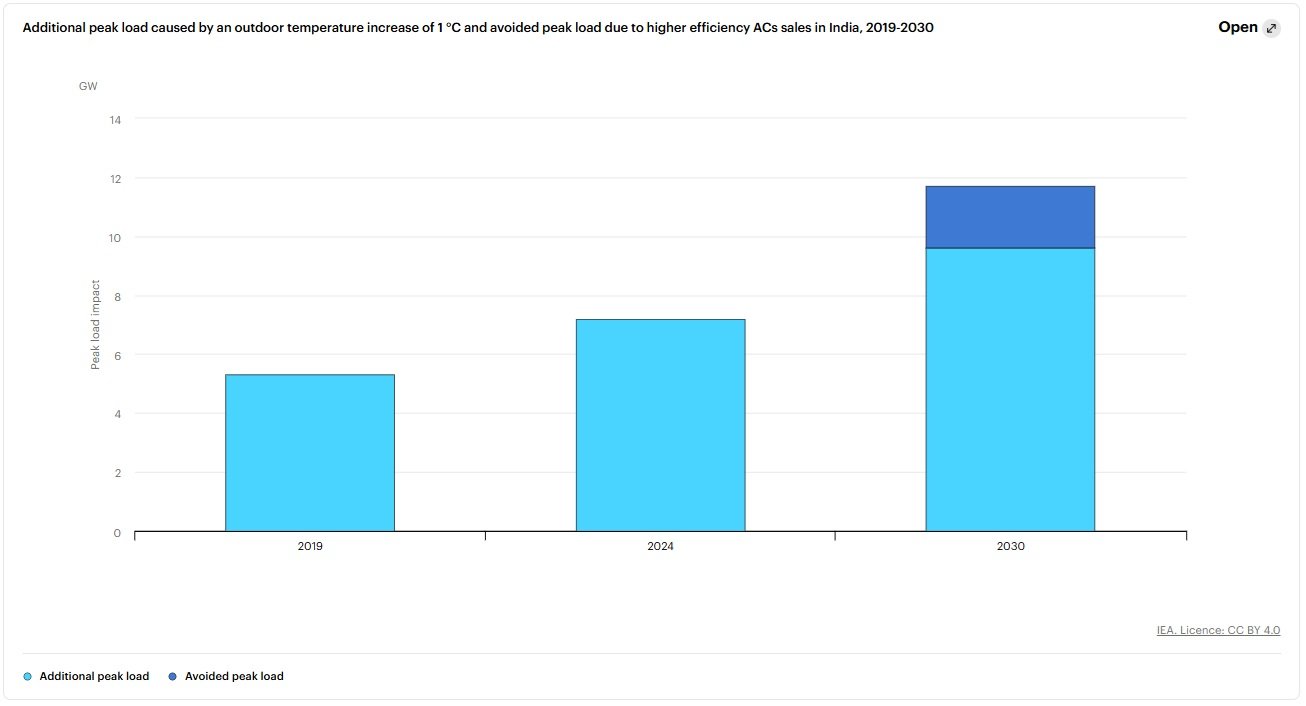
Air conditioning is now the fastest-growing energy demand from the buildings sector, with an annual increase of nearly 4% through 2035 under current policies. This trend adds pressure to electricity systems. In India, each 1 °C increase in 2024 outdoor temperatures triggered a 7 GW rise in peak demand—up from earlier years and projected to reach 12 GW per degree by 2030 without efficiency measures. Efficient ACs could reduce this peak load growth by 20%.
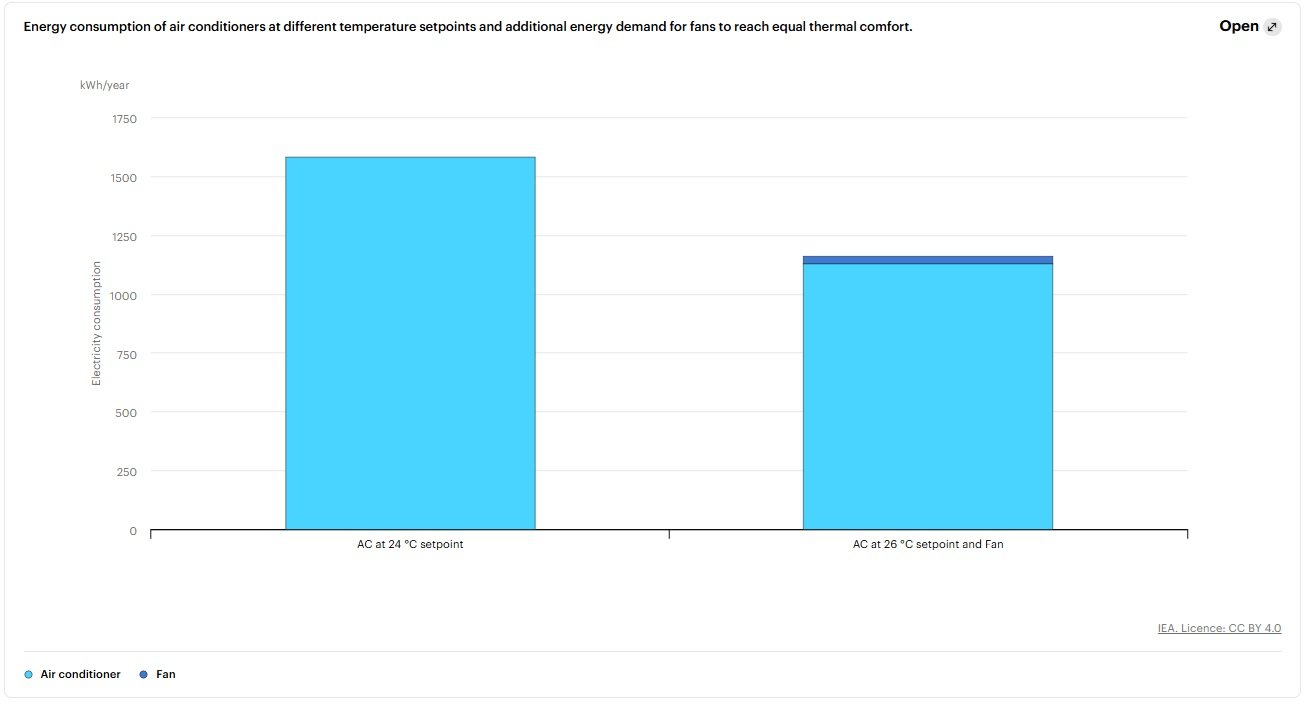
The IEA notes that most new ACs sold globally are only half as efficient as the best models available. Yet higher efficiency is achievable without higher costs. In Southeast Asia and Latin America, consumers can purchase units with efficiency levels from 3 to over 6 W/W at similar prices. Adjusting temperature setpoints and using fans can further lower energy use without sacrificing comfort.
Beyond equipment, building design plays a key role. Proper insulation and passive cooling methods like natural ventilation can cut cooling demand by up to 80%. In urban areas, green spaces can reduce night temperatures by several degrees, mitigating heat island effects.
The IEA emphasizes that supportive policies are essential. These include stricter building energy codes, minimum performance standards for ACs, energy labelling, and targeted subsidies. More than 80 countries have mandatory building codes, and over 100 enforce AC efficiency standards, though policy strength varies widely.
By advancing efficient, inclusive cooling strategies, countries can protect public health, reduce electricity strain, and limit emissions amid growing climate challenges.