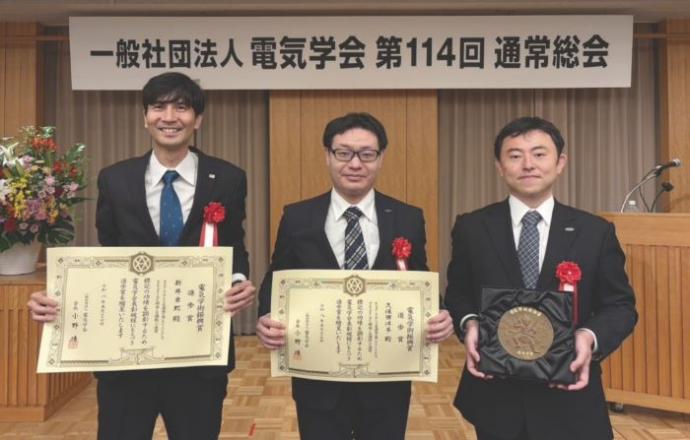
Nippon Carrier Corporation has applied a heatsink-free active filter based on a modular multilevel converter (MMC) to its Super Multi u® series of multi-split air-conditioning systems for buildings. The technology received the 82nd Electrical Engineering Promotion Award (Progress Award) from the Institute of Electrical Engineers of Japan.
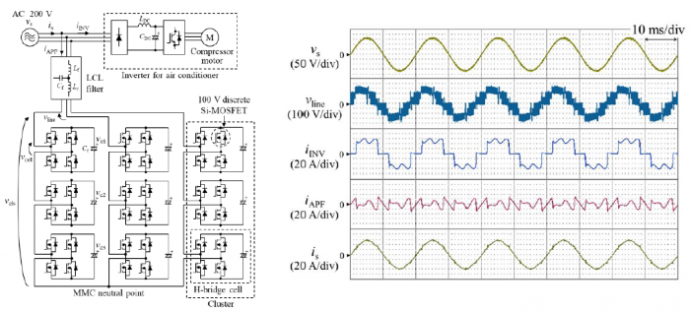
The active filter uses low-voltage Si-MOSFETs and adapts an MMC circuit previously used in high-voltage converters for low-voltage applications. By controlling the filter’s line-to-line voltage across seven levels and adjusting its current, the system compensates the air conditioner’s overall input current into a sinusoidal waveform. Total harmonic distortion through the 40th harmonic is 2.9%.
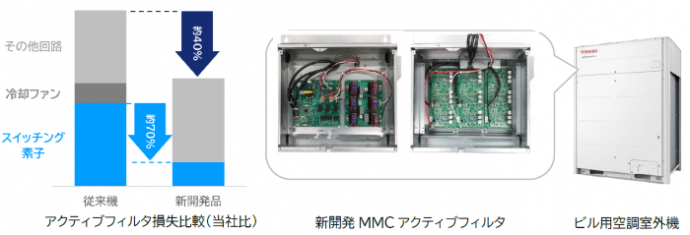
The design combines lower switching losses from multilevel operation with lower conduction losses from low-on-resistance Si-MOSFETs. Loss per switching device is below 1 W (approximately 3.4 BTU/h), while switching-device losses are about 70% lower and total system losses about 40% lower than in the previous model.
Nippon Carrier distributes the switching devices across the circuit board to disperse heat and uses airflow from the outdoor-unit fan. This eliminates the heatsink and dedicated cooling fan, reducing weight by approximately 2 kg (4.4 lb) and improving on-site installation workability.
“This award-winning technology has been applied to the Super Multi u® series of multi-split air conditioners for buildings since 2023 and will make a major contribution to customers’ energy-saving and decarbonization initiatives,” said Mineo Maruyama, president and representative director of Nippon Carrier. “Encouraged by this award, we will continue contributing to a sustainable society by developing technologies that combine comfort with environmental performance.”