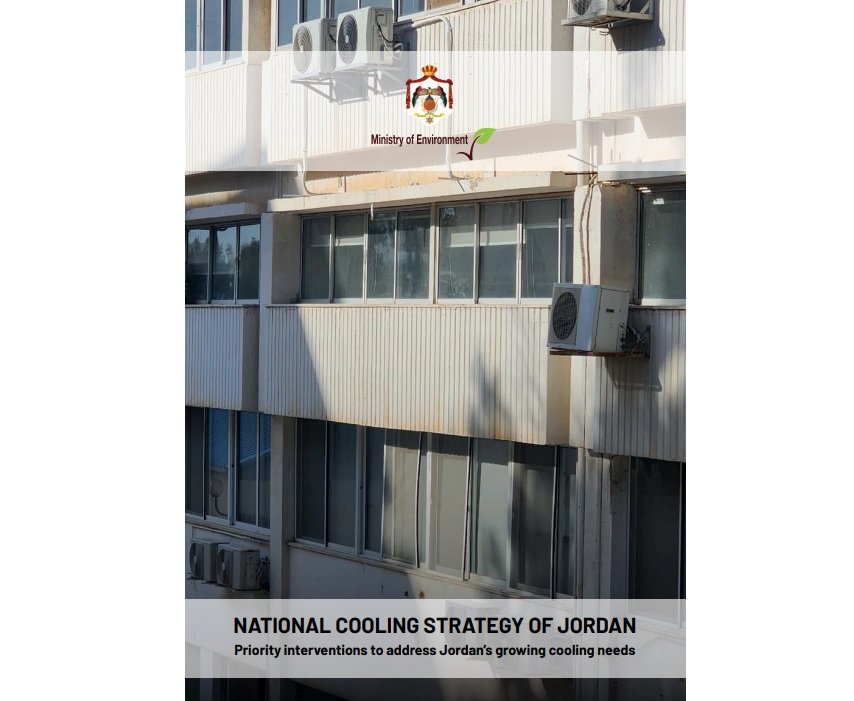
In May 2024, Jordan’s Ministry of the Environment published its National Cooling Strategy (NCS), which details the country’s cooling sector and sets a framework for the National Cooling Action Plan (NCAP) now in development.
In Jordan, increasing average temperatures and heat waves are main drivers of demand for refrigeration.
In residential buildings, around 60 to 80% of new apartments and single-family buildings are equipped with an AC system. In non-residential buildings, the share is around 70-75% for new offices and supermarkets, and around 90-95% for new healthcare and hotel buildings. Demand for air conditioning is expected to increase 3.6-fold by 2025.
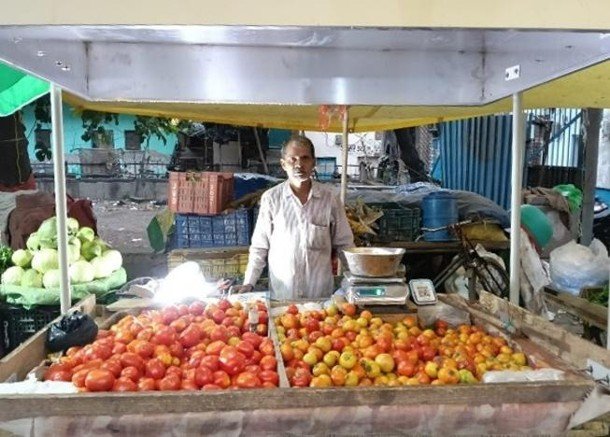
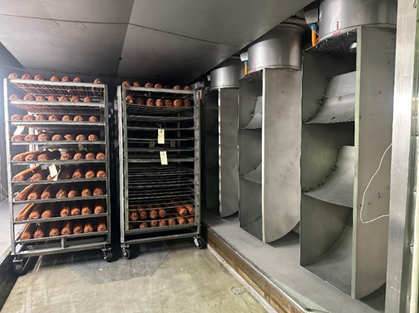
Rising population and incomes are driving demand for food, which requires a growing cold chain (cold rooms, commercial refrigeration, and transport refrigeration). Currently, 93 kilograms of food are wasted per person per year in Jordan, and 22% of domestically grown fruits and vegetables are lost along the supply chain. Expanding the cold chain will support the country’s efforts to combat food waste and improve food safety.
Together, domestic refrigeration and transport account for 45% of total direct emissions, stationary air conditioning for 43% and mobile air conditioning for only 11%. Direct emissions (from refrigerants leakage and release) for 2022 account for 43% of total emissions (the sum of direct and indirect emissions).
Jordan’s National Cooling Strategy (NCS) serves as a blueprint for the transition towards sustainable cooling practices, promoting energy efficiency and the use of non-halogenated, environmentally friendly refrigerants. It provides an overview of strategic areas for policy interventions to reduce emissions from the RAC sector.
The objectives of the NCS are as follows:
- Set the strategic framework for the development of a National Cooling Action Plan (NCAP) by identifying strategic areas of policy intervention.
- Raise awareness of sustainable cooling among policymakers, industry, and end-users.
- Link the NCS and sustainable cooling to existing policies and identify contributions to existing targets.
- Advance Jordanian development objectives, such as reducing food losses, improving quality of life, creating skilled jobs, and providing opportunities for women and youth in the labour force.
- Put Jordan on track to phase down HFC use to 80% of the baseline by 2045, in line with the targets set under the Kigali Amendment.
- Ensure that the cooling sector contributes to a net-zero emissions future.
The document is available on the website of the Jordan’s Ministry of the Environment.
Source