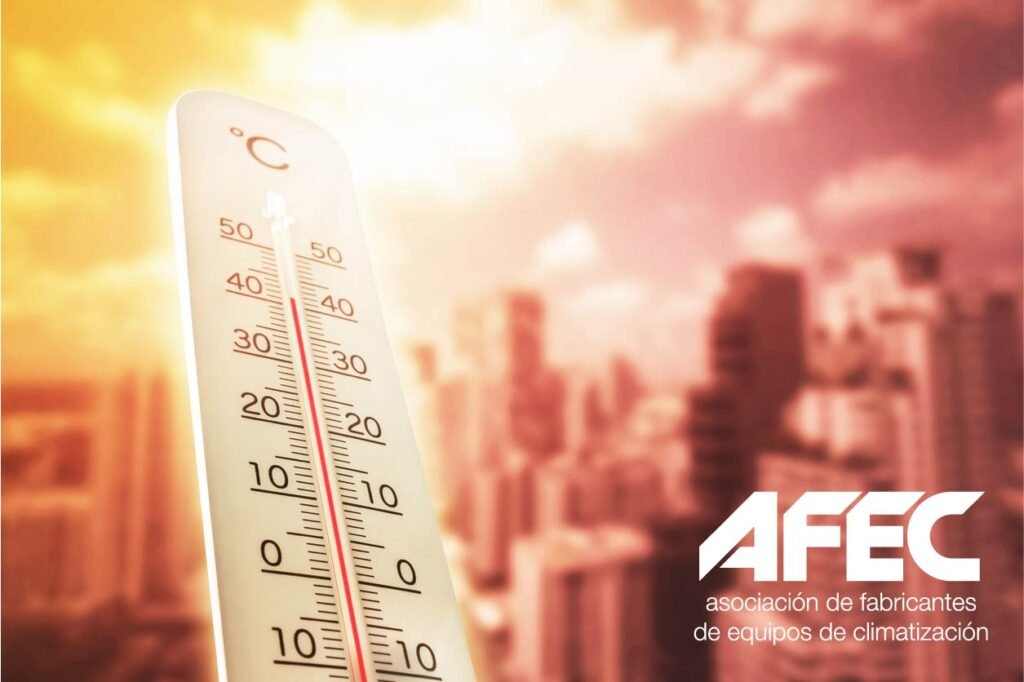
AFEC, the Spanish Association of Air Conditioning Equipment Manufacturers, says persistent heat, the number of homes without cooling systems and growing pressure to keep buildings usable during extreme temperatures are driving cooling demand in Spain. Spring 2026 was the country’s second warmest since records began in 1961, while July reached an average temperature of 25.7°C (78.3°F) in mainland Spain, 2.6°C (4.7°F) above normal.
According to Spain’s National Statistics Institute, 49.6% of primary residences had some form of cooling system in 2021. Demand extends beyond homes: by the end of May, Andalusia had reported more than 19,000 measures in public education facilities under its Thermal Comfort Plan, including more than 13,000 ventilation and air conditioning installations.
AFEC says passive measures including shade, solar protection, appropriate glazing, higher-performing building envelopes and night ventilation can reduce overheating and cooling loads. The European Environment Agency recommends combining urban and passive cooling measures with high-efficiency active cooling systems to meet remaining demand.
The article also distinguishes between cooling solutions. Fans move air but do not lower air temperature, while direct evaporative coolers depend heavily on outdoor conditions, increase indoor humidity and consume water. Reversible air conditioning systems, or air-to-air heat pumps, provide active cooling with thermostatic temperature control.
AFEC says air conditioning does not cause urban heat islands, which are mainly linked to factors including high building density, heat-absorbing surfaces, insufficient vegetation and shade, limited evapotranspiration, poor air circulation, traffic and other anthropogenic heat sources. As an example, a cooling system with a COP of 4 uses 1 kWh of electricity to remove 4 kWh of heat from indoors and rejects around 5 kWh outdoors.
According to AFEC, additional heat associated with system operation can be minimized through high-efficiency equipment, correct sizing and installation, maintenance, zoning, regulation and control, while appropriate placement of outdoor units can help limit local heat accumulation. AFEC states that during extreme heat events, efficient air conditioning is essential to protect people and keep buildings safe, healthy and usable.