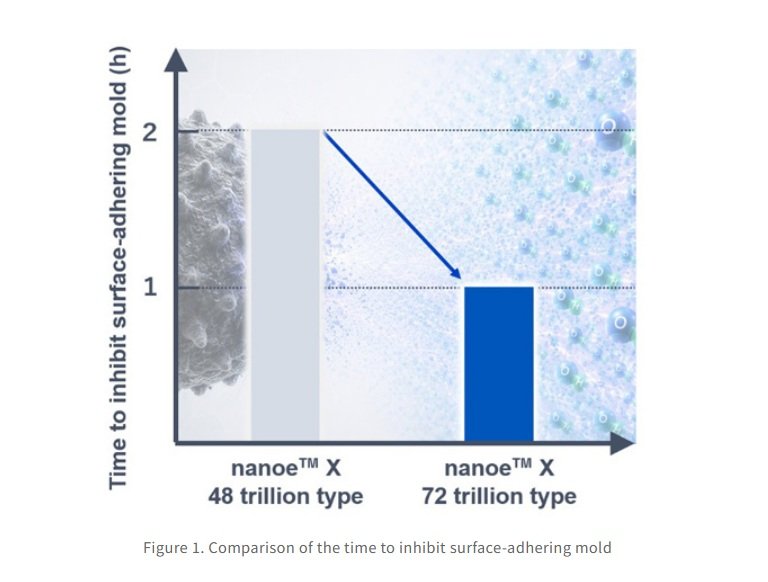
Panasonic Corporation has developed a new nanoe X generating device that reduces mold inhibition time by half compared with its previous-generation nanoe X technology. The device generates 72 trillion OH radicals per second and increases components that contribute to mold inhibition.
According to Panasonic, OH radical generation is 150 times the 480 billion per second generated by the previous-generation nanoe X. The company also confirmed a greater quantity of NO radicals, identified as a component contributing to mold inhibition. Tests of surface-adhering mold were conducted in a space equivalent to approximately 24 m3 (848 ft3).
Panasonic said analysis of the inhibition mechanism showed that the new nanoe X increases the rate of damage to mold cell membranes and denatures internal proteins involved in mold metabolism and reproduction. The company suggested that damage to cell membranes allows mold-inhibiting components to penetrate cells and denature these proteins. Verification of this mechanism was conducted in a test chamber of approximately 45 liters (11.9 US gal).
The generating device retains the round-leader discharge system used in the previous-generation nanoe X while increasing the number of discharges. Panasonic said it also increased the amount of condensed moisture collected at the electrode tip and extended the duration of high-voltage application, promoting chemical reactions that increase components contributing to mold inhibition.
Masafumi Mukamoto, Professor Emeritus at Osaka Metropolitan University, said: “The newly developed nanoe™ X has demonstrated mold inhibition performance that surpasses previous technologies through increases in both OH radicals and mold-inhibiting components.” His comments were provided at Panasonic’s request and edited for publication.