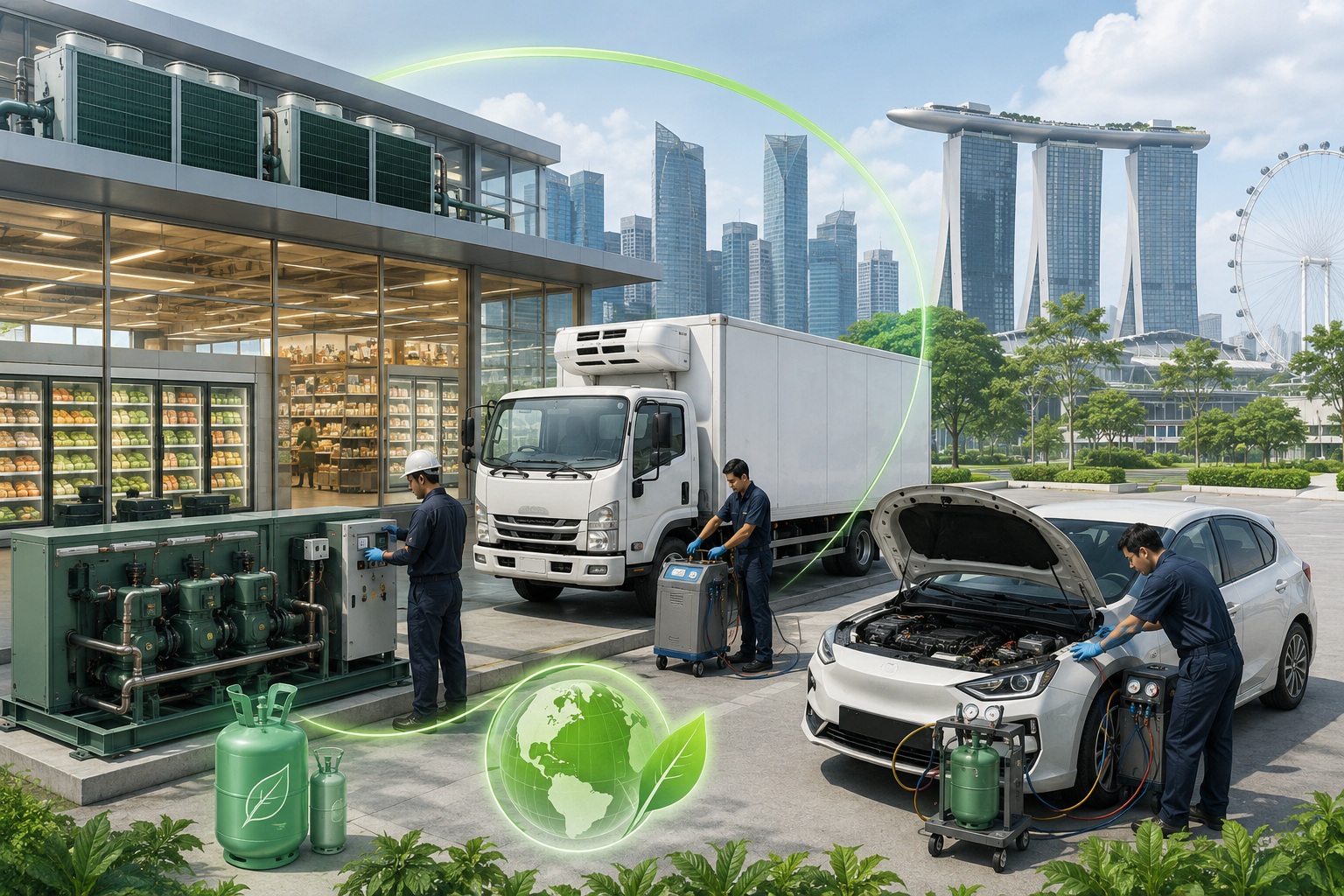
Singapore’s National Environment Agency (NEA) will introduce measures from 1 July 2027 to reduce greenhouse gas emissions from refrigeration and air-conditioning equipment. The rules will cover large commercial and industrial refrigeration systems, transport refrigeration, and air-conditioning for passenger cars and light goods vehicles.
From July 2027, new centralised commercial refrigeration systems typically used in supermarkets must use refrigerants with a Global Warming Potential (GWP) not exceeding 150. From July 2028, air-conditioning systems in new passenger cars and light goods vehicles must meet the same limit.
The requirements will apply only to new equipment. Businesses may continue operating existing systems until the end of their service life. NEA said the limits align with standards adopted in markets including the EU and Japan.
From July 2027, companies dismantling covered equipment must register with NEA and follow disposal procedures for spent refrigerants. The requirement applies to centralised commercial refrigeration systems, centralised industrial refrigeration systems for cold rooms, vehicle air-conditioning systems, and refrigerated trucks.
NEA said the transition away from hydrofluorocarbons forms part of global efforts to address climate change. The agency will continue reviewing its measures based on industry readiness and the availability of lower-GWP alternatives.