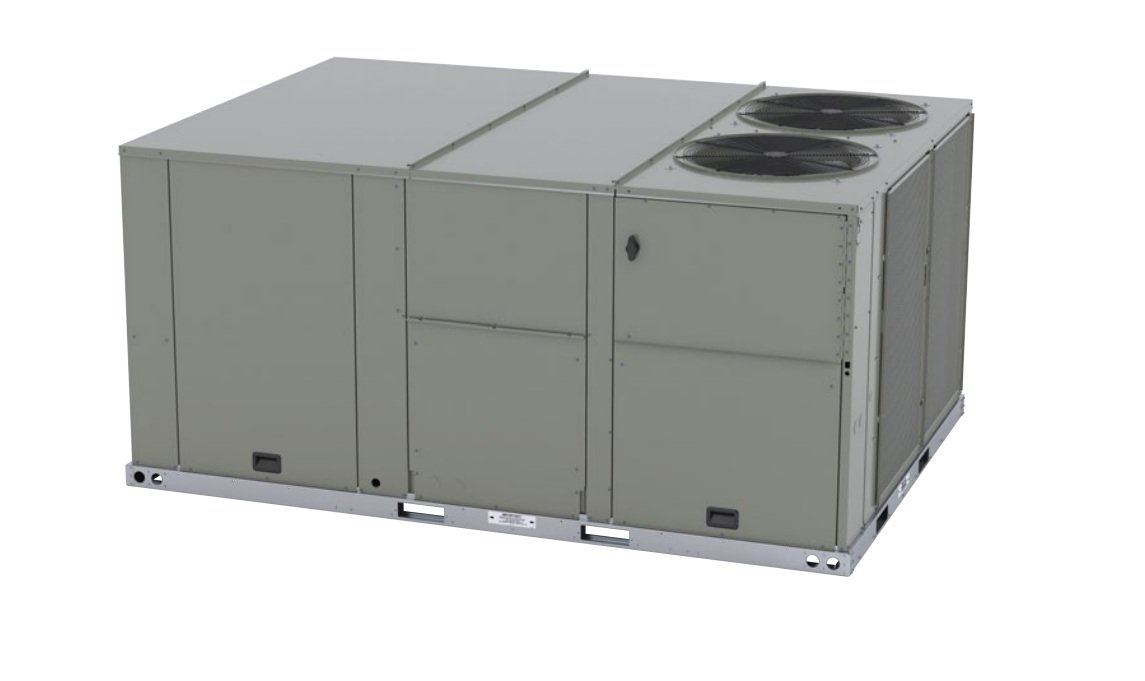
Trane Technologies has completed all required laboratory testing for its rooftop units submitted to the U.S. Department of Energy’s Commercial Building HVAC Technology Challenge in the 10-14 ton (about 35.2-49.2 kW) and 15-25 ton (about 52.8-87.9 kW) capacity ranges. The company said it also received additional recognition from the DOE for the smaller rooftop unit as the only manufacturer exceeding the challenge’s optional heating capacity and efficiency requirements for improved cold climate performance.
The DOE’s Commercial Building HVAC Technology Challenge encourages manufacturers to develop rooftop units that meet an advanced technology specification designed to help organizations achieve cost, energy and reliability goals. According to Trane Technologies, energy-efficient rooftop units with vapor compression technology can reduce energy costs by up to 50% compared with conventional rooftop units.
Following the laboratory testing phase, Trane Technologies has moved to the next stage of the challenge, which includes two field trial installation sites in Illinois and Wisconsin. The company said these demonstrations are intended to validate system performance, reliability and energy-saving potential in real-world conditions.
“Being recognized as the only manufacturer to exceed the DOE’s optional cold climate performance requirement is a powerful testament to the deep technical expertise and customer-focused innovation that drive our team every day,” said Holly Paeper, President, Commercial HVAC Americas, Trane Technologies. “As we move into field trials, we’re excited to work with the DOE to show how these next-generation rooftop units can make a tangible difference for building owners and the communities they serve.”
Trane Technologies also said it participated in the DOE’s Residential Cold Climate Heat Pump Challenge, where a Trane prototype operated down to minus 23 degrees Fahrenheit (about minus 30.6 degrees Celsius), surpassing the DOE requirement. After nearly two years of field trials, the system continues to perform in extreme cold and is delivering about 15% energy savings, according to the company.