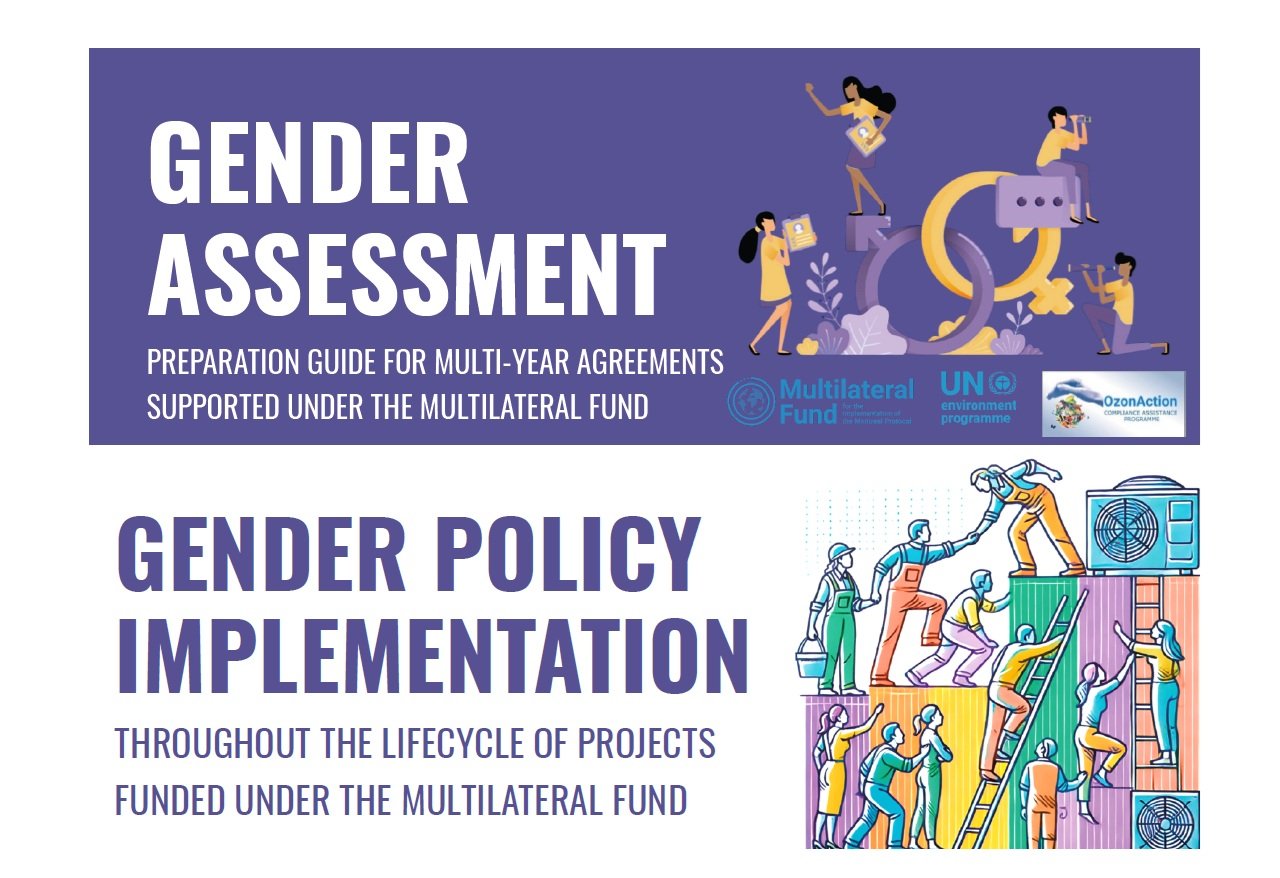
The United Nations Environment Programme (UNEP), under its OzonAction initiative, has released two new guidance documents to support the integration of gender perspectives across the lifecycle of projects funded by the Multilateral Fund (MLF) for the implementation of the Montreal Protocol.
The documents—Gender Policy Implementation Checklist and Gender Assessment Preparation Guide—offer stakeholders clear instructions on how to meet the requirements set out in Decisions 84/92 and 92/40. These resources are designed for use by National Ozone Units (NOUs), implementing agencies, and other project stakeholders involved in the preparation, planning, implementation, and reporting of activities such as HCFC Phase-out Management Plans (HPMPs) and Kigali Implementation Plans (KIPs).
The checklist outlines mandatory and optional gender-related actions at each project stage. For project preparation, it recommends consultations with gender experts and inclusion of gender-specific narrative in project forms. During planning, it mandates a gender assessment to identify gaps and guide the formulation of strategies. Optional measures include the development of a Gender Action Plan (GAP), gender-responsive results frameworks, and dedicated budgets.
During implementation, projects must aim for gender parity in staffing and apply gender assessment recommendations. Monitoring and reporting phases require submission of gender-responsive progress reports and collection of sex-disaggregated data. Optional practices include capacity building, regular stakeholder consultations, and documentation of best practices.
The factsheet on gender assessment offers a step-by-step guide for NOUs to identify gender inequalities in their national context, especially in the refrigeration and air conditioning (RAC) sector. It includes essential questions on socio-economic indicators, sector-specific participation, barriers to equality, and planning for gender-responsive interventions. It also provides a non-exhaustive list of activities such as tailored training, support for female technicians, inclusive workplace policies, and industry outreach campaigns.
Both factsheets are available in English, French, and Spanish.
Source