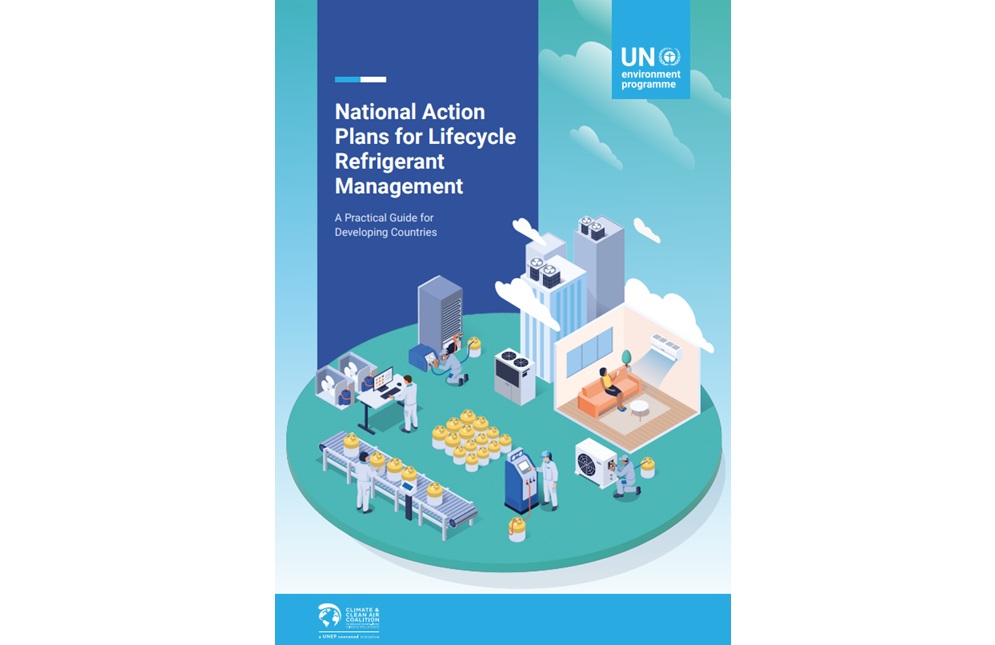
The United Nations Environment Programme has published a practical guide to help developing countries convert inventories of ozone-depleting substances and HFC banks into operational, costed National Action Plans for lifecycle refrigerant management. The guide is intended for national ozone units, environmental ministries and implementing agencies.
It covers refrigerant containment and leak prevention, recovery during servicing and equipment decommissioning, recycling, reclamation, reuse and environmentally sound destruction. The publication also explains how these measures can be integrated with HCFC Phase-out Management Plans, Kigali HFC Implementation Plans, National Cooling Action Plans and Nationally Determined Contributions.
A model action-plan template addresses policy frameworks, institutional responsibilities, infrastructure, financing and monitoring, reporting and verification. According to the guide, 127 Article 5 countries are receiving Multilateral Fund support to develop national inventories of controlled-substance banks.
The publication cites a 2024 Technology and Economic Assessment Panel estimate that lifecycle refrigerant management could prevent an additional 39 Gt CO2e of HFC and HCFC emissions between 2025 and 2050, rising to as much as 67 Gt CO2e by 2100.
“This Guide is a practical roadmap and a call to action,” said Martina Otto, Head of Secretariat at the Climate and Clean Air Coalition, United Nations Environment Programme.