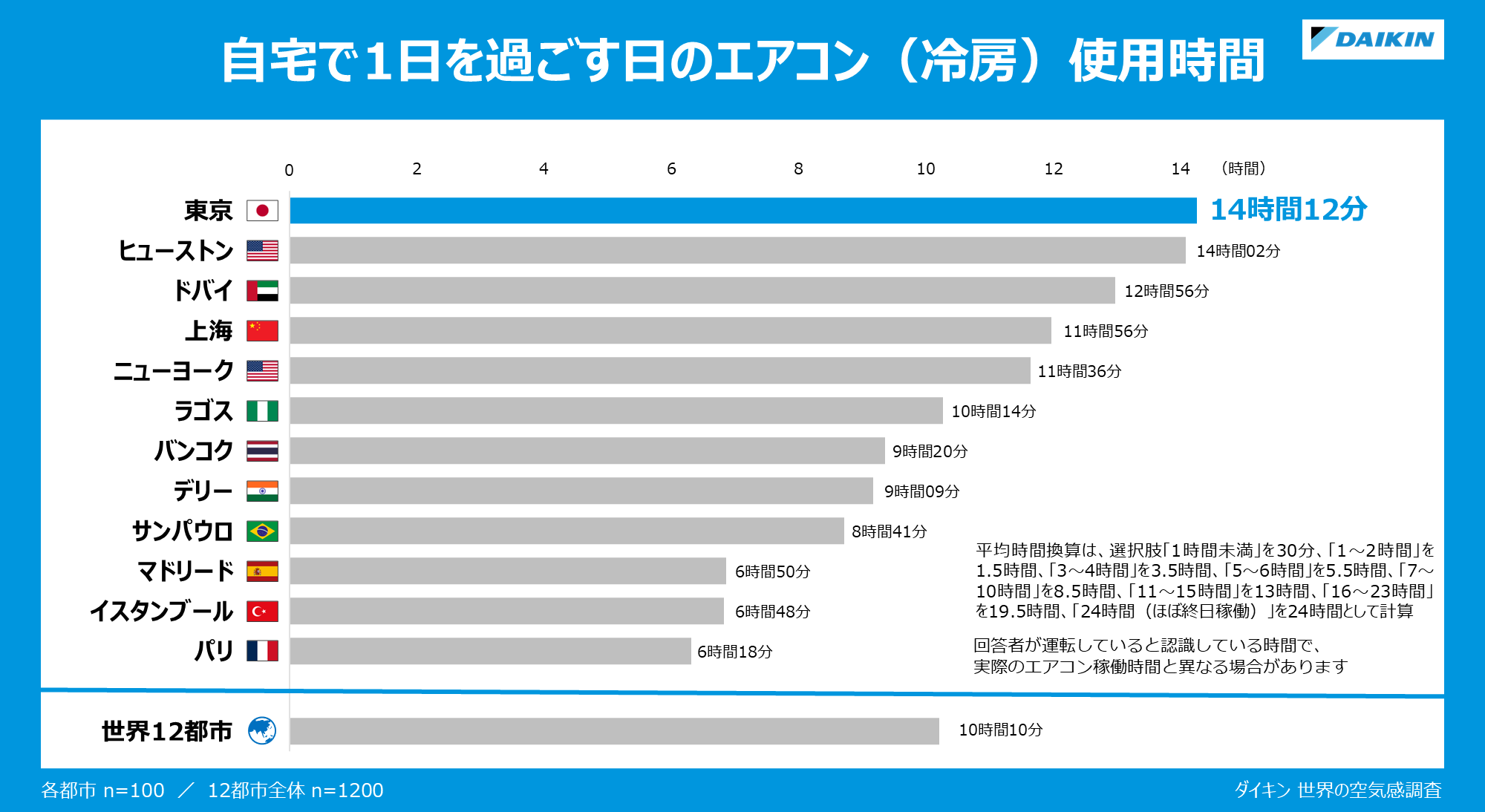
Tokyo recorded the longest daily air-conditioning use among 12 cities in Daikin Industries’ second Global Air Survey. The company surveyed 1,200 air-conditioner owners, with 100 respondents in each city, about their experience of rising temperatures and cooling use.
During the hottest period of the year, respondents in Tokyo used residential cooling for an average of 14 hours and 12 minutes per day. Houston followed at 14 hours and 2 minutes, ahead of Dubai at 12 hours and 56 minutes, Shanghai at 11 hours and 56 minutes, and New York at 11 hours and 36 minutes. In Tokyo, 29% reported operating cooling for 24 hours or almost all day, while 63% used it for at least 11 hours.
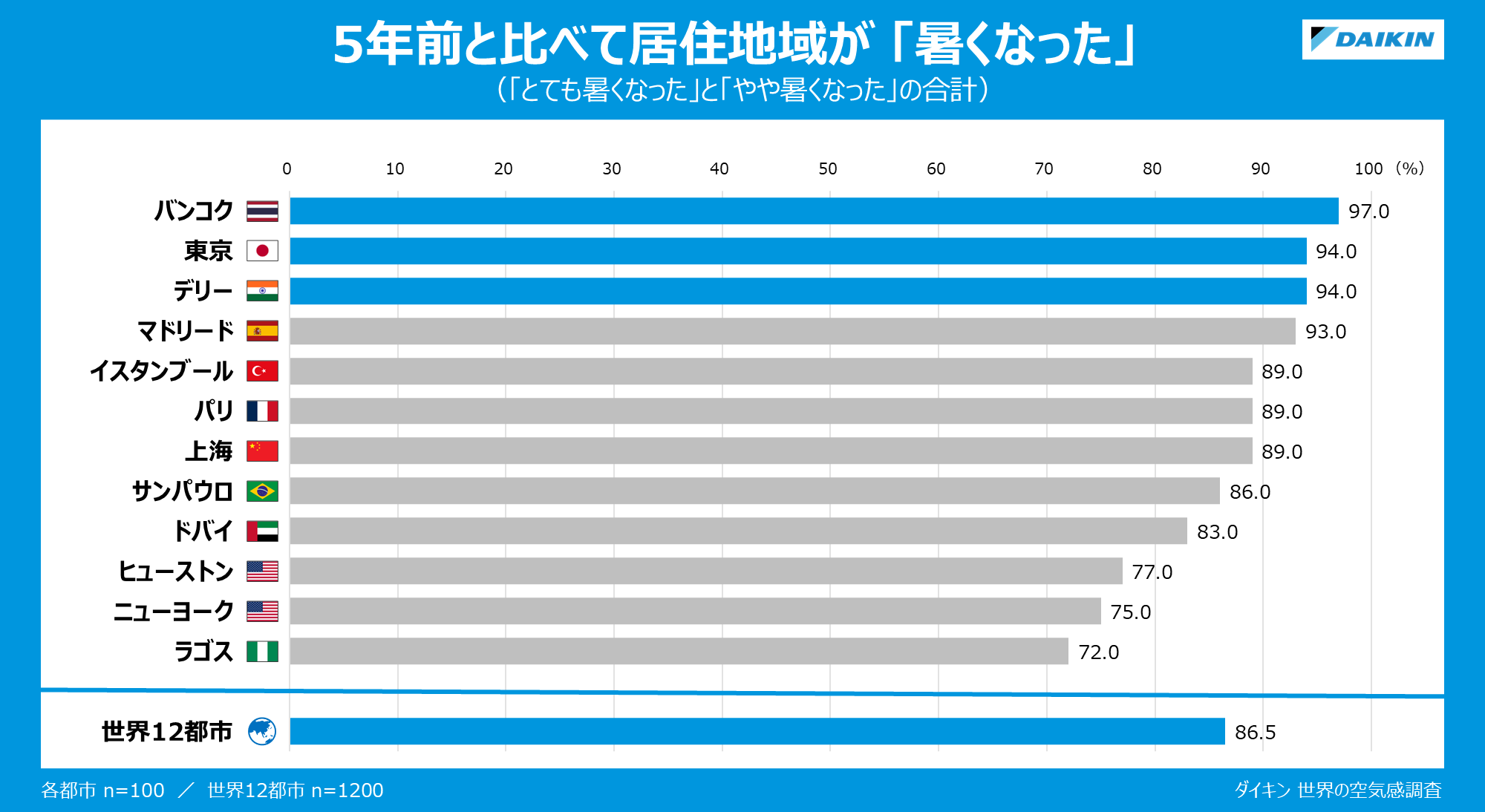
The survey found that 94% of Tokyo respondents considered their area hotter than five years ago, compared with 86.5% across all 12 cities. According to calculations based on Japan Meteorological Agency data, Tokyo’s average daily maximum temperature from June to August increased from 29.7°C (85.5°F) in 2018–2020 to 32.0°C (89.6°F) in 2023–2025. The 2.3°C (4.1°F) rise was the largest among the surveyed cities. Days with maximum temperatures of at least 35°C (95°F) increased from an annual average of 12.0 to 23.7 over the same periods.
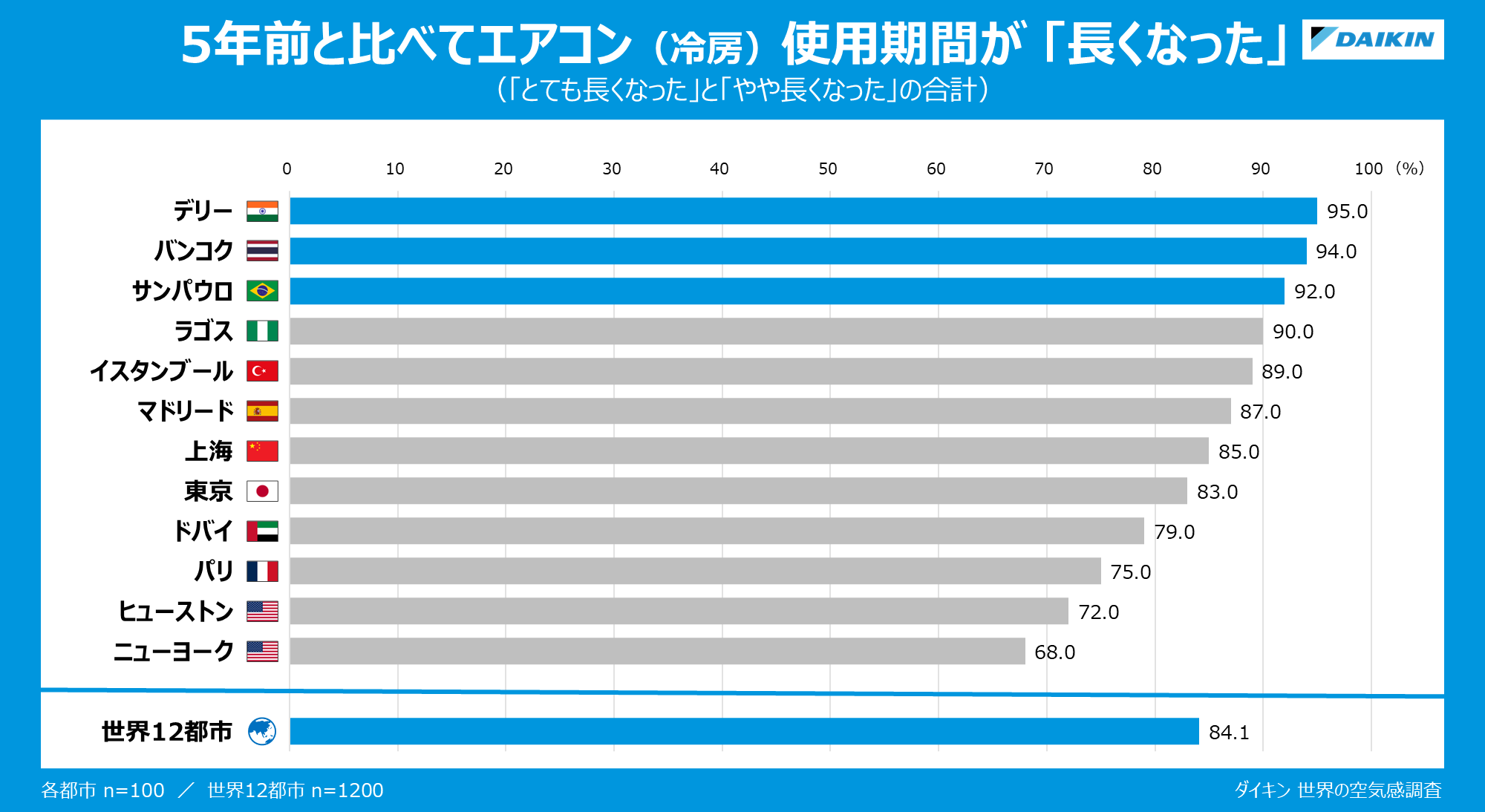
A total of 84.1% of respondents across the 12 cities said their annual cooling-use period had become longer, including 83% in Tokyo. In Tokyo, 65% said they set a higher temperature to reduce energy use, compared with a 12-city average of 37.5%. Daikin’s 2024 survey recorded an average Tokyo cooling setpoint of 26.2°C (79.2°F), compared with a global average of 23.6°C (74.5°F).
Across the survey, 89.9% reported physical discomfort attributed to heat. Reduced sleep quality was the most common response at 58.3%, followed by fatigue at 50.9% and headaches at 36.1%. Dubai had the highest share of respondents leaving cooling on until morning at 67.7%, followed by Houston at 63.5% and Tokyo at 58.6%.
The survey also found that 64.4% of respondents were sometimes unable to use enough cooling because of factors including electricity costs and power-supply constraints. About 90% said they would increase cooling use for comfort or health if those constraints did not exist.