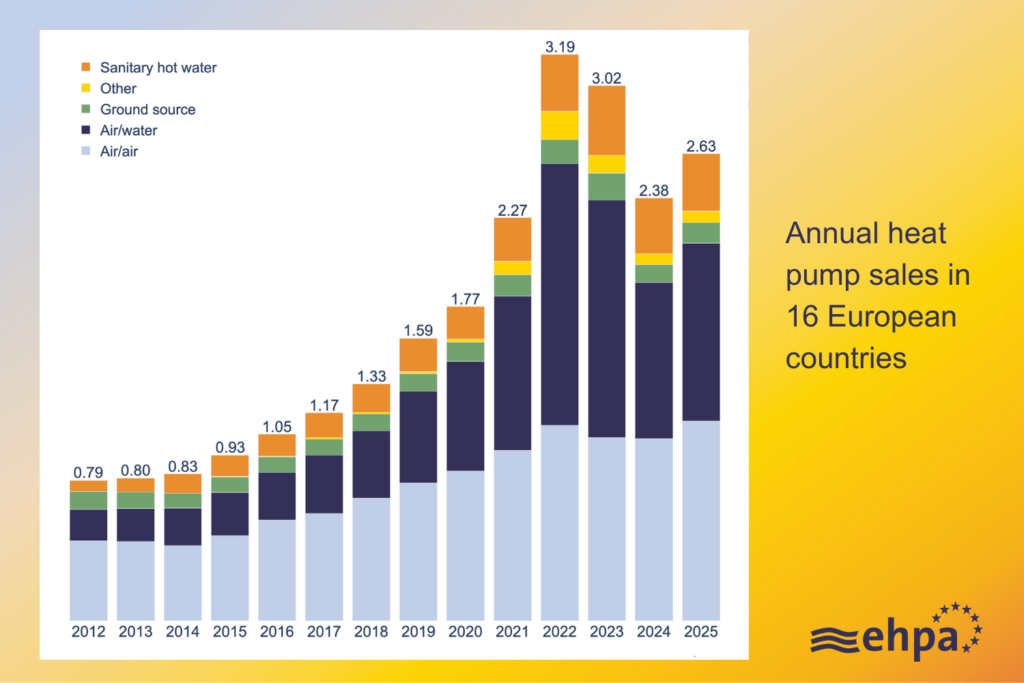
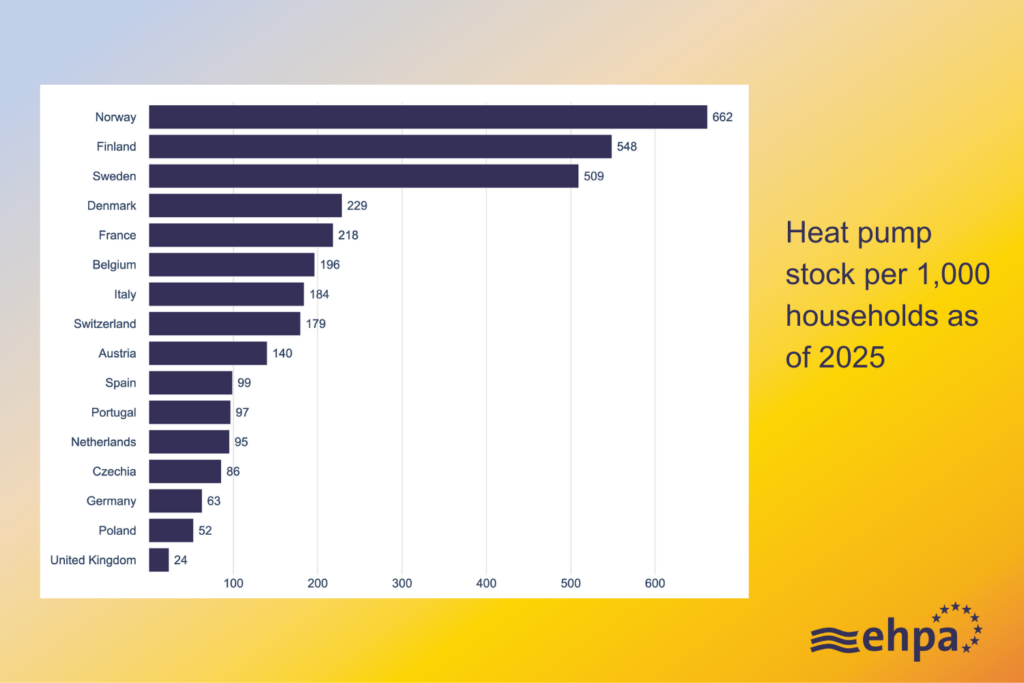
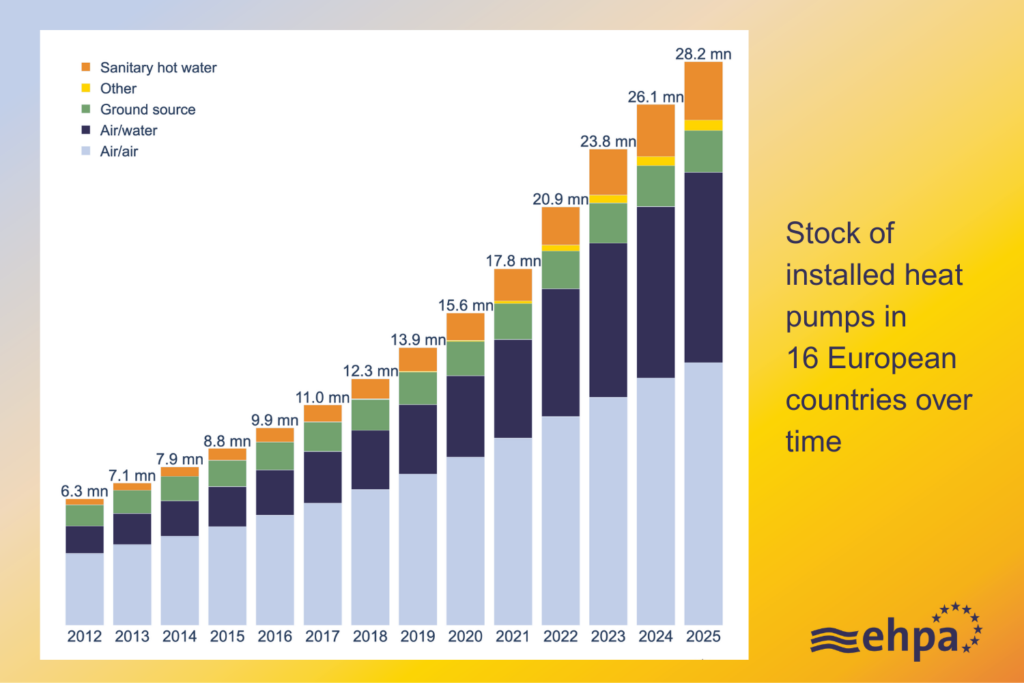
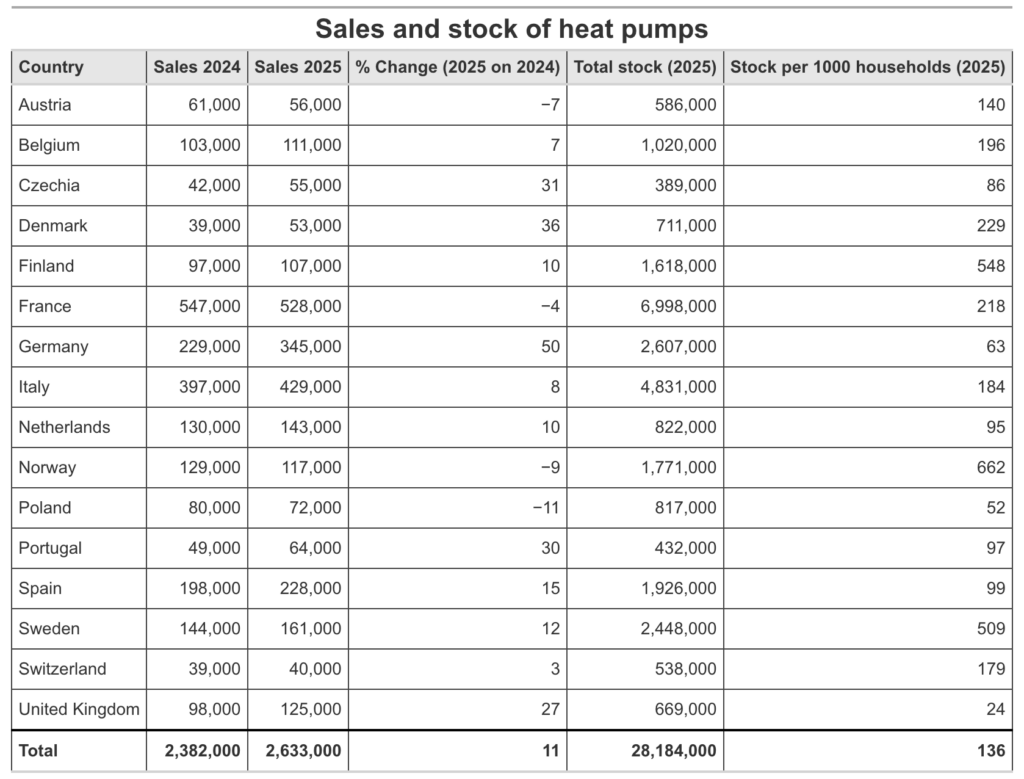
Heat pump sales across 16 European countries increased by 11% in 2025, reaching around 2.63 million residential units, according to preliminary data from the European Heat Pump Association (EHPA). This compares with 2.38 million units sold in 2024 in the same countries and brings the total number of installed heat pumps in Europe to around 28 million.
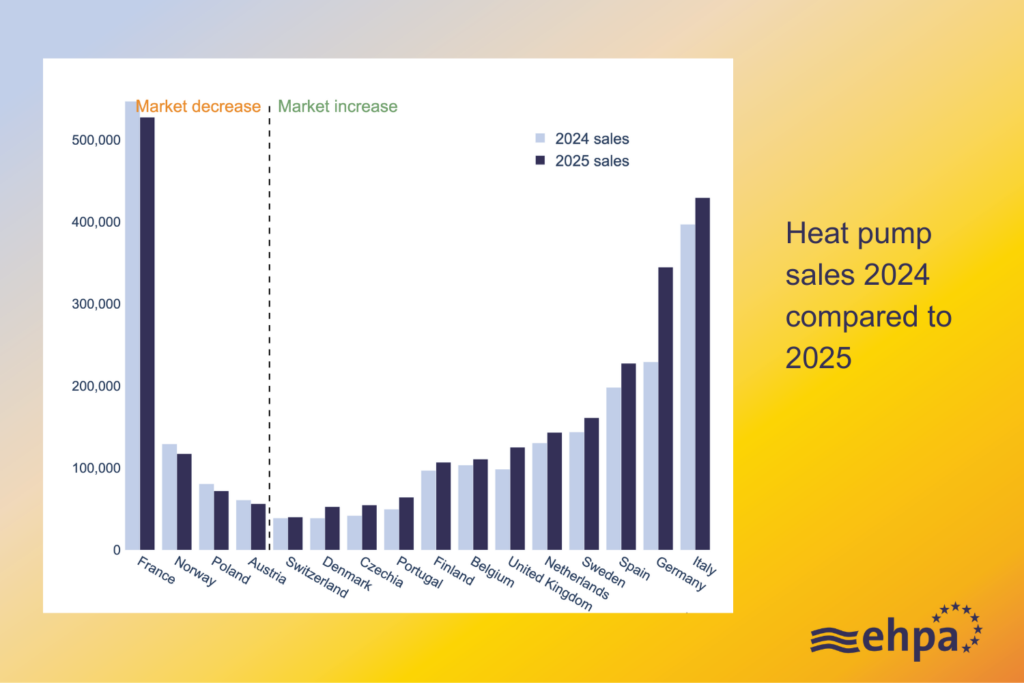
Twelve of the 16 countries recorded higher installations in 2025 than in the previous year. EHPA attributes this growth largely to governments stabilising subsidy schemes and taking action on energy costs, including reducing tax on electricity bills. These measures have improved the competitiveness of heat pumps, which use a small amount of electricity, compared with fossil fuel boilers.
In Belgium, new restrictions on fossil fuel heating combined with a VAT reduction on heat pumps in new buildings contributed to a 7% increase in sales, reaching 111,000 units. In the UK, continued policy support through the Boiler Upgrade Scheme and the Warm Homes plan led to a 27% rise in sales to 125,000 units.
In Germany, heat pumps accounted for almost half of all heat generators sold last year, a record share. EHPA links this to growing consumer confidence in the technology following earlier politicisation of heating and to the role of heat pumps in energy security. By contrast, sales declined in Poland, where EHPA cites disinformation about heat pumps, and in France, where government budgets and support schemes were in flux.
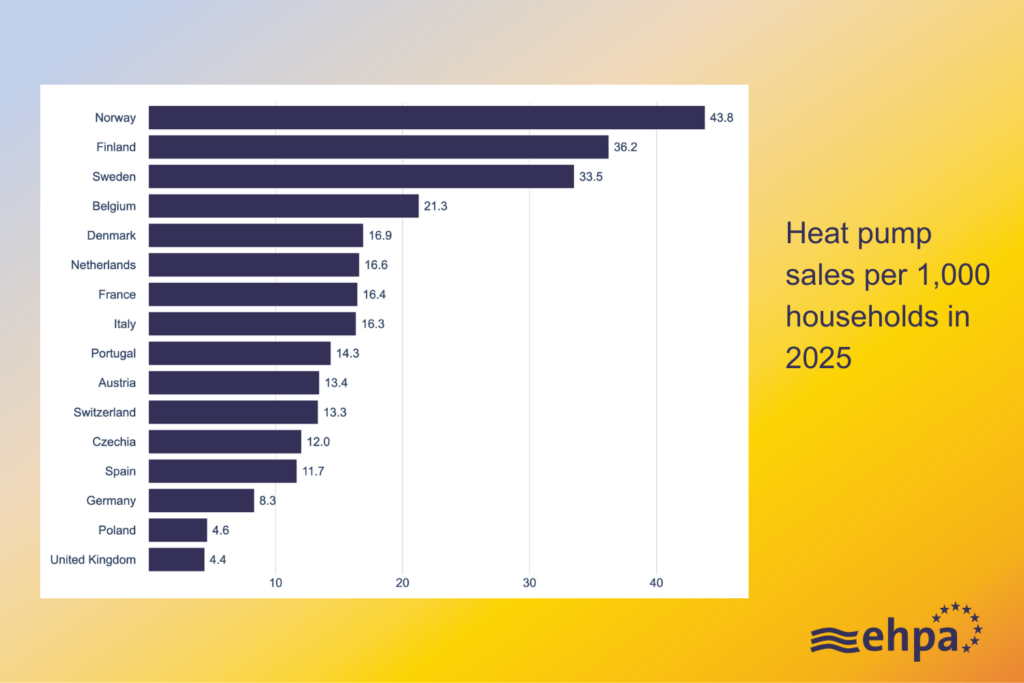
Measured against population size, Norway, Finland and Sweden remain the largest markets, with over 30 heat pumps sold per 1,000 households. Poland and the UK recorded fewer than five per 1,000 households.
EHPA is also collecting sales data for large heat pumps and reports an upward trend, with more factories and district heating systems across Europe installing large-capacity units.
“It’s government 101 that taxation is how you change behaviour. European countries need to move fast to reduce taxes on heat pumps and electricity so they become the most competitive choice. This must be consolidated through stable policies. Otherwise, Europe is still relying on fossil fuel imports from unreliable partners. The weekend’s events in Iran show the need for this more clearly than ever.
“The European Commission’s upcoming heating and cooling strategy and electrification action plan are great opportunities to encourage governments to reduce electricity tax faster, since it has a clear impact on the domestic manufacturing of both residential and industrial heat pumps,” said Paul Kenny, director general of the European Heat Pump Association.