Esta página solo está disponible en inglés. Ir a la portada en español

×

Questa pagina è disponibile solo in inglese. Home page in italiano

×

Diese Seite ist nur auf Englisch verfügbar. Zur deutschen Startseite

×

Cette page est disponible uniquement en anglais. Aller à la page d'accueil en français

×

MHI Thermal Systems Wins 2024 Energy Conservation Award for Electric-Driven Transport Refrigeration Unit

MHI Thermal Systems Wins 2024 Energy Conservation Award for Electric-Driven Transport Refrigeration Unit
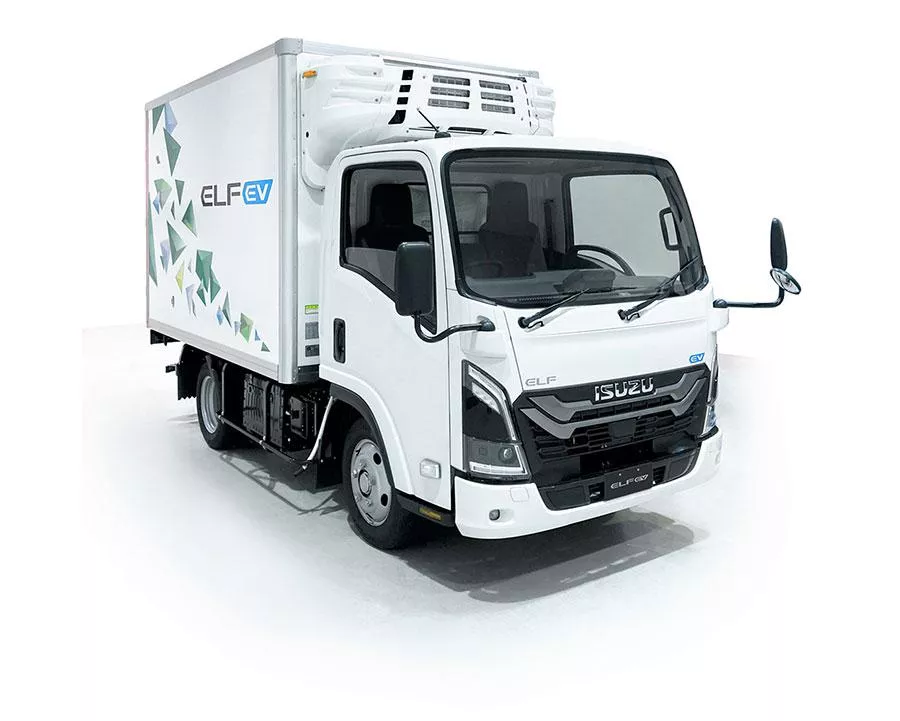
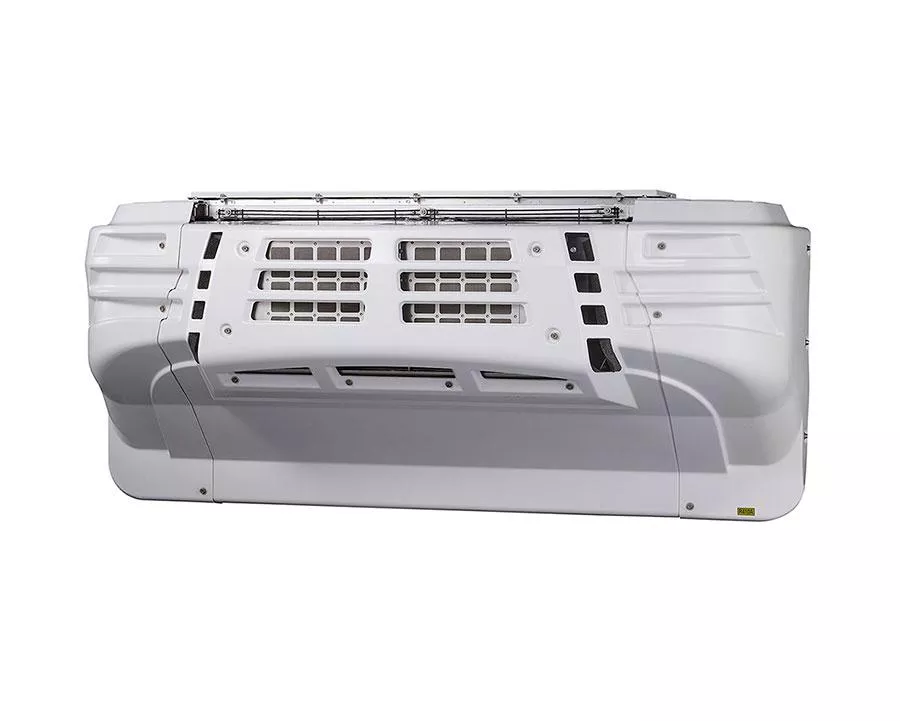
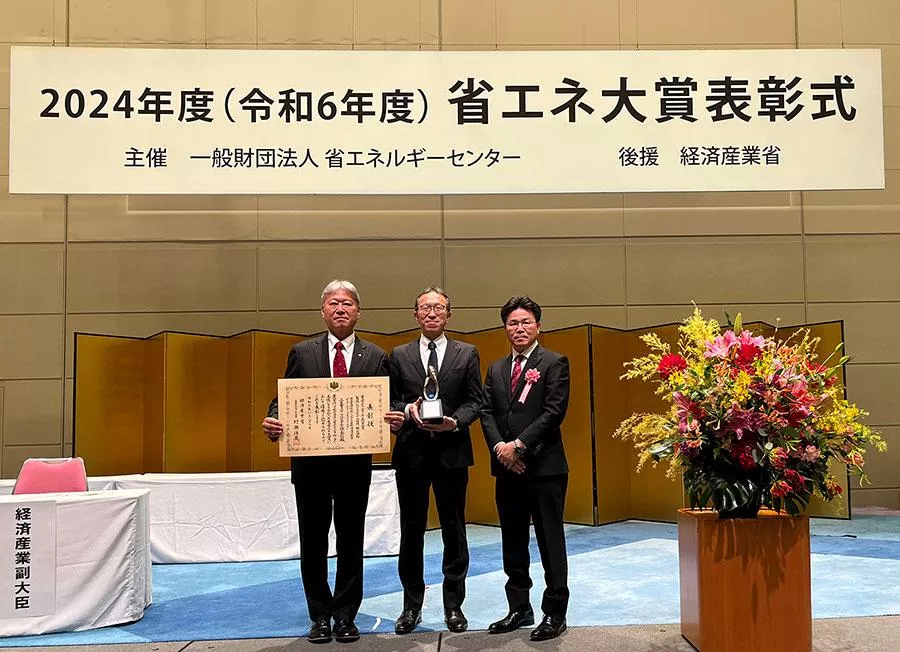
Mitsubishi Heavy Industries Thermal Systems, Ltd. (MHI Thermal Systems) has received the Agency for Natural Resources and Energy Commissioner’s Award in the Transportation Field at the 2024 Energy Conservation Grand Prize Awards, organized by the Energy Conservation Center, Japan (ECCJ). The award recognizes the TEJ35AM electric-driven transport refrigeration unit, which operates in combination with Isuzu’s ELF EV electric truck.

The award-winning system was recognized for its energy efficiency and CO2 reduction. Compared to conventional refrigeration trucks, the TEJ35AM and ELF EV combination reduces annual average energy consumption by 21.3% and CO2 emissions by 46.1%. The system integrates power control between the refrigeration unit and the electric truck, prioritizing temperature stability inside the cargo room while maximizing energy efficiency.

Advancing Decarbonization in Transport Refrigeration

ECCJ’s Energy Conservation Grand Prize Awards highlight outstanding energy-saving technologies and initiatives that serve as models for other industries. MHI Thermal Systems previously won an ECCJ award in 2019 for its TE20/TE30 Series of electric-driven refrigeration units.

The TEJ35AM, launched in 2023, is designed exclusively for EVs and features a heat-pump heating function that enables simultaneous heating and cooling operations. This feature supports multi-temperature transport, making the unit suitable for applications such as convenience store deliveries. The refrigeration unit can operate in all vehicle conditions—including running, idling, parked, or charging—ensuring stable cargo temperatures without requiring constant driver monitoring.

By integrating with the ELF EV, the system also reduces annual energy costs by 42.2% compared to conventional trucks.

Commitment to Energy Efficiency and Sustainability

With this latest recognition, MHI Thermal Systems reaffirms its commitment to CO2 reduction and energy savings. The company plans to continue developing advanced thermal solutions across various sectors, including refrigerated transport, industrial energy efficiency, large-scale cooling systems, and automotive air-conditioning.

By leveraging its expertise across multiple fields, MHI Thermal Systems aims to deliver innovative technologies that support a more sustainable and energy-efficient future.

Get the daily refrigeration briefing

One email a day. Trusted by 3,000+ RACHP professionals.

More on Cold Chain

All on Cold Chain →

Insights

Secop's Solar Direct Drive (SDD) System Earns WHO PQS Approval – The Team Behind It
Article

Secop’s Solar Direct Drive (SDD) System Earns WHO PQS Approval – The Team Behind It

Partner's material In March 2026, Secop’s Solar Direct Drive Power Management Module was granted WHO PQS prequalification and officially listed in the WHO Catalogue of Prequalified Immunization Devices. The WHO IMD-PQS (Immunization Devices Performance, Quality and Safety programme) is the global benchmark for cold chain equipment used in immunisation. Being listed in its catalogue is

22 Jun 2026
Case Study - Effect of Louvers or diffusers on air flow distribution and cooling time on a meat log during Chill cycle
Tech Guide

Case Study – Effect of Louvers or diffusers on air flow distribution and cooling time on a meat log during Chill cycle

By Kushal Aurangabadkar An experimental analysis was conducted on a cooler space measuring 3.66 m × 6.096 m (12.0 ft × 20.0 ft), equipped with an ammonia refrigeration coil, five 30 cm (12 in.) fans, and five diffusers. The study measured airflow patterns, cooling rates, and heat transfer efficiency in meat storage by testing two configurations:

Kushal Aurangabadkar · 21 Jan 2026
Total Cost of Ownership (TCO) for Modular Refrigeration Systems in Life Sciences Distribution Centers
Tech Guide

Total Cost of Ownership (TCO) for Modular Refrigeration Systems in Life Sciences Distribution Centers

by Ramez Naguib, P.E. Introduction Life sciences distribution centers are under immense pressure to deliver consistent temperature control, comply with increasingly stringent regulations, and optimize operational efficiency. Traditional built-up refrigeration systems often prove cumbersome, costly, and slow to implement. In contrast, modular, factory-assembled refrigeration systems have emerged as a compelling alternative. Drawing on lessons from

Ramez Naguib · 14 Jan 2026
Everything on Cold Chain: 2,059 articles, 2 case studies, 23 insights

Most read this month

All news →