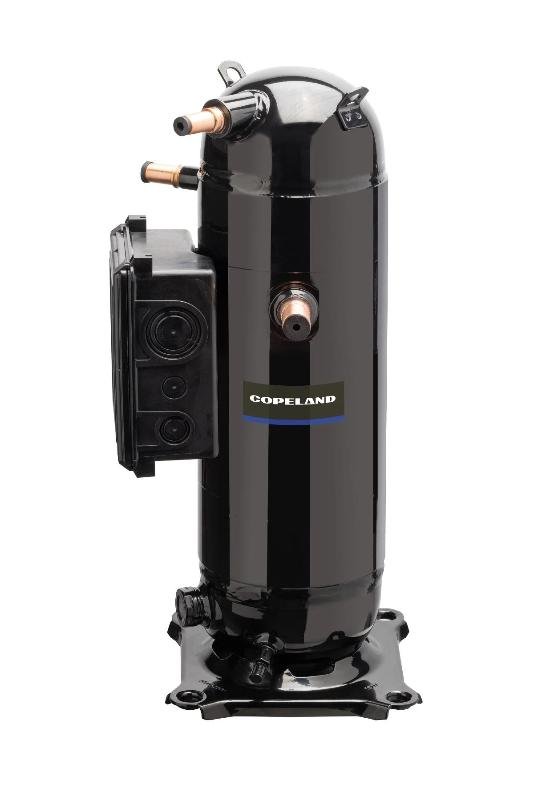
Copeland has launched a transcritical CO2 scroll compressor with dynamic vapor injection (DVI) technology in North America. The new solution is designed for distributed CO2 refrigeration systems and aims to support both new installations and remodels in food retail applications.
The development responds to rising regulatory demands and the transition to lower-global warming potential (GWP) refrigerants.
The new Copeland compressor is part of the company’s broader CO2 portfolio, which includes transcritical and subcritical semi-hermetic compressors, scrolls, controls, drives, and system components. The scroll compressors are available in fixed- and variable-speed versions, all equipped with DVI technology.
DVI enhances system efficiency by digesting high-pressure vapor directly in the compression cycle, eliminating the need for parallel compression. This reduces design complexity and lowers applied system costs. The technology also enables efficient operation in various climates and supports simplified system design.
The simplified architecture of the Copeland transcritical CO2 scroll compressor offers advantages such as easier installation and maintenance, reduced component count, smaller piping systems, and more compact rack dimensions. These factors contribute to lower maintenance costs and improved reliability.
“With this solution, we’re combining Copeland's unmatched CO2 domain expertise, innovative supermarket test labs and rigorous manufacturing capabilities to support the next generation of sustainable CO2 refrigeration solutions in both centralized and distributed system types,” said Kurt Knapke, vice president and general manager, cold chain, for Copeland.
The initial release includes a 460-volt model for the US market. Copeland plans to introduce additional voltage options through 2026.