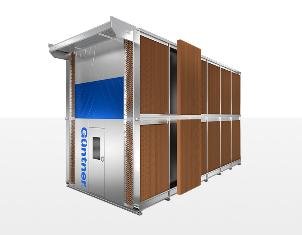
Güntner’s New High Density Adiabatic Coolers And Condensers

Güntner’s New High Density Adiabatic Coolers And Condensers

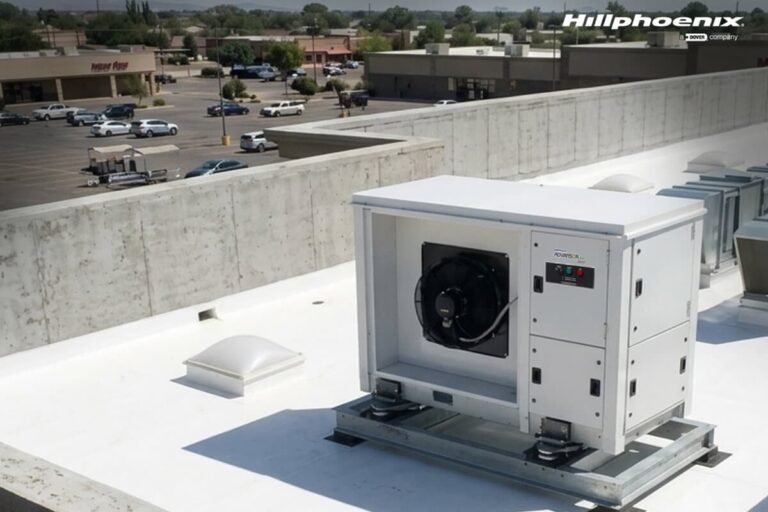
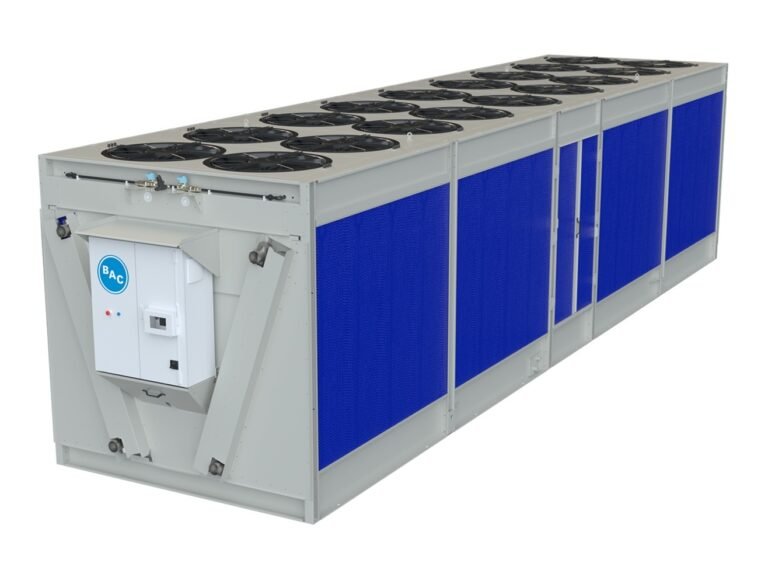
Güntner makes the business case for sustainability yet again with the latest generation of High Density adiabatic coolers and condensers. They prove that eliminating water waste and pollution not only reduces cooling solutions’ environmental impact but can also positively affect the bottom line. This is especially true in the High Density lineup’s target industries such as data processing, food and beverages, manufacturing, and power generation, where inefficient, high-maintenance evaporative cooling towers are still significant cost factors.

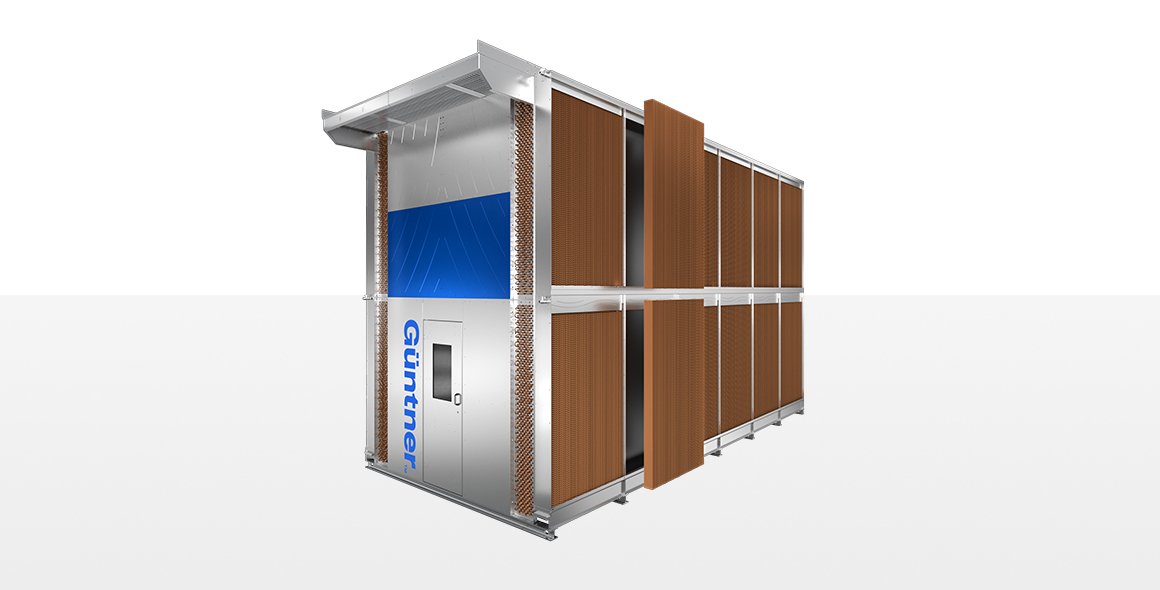
Unlike cooling towers, which only work by evaporation, High Density adiabatic coolers and condensers can operate in dry and evaporative mode. Dry cooling is usually sufficient at most loads and temperatures – which means most of the water consumed by cooling towers can be considered wasted. To cover peaks, evaporative cooling via Güntner’s pre-cooling system hydroBLU is activated above a pre-set temperature threshold. The system contains humidification pads installed in front of the heat exchangers as well as the intelligent control modules GHM and GMMnext. They dynamically adjust the cooling water flow to provide the required level of extra cooling.

Thanks to this hybrid operating principle, High Density adiabatic dry coolers and condensers use up to 70 percent less water compared to cooling towers. This comes with another advantage: Since there is less moisture in the system, it doesn’t require disinfection or any other kind of chemical water treatment to prevent the bacterial infestations and moisture damage commonly associated with cooling towers. Hence, maintenance costs are drastically reduced along with the environmental footprint. As to the devices’ physical footprints, thanks to advances in adiabatic cooling design they could be brought down almost to the level of comparable cooling towers.

Get the daily refrigeration briefing

One email a day. Trusted by 3,000+ RACHP professionals.

Related news

Energy Efficiency

EECA publishes New Zealand industrial refrigeration efficiency guide

Whole-system upgrades can cut energy use by up to 40%, while operational changes can deliver reductions of up to 20%.

Today
Cold Chain

GEA system extends Betko fruit storage to 14 months in South Africa

The integrated plant, envelope and storage layout handled more than 37,000 bins in its first season, surpassing design capacity.

28 Jul 2026
Data Centres

MarketsandMarkets forecasts $17.31 billion direct-to-chip cooling market

AI, high-performance computing and hyperscale workloads are set to drive 26.5% annual growth through 2032, with single-phase systems leading.

23 Jul 2026
Chillers

MHI ships 10MW-class chiller to Georgia for AI cooling

Mitsubishi Heavy Industries (MHI) has shipped a 10MW-class centrifugal chiller test unit to the United States, with arrival at the Port of Brunswick, Georgia, scheduled around July. The unit, rated at approximately 34.1 million BTU/h, is intended to support high-density AI workloads and marks a commercialization milestone in MHI’s integrated AI infrastructure strategy. MHI is

21 Jul 2026
Commercial Refrigeration

MarketsandMarkets forecasts refrigeration coolers market at $6.85 billion

The global refrigeration coolers market is projected to grow from USD 4.72 billion in 2026 to USD 6.85 billion by 2032, according to MarketsandMarkets. The research firm forecasts a compound annual growth rate of 6.4% during the period. Market growth is linked to investment in energy-efficient refrigeration infrastructure across retail, food and beverage processing, logistics

21 Jul 2026
Commercial Refrigeration

SYCLEF expands in Romania through HORECO partnership

The deal, pending regulatory approvals, will add HORECO's CO2 and NH3 expertise and more than 90 employees to the international group.

20 Jul 2026

Most read this month

All news →

Related insights