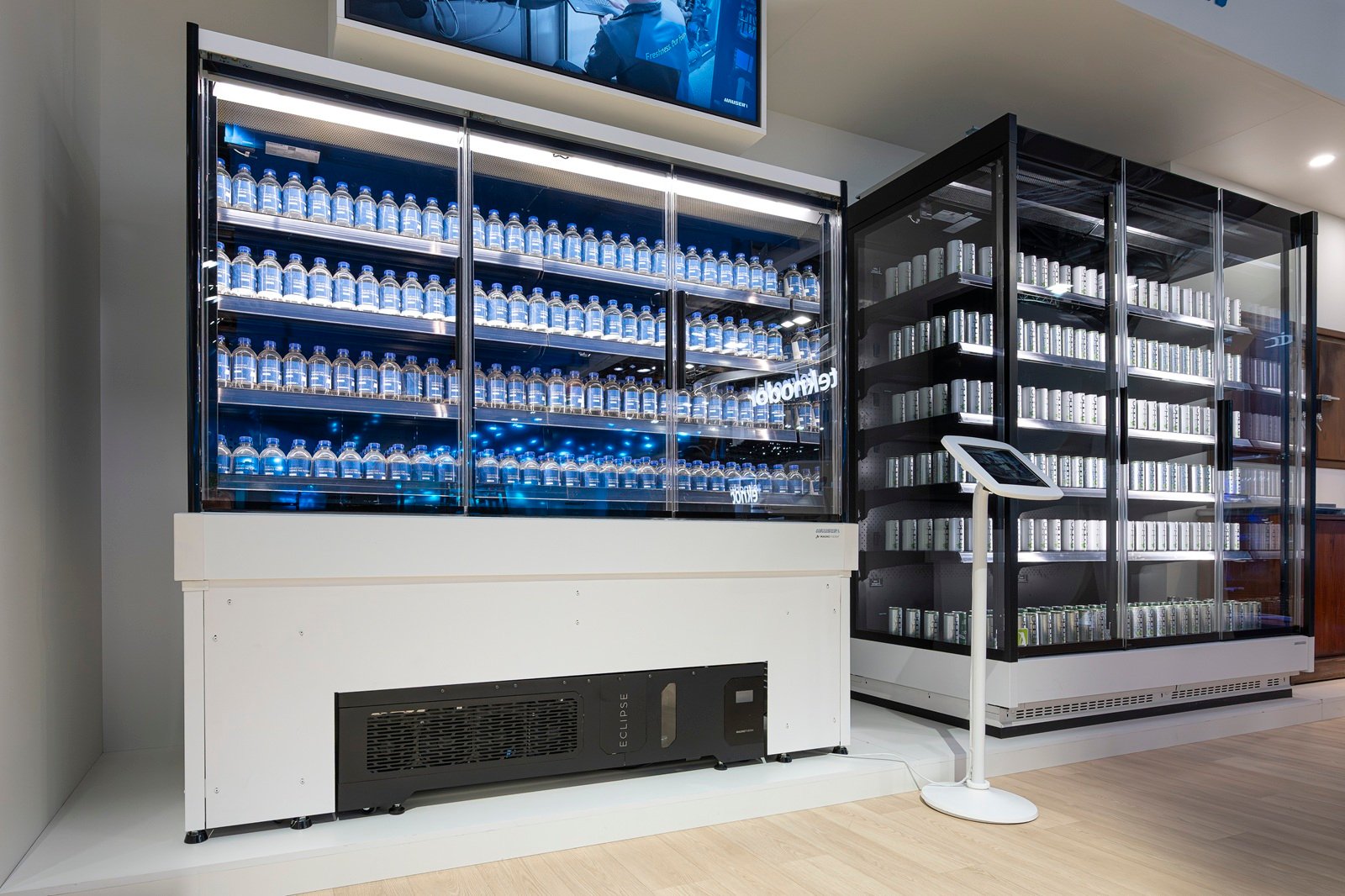
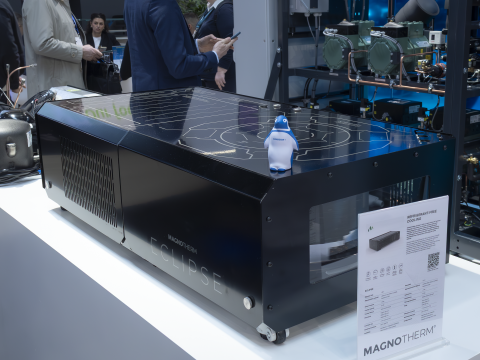
HAUSER and MAGNOTHERM have presented the Renimag prototype to show how magnetocaloric cooling could be used in refrigeration cabinets without conventional refrigerants. The companies said the system is designed to operate safely and with lower energy consumption, using water as the cooling medium.
MAGNOTHERM emerged from a research project at the Technical University of Darmstadt, where work on magnetocaloric cooling has been underway since 2002. In 2019, the team around Managing Director Timur Sirman founded the company. According to Sirman, the technology uses magnetocaloric materials that heat up when magnetised and cool down when demagnetised, with water passing through the material to generate cooling.
The company said its systems currently achieve temperatures between 0 and 30 degrees Celsius (32 and 86 degrees Fahrenheit), with future ranges from -5 to +50 degrees Celsius (23 to 122 degrees Fahrenheit) as well as deep-freeze applications seen as possible. MAGNOTHERM added that the system operates at 1 bar pressure and can be scaled to capacities from 50 kW (approx. 170,600 BTU/h) to 500 kW (approx. 1.71 million BTU/h).
Together with HAUSER, MAGNOTHERM developed the Renimag prototype with around 1 kW of cooling capacity (approx. 3,412 BTU/h) for normal and medium-temperature cooling. The company said tests showed that target temperatures were achieved and that operation was quiet and stable. Initial practical tests on a converted refrigerated island at a retail partner that had previously used propane showed an efficiency increase of around 15 per cent, while long-term gains of up to 30 per cent are considered realistic.
MAGNOTHERM said current challenges include building the supply chain, reducing costs and improving performance. “We can completely dispense with conventional refrigerants and instead use magnetocaloric materials,” said Timur Sirman, Managing Director of MAGNOTHERM. He added that pilot customers such as the REWE Group are already on board, while further tests, including at HAUSER in a climate chamber, are planned to support series readiness.