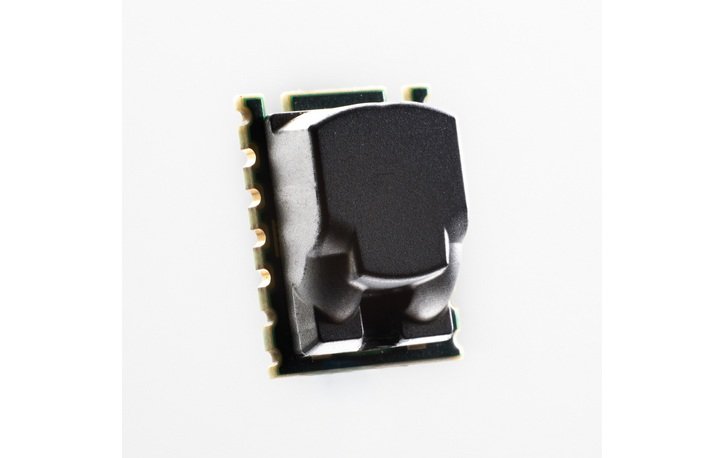
Senseair, the Swedish subsidiary of Asahi Kasei Microdevices, has introduced the “S12 CO2” sensor, a next-generation CO2 sensor designed for demand-controlled ventilation (DCV) in zero-energy buildings and battery-powered indoor air quality (IAQ) monitoring. The new model is approximately 75% smaller in volume than previous sensors and supports surface-mount device (SMD) soldering on circuit boards, enabling integration in space-constrained applications. Sample shipments have begun, with mass production scheduled for 2026.
The launch responds to increasingly stringent global regulations for energy-efficient buildings. In the EU, the revised Energy Performance of Buildings Directive mandates zero-emission standards for new public buildings by 2028 and for all new buildings by 2030. DCV systems that adjust airflow based on CO2 levels are seen as a key technology to meet these requirements, but widespread sensor deployment has been limited by size and installation constraints.
Built on Senseair’s non-dispersive infrared (NDIR) technology, the S12 CO2 sensor offers a measurement range of 400–10,000 ppm with an accuracy of ±(30 ppm + 3% of reading). Despite its compact dimensions—18 mm × 15 mm × 7 mm—the sensor matches the performance of Senseair’s earlier “Sunrise” and “Sunlight” models while enabling reflow SMD mounting. This supports discreet installation in HVAC equipment and wall-mounted monitors without affecting design.
For retrofit applications where cabling is difficult, the S12 CO2 maintains the ultra-low power consumption of previous models, making it suitable for battery-powered CO2 monitors. Target applications include IAQ monitoring in building energy management systems (BEMS), HVAC units, and residential heat exchangers, particularly in Europe, North America, and Asia.
The sensor is compliant with several international standards, including ANSI/ASHRAE Standard 62.1-2022 Addendum d, RESET Grade B, and WELL Building Standard (WELL v2).