bronze partner
20 January 2026
ebm-papst to present new fan and motor technologies at AHR Expo 2026
ebm-papst Inc., the Americas subsidiary of the global fan and motor manufacturer, will showcase its latest air movement, heating, and cooling innovations at AHR Expo 2026, held February 2–4 in Las Vegas, Nevada. The company’s exhibit at Booth C7325 will focus on efficient, sustainable, and connected HVACR technologies under the theme “Today. Tomorrow. Beyond.”
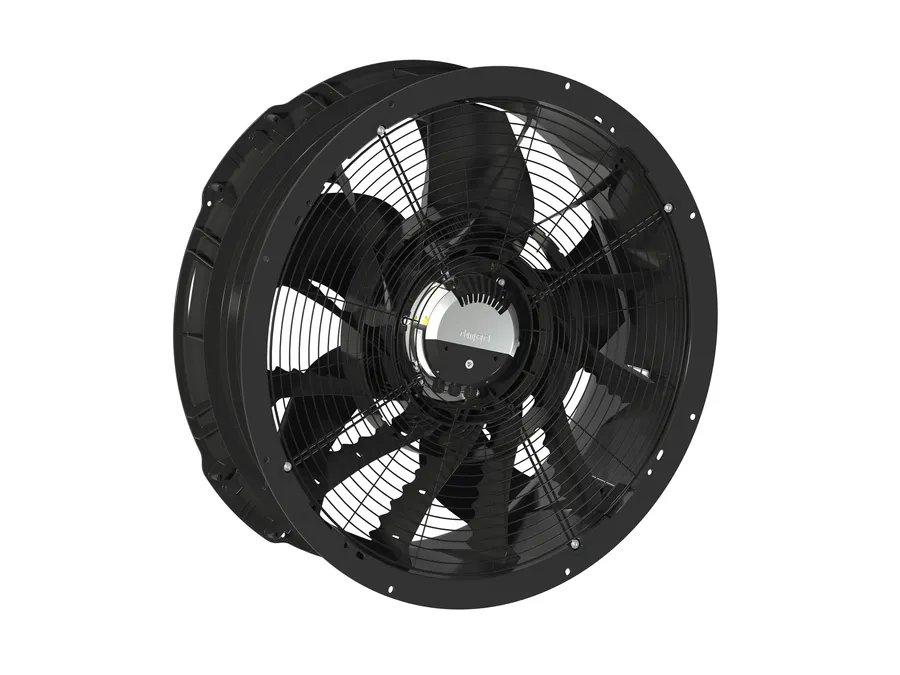
The company will debut its AxiBlade.Perform fans in 860 mm and 950 mm sizes, designed for use in chillers, evaporators, and condensers. These units feature a new composite wall ring that enables stable bidirectional airflow and flexible installation. Key features include a side-mountable terminal box, pressure tap, FlowGrid for reduced tonal noise, and integration with MODBUS-RTU and cloud-based systems.
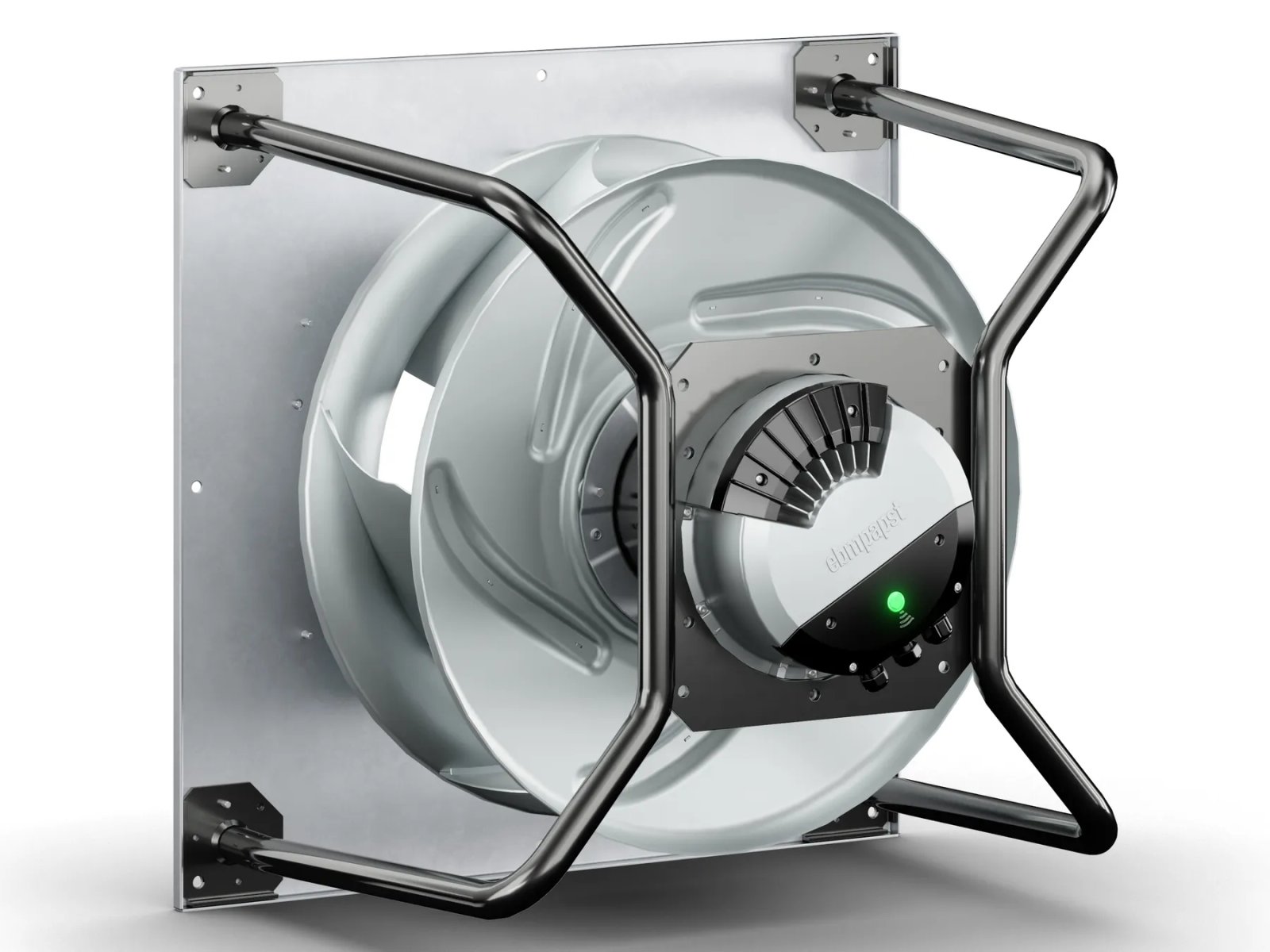
Also on display will be the RadiPac 3M impeller combined with the DV214 EC motor for commercial ventilation and data center applications. The compact metal impeller provides high power density without compromising acoustic performance, while the motor’s integrated electronics allow for efficient speed control. ebm-papst will assemble selected sizes of both AxiBlade.Perform and RadiPac 3M products in the Americas for regional markets.
Digital innovations will include NEXAIRA.Systems, a platform connecting fans with AI-based system intelligence to optimize energy use and cooling performance in complex environments. For high-density data centers, the company will feature AxiEco and AxiForce fan solutions tailored for rear door heat exchanger (RDHx) systems.
ebm-papst will also present the CompaNamic HighSpeed turbo compressors, which won the German Sustainability Award 2026. These oil- and wear-free units offer up to 40% energy savings compared to conventional systems, with compact, low-noise designs developed through in-house R&D for use in refrigeration and heat pump applications.
In the U.S. home comfort market, the company will highlight its expanding range of EC fan and motor solutions for ventilation, heat pumps, furnaces, and air handling units. These systems are developed and tested in the U.S. for residential performance and efficiency.
The company will debut its AxiBlade.Perform fans in 860 mm and 950 mm sizes, designed for use in chillers, evaporators, and condensers. These units feature a new composite wall ring that enables stable bidirectional airflow and flexible installation. Key features include a side-mountable terminal box, pressure tap, FlowGrid for reduced tonal noise, and integration with MODBUS-RTU and cloud-based systems.
Also on display will be the RadiPac 3M impeller combined with the DV214 EC motor for commercial ventilation and data center applications. The compact metal impeller provides high power density without compromising acoustic performance, while the motor’s integrated electronics allow for efficient speed control. ebm-papst will assemble selected sizes of both AxiBlade.Perform and RadiPac 3M products in the Americas for regional markets.
Digital innovations will include NEXAIRA.Systems, a platform connecting fans with AI-based system intelligence to optimize energy use and cooling performance in complex environments. For high-density data centers, the company will feature AxiEco and AxiForce fan solutions tailored for rear door heat exchanger (RDHx) systems.
ebm-papst will also present the CompaNamic HighSpeed turbo compressors, which won the German Sustainability Award 2026. These oil- and wear-free units offer up to 40% energy savings compared to conventional systems, with compact, low-noise designs developed through in-house R&D for use in refrigeration and heat pump applications.
In the U.S. home comfort market, the company will highlight its expanding range of EC fan and motor solutions for ventilation, heat pumps, furnaces, and air handling units. These systems are developed and tested in the U.S. for residential performance and efficiency.
Related news
Deutsche Messe uses ebm-papst NEXAIRA for retrofit
Deutsche Messe AG has connected technical installations at its Pavilion 36 to ebm-papst’s NEXAIRA digital ecosystem as part of an energy-efficiency retrofit ahead of Hannover Messe 2026 in Germ...
08 Apr 2026
China Refrigeration Exhibition 2026 was held in Beijing, China
The 37th China Refrigeration Exhibition was held from April 8 to 10, 2026, at the Beijing Capital International Exhibition & Convention Center in China. The event covered 115,000 sq m (approx. ...
16 Apr 2026
ebm-papst launches third-generation RadiPac 3M EC centrifugal fans
ebm-papst has introduced the third generation of its RadiPac radial fans in a metal housing for HVAC systems, precision air conditioning units, electronics cooling, cooling towers and other ref...
24 Mar 2026
Sanhua Expands R744 Portfolio with CDF-T Solenoid Valves
Sanhua has expanded its R744 product portfolio with the new CDF-T Series NC solenoid valves for CO2 refrigeration systems. The product range is designed for transcritical applications and is intend...
today
Refindustry opens call for CO2 Refrigeration case studies
Refindustry has opened submissions for the next CO2 Special Edition of Refrigeration Industry Magazine, inviting companies to share project-based case studies on CO2 refrigeration applications,...
19 Mar 2026
Frigoglass completes exit from Russian refrigeration market
Frigoglass Group has completed the disposal of its entire shareholding in Frigoglass Eurasia LLC, the company conducting the Group’s commercial refrigeration business in Russia.
The transactio...
02 Jun 2026