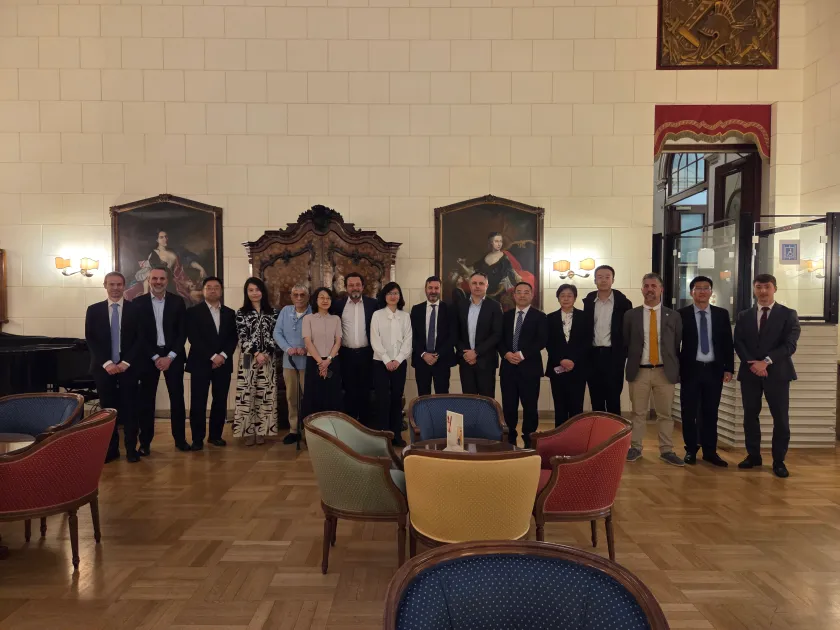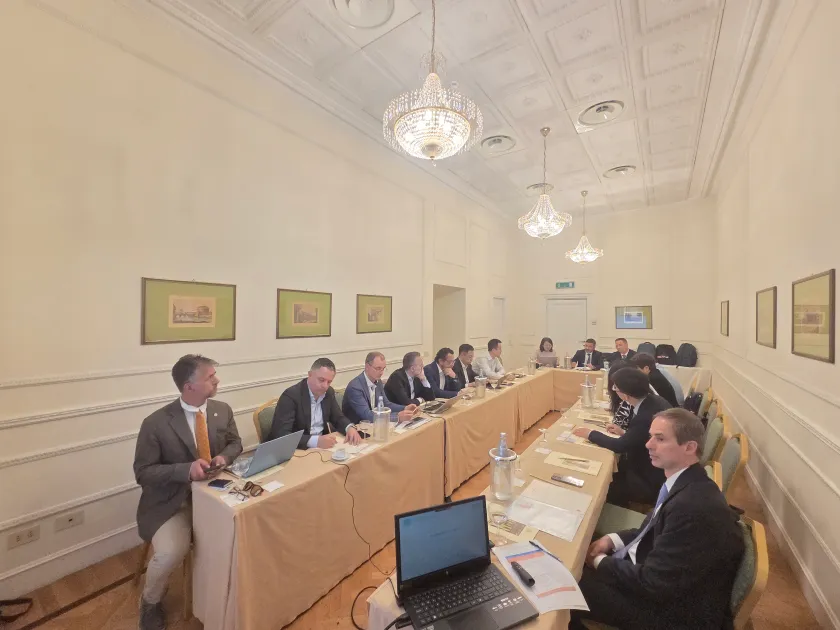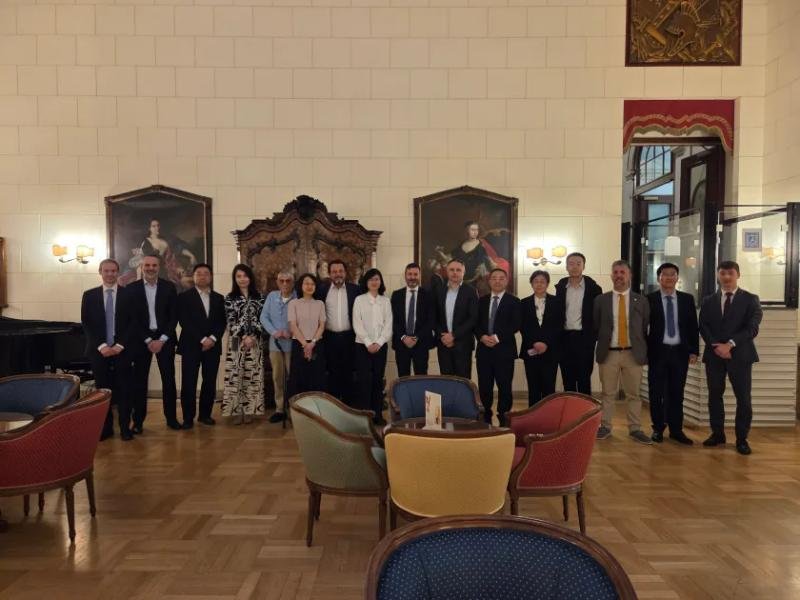
An Italian-Chinese delegation meeting in Rome examined key issues in the transition of the refrigeration, air conditioning and heat pump sector. Held at the Hotel Quirinale, the three-hour technical and institutional event brought together representatives of institutions, academia, industry and training bodies to support international dialogue on new technologies and climate policies in the HVAC/R sector.
After opening remarks from UNIDO, Italy’s National Ozone Unit and the Chinese counterpart, the programme began with an update on the Italy-China project linked to the second phase of China RAC HPMP Stage II. The discussion highlighted the role of international cooperation in supporting the reduction of the environmental impact of the RAC sector.
Marco Buoni, director of Centro Studi Galileo and secretary general of the Italian Association of Refrigeration Technicians (ATF), presented on the new training content required for technicians working with natural refrigerants. The topic was presented as increasingly strategic as safety, competence and professional updating become essential conditions for the wider adoption of new system solutions.
The first session of the meeting focused on the decarbonisation path of China’s refrigeration industry, with attention to strategies for reducing climate-altering emissions. It also covered technological innovation involving natural refrigerants, which the programme described as central to current global regulatory and industrial developments.
Technical contributions included applications of artificial intelligence for predictive maintenance, plant resilience and improved energy efficiency, as well as developments in heat exchangers, compressors and heat pumps designed to operate with natural refrigerants. The second part of the meeting turned to the Italian context, covering the market, sector policies, barriers to development and professional qualification, including the market impact of the new F-Gas Regulation, the average energy performance of heat pumps in Italy and the main obstacles to wider adoption.