UNEP’s Cool Coalition used London Climate Action Week 2026 to highlight the links between extreme heat, cooling, buildings, electrification and public health. During the event, the Mayor of London launched Heat Ready London, the capital’s first heat plan, with 37 priority actions covering cooling spaces, drinking water, housing retrofits, green and blue spaces, health and care systems, and transport resilience.
At the Global Energy Transition and Electrification Summit, UNEP and the International Renewable Energy Agency announced an upcoming global demand-flexibility programme for developing countries. The programme will address flexible demand across buildings, cooling, electric vehicles and industry, with the aim of helping power systems manage peak loads and integrate renewable energy.
Cooling also featured in discussions on buildings, finance and adaptation. Lily Riahi, Head of UNEP’s Buildings and Cooling Unit, moderated a GlobalABC roundtable on linking resilience, decarbonisation, cooling, electrification, circularity and finance. Gulnara Roll, Head of UNEP’s Sectoral Transition Section, described cooling as an underpriced risk in real estate portfolios because it affects operating costs, grid exposure, occupant expectations and asset value.
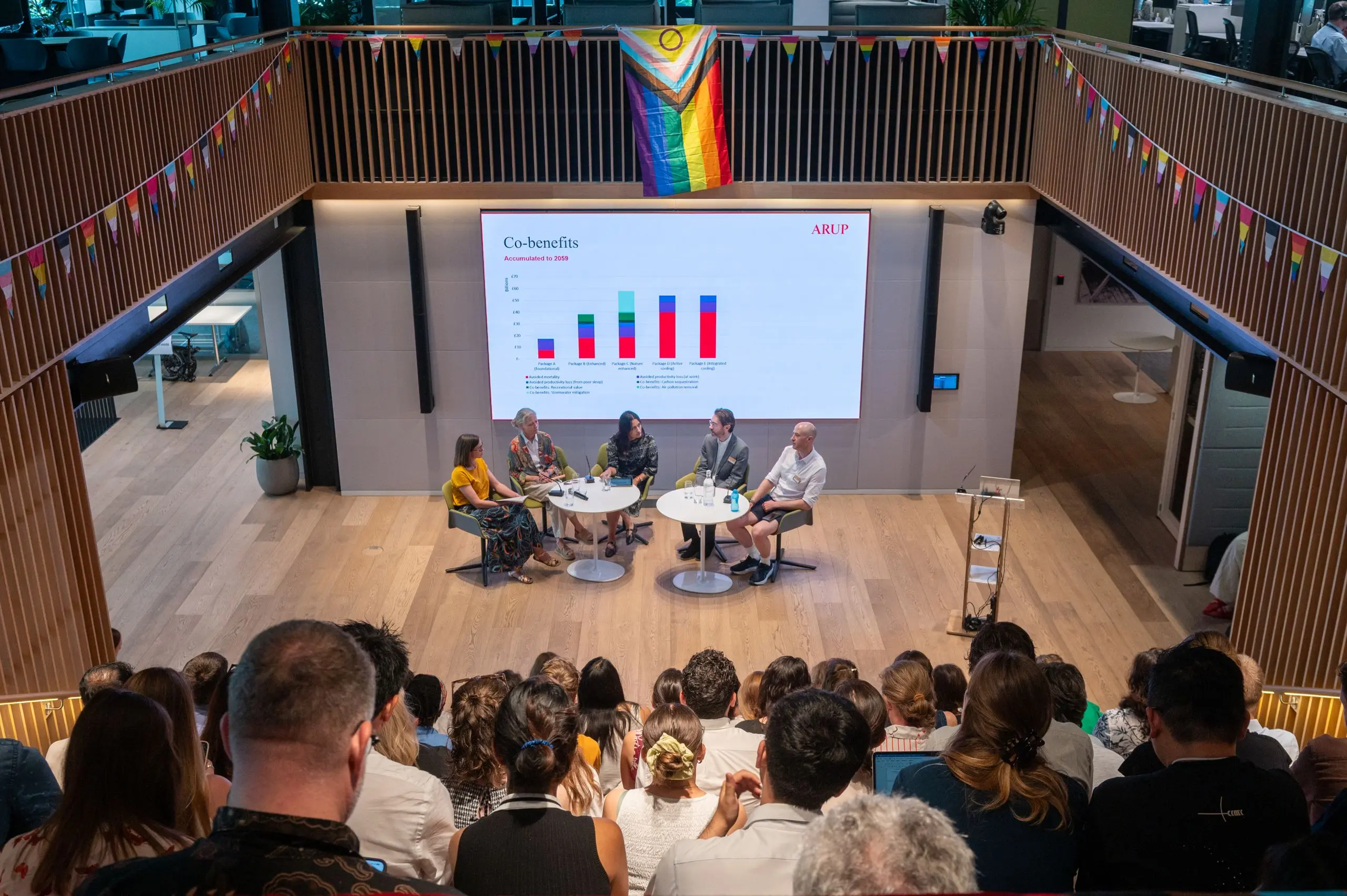
At an event convened by Arup, Riahi cited Global Cooling Watch 2025 modelling showing that a sustainable cooling pathway could cut cooling-related emissions by 60% by 2050, extend cooling access to 3.5 billion people and save consumers around USD 1 trillion annually. The modelling also indicates that passive measures can reduce indoor temperatures by up to 8°C (14.4°F).
The Cool Coalition also convened the Beat the Heat Partner Meeting, bringing together cities, implementation organisations, private-sector participants and representatives of the COP30 Brazil and COP31 Türkiye action agendas. The initiative is supporting implementation in more than 250 cities through heat-risk assessments, heat action plans, passive and nature-based cooling, public procurement of efficient low-GWP technologies, and the integration of heat resilience into buildings and urban planning.
The coalition will next focus on the High-Level Financing Forum in New York and the Global Cooling Pledge Assembly in Singapore, where governments and non-state actors are expected to work on financing sustainable cooling, heat resilience and demand flexibility.