Esta página solo está disponible en inglés. Ir a la portada en español

×

Questa pagina è disponibile solo in inglese. Home page in italiano

×

Diese Seite ist nur auf Englisch verfügbar. Zur deutschen Startseite

×

Cette page est disponible uniquement en anglais. Aller à la page d'accueil en français

×

Review explores challenges and innovations in sustainable cold storage for fresh produce

Review explores challenges and innovations in sustainable cold storage for fresh produce

A new review published in Food Research International presents a comprehensive analysis of current challenges and future opportunities in postharvest cold storage for fresh produce. The international research team examines energy efficiency, environmental impact, and advanced monitoring technologies to support more sustainable and effective cold chain management.

The authors identify key issues in current cold storage practices, including non-uniform cooling, temperature stratification, moisture loss, and energy-intensive systems. These problems can lead to product spoilage, reduced shelf life, and increased food waste. The review highlights that even small variations in storage temperature or humidity can significantly affect the physiological and microbial stability of perishable items such as fruits and vegetables.

To address these challenges, the study reviews recent advances in refrigeration technologies, including sensor-based monitoring, artificial intelligence (AI) systems, and digital twin platforms. These tools enable real-time tracking of environmental parameters such as temperature, humidity, airflow, and gas concentrations. When combined with predictive modelling, they allow cold storage facilities to optimize energy use, prevent spoilage, and extend shelf life.

The integration of renewable energy sources and natural refrigerants, such as CO2 and ammonia, is also discussed as a strategy to reduce the environmental footprint of refrigeration. Case studies show that solar-powered and mobile cold storage systems can provide reliable cooling in off-grid regions, supporting food preservation for smallholder farmers.

Several commercially available technologies are analysed, including humidity-controlled cold chambers, dry misting systems, and AI-driven quality assessment platforms. Solutions like 1-MCP treatments and controlled atmosphere (CA) storage are also noted for their role in slowing down ripening processes and extending the marketability of produce.

The authors emphasize that wider adoption of advanced cold storage systems will depend on overcoming financial and technical barriers, particularly for small- and medium-sized operators. They suggest modular and open-source technologies, as well as improved training and digital readiness, as steps toward more accessible and efficient solutions.

“Future research should focus on data-driven optimization of cold storage designs, integrating predictive shelf-life models with real-time sensor data while considering cost, fruit quality, and energy consumption,” the authors conclude.

Get the daily refrigeration briefing

One email a day. Trusted by 3,000+ RACHP professionals.

More on Cold Chain

All on Cold Chain →

Insights

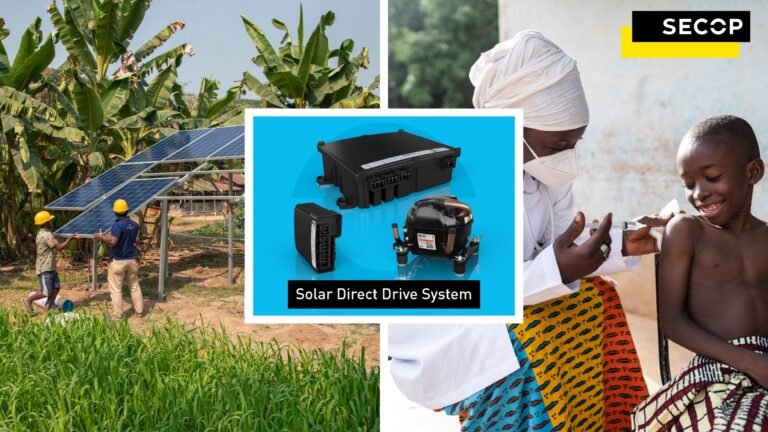
Secop's Solar Direct Drive (SDD) System Earns WHO PQS Approval – The Team Behind It
Article

Secop’s Solar Direct Drive (SDD) System Earns WHO PQS Approval – The Team Behind It

Partner's material In March 2026, Secop’s Solar Direct Drive Power Management Module was granted WHO PQS prequalification and officially listed in the WHO Catalogue of Prequalified Immunization Devices. The WHO IMD-PQS (Immunization Devices Performance, Quality and Safety programme) is the global benchmark for cold chain equipment used in immunisation. Being listed in its catalogue is

22 Jun 2026
Case Study - Effect of Louvers or diffusers on air flow distribution and cooling time on a meat log during Chill cycle
Tech Guide

Case Study – Effect of Louvers or diffusers on air flow distribution and cooling time on a meat log during Chill cycle

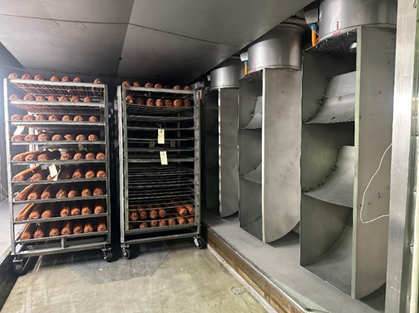
By Kushal Aurangabadkar An experimental analysis was conducted on a cooler space measuring 3.66 m × 6.096 m (12.0 ft × 20.0 ft), equipped with an ammonia refrigeration coil, five 30 cm (12 in.) fans, and five diffusers. The study measured airflow patterns, cooling rates, and heat transfer efficiency in meat storage by testing two configurations:

Kushal Aurangabadkar · 21 Jan 2026
Total Cost of Ownership (TCO) for Modular Refrigeration Systems in Life Sciences Distribution Centers
Tech Guide

Total Cost of Ownership (TCO) for Modular Refrigeration Systems in Life Sciences Distribution Centers

by Ramez Naguib, P.E. Introduction Life sciences distribution centers are under immense pressure to deliver consistent temperature control, comply with increasingly stringent regulations, and optimize operational efficiency. Traditional built-up refrigeration systems often prove cumbersome, costly, and slow to implement. In contrast, modular, factory-assembled refrigeration systems have emerged as a compelling alternative. Drawing on lessons from

14 Jan 2026
Everything on Cold Chain: 2,038 articles, 1 case study, 23 insights

Most read this month

All news →