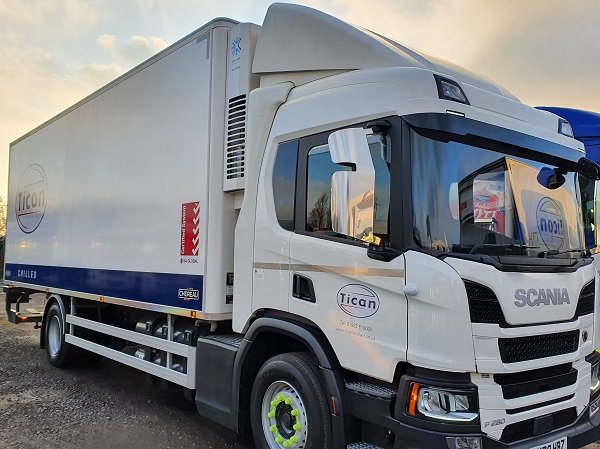
Meat wholesaler Tican Chilled is using hydraulic-drive TRUs on two CNG-powered Scania 18 tonners, in a bid to apply long-term sustainable solutions to their national distribution vehicle fleet.
Supplied by Swedish and UK manufacturer & Cold Chain Federation member Hultsteins, the hydraulic refrigeration systems use an engine PTO-driven hydraulic pump to harness the energy from the truck engine and use it to drive the compressor of the fridge directly. This, say Hultsteins, is distinct from other hydraulic drive systems which first need to convert the hydraulic power to electricity to drive the compressor, in which case, around 10 to 15 % of the power would be lost by changing the energy from hydraulic to electric.
“The diesel-free slimline fridges are a natural fit with our sustainable transport programme.” Says Tican’s Group Operations Manager, Ian Adderley. “Over the first three months, the Slimline hydraulic units have performed exceptionally well and are living up to all our expectations regarding efficiency, economy and environmental impact.”
According to Tican and Hultsteins the diesel-free systems are expected to reduce carbon by around 90% and DPM/NOx emissions by over 95% – compared to a normal diesel fridge unit. During the first few months, diesel consumption has been reduced to around 10% of the amount usually expected of a conventional TRU.
“The units are certainly powerful, yet at the same time very quiet.” Explains Adderley. “They deliver 100% cooling capacity – even at idle speed – which is a great benefit given the 16-18 hour working days during which a constant set temperature is required. Furthermore, the absence of a diesel engine will not only contribute to low operating and maintenance costs but also will improve reliability and reduce downtime. The standard 5-year warranty on parts and service underpins Hultsteins’ confidence in the product.”
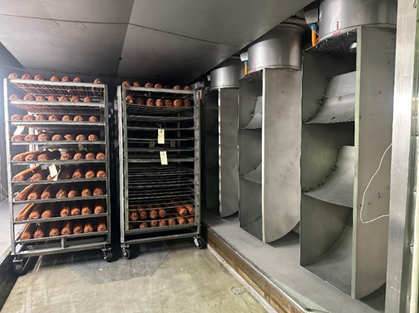
As part of the Denmark-based Tican Group, Tican Chilled specialises in bacon and pork, but also offers a wide range of meats (beef, lamb, poultry), including cooked meats as well as cheeses and marinades.
“We deliver to butchers throughout England and Wales from 7 key hubs and with many hundreds of destinations each week, the scope to reduce costs and environmental impact is of course considerable. In that regard, the Hultsteins fridges are making a significant contribution and in our view are preferable to conventional diesel refrigeration. I’m sure they will figure in our sustainable fleet requirements going forward.”
Hultsteins hydraulic refrigeration systems have been specified by single, multi-temperature and drawbar operators in Sweden and the Nordic countries for over 50 years. Now, with three different units to choose from – Slimline, Topline and Lowline – operators in the UK and Ireland will benefit from lower operating costs and, according to Hultsteins, will also be using TRU’s with the lowest carbon footprint, DPM & Nox emissions available anywhere in transport refrigeration.