The maritime freight sector must urgently transition to low-emission refrigeration technologies to meet global climate targets, according to a new publication released by the Kuehne Climate Center and the GIZ-implemented Greener Reefers project.
The white paper, “Accelerating the transition to climate and environmentally friendly reefers”, outlines the pressing need to replace high-global warming potential (GWP) hydrofluorocarbons (HFCs) like R134a and R404A, commonly used in refrigerated containers. These refrigerants leak at rates of up to 25%, resulting in millions of tonnes of CO₂-equivalent emissions each year.
In addition to direct emissions from refrigerant leakage, energy use from outdated systems significantly contributes to the sector’s carbon footprint. Without immediate action, the refrigerated transport industry risks falling short of the Paris Agreement and the International Maritime Organization’s (IMO) 2023 Strategy for GHG Reduction.
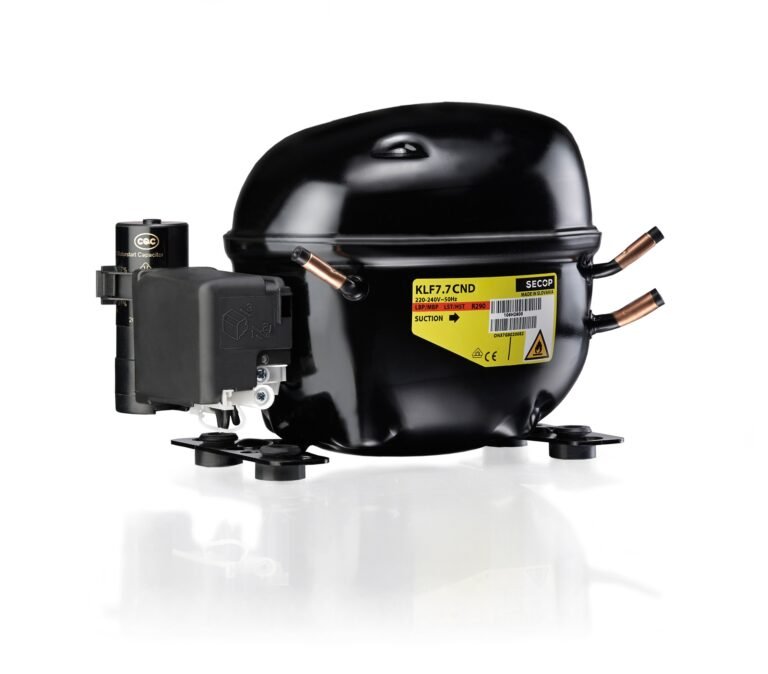
While alternative refrigerants like HFO R1234yf are already in use in mobile air-conditioning systems, the report warns of their environmental impact due to their breakdown into persistent “forever chemicals” (PFAS). Instead, natural refrigerants such as CO₂ (R744) and propane (R290) are presented as viable long-term solutions.
The white paper identifies the adoption of R290 as a key opportunity to decarbonise the reefer sector. However, uptake is slowed by regulatory, technical, and financial barriers. Safety concerns, limited infrastructure compatibility, and the absence of economic incentives are among the challenges.
To accelerate the transition, the report recommends:
-
Technology development and deployment: Accelerating prototype testing and integrating energy-efficient designs.
-
Regulatory and policy support: Enacting global and national policies to support natural refrigerants.
-
Capacity building: Training technicians and informing stakeholders across the supply chain.
-
Financial mobilisation: Utilizing carbon markets, public–private partnerships, and government funding.
The white paper models the emissions gap between action and inaction, emphasizing that switching to natural refrigerants is essential for aligning with international climate goals and maintaining competitiveness.
The publication was developed with input from stakeholders across the shipping and container sectors. The Greener Reefers project is financed through the International Climate Initiative (IKI) by the German Federal Ministry for the Environment, Nature Conservation, Nuclear Safety and Consumer Protection (BMUV).