Esta página solo está disponible en inglés. Ir a la portada en español

×

Questa pagina è disponibile solo in inglese. Home page in italiano

×

Diese Seite ist nur auf Englisch verfügbar. Zur deutschen Startseite

×

Cette page est disponible uniquement en anglais. Aller à la page d'accueil en français

×

CoolKit Improves Capacity Of New Vans Of By 20% For Oliver Kay

CoolKit Improves Capacity Of New Vans Of By 20% For Oliver Kay

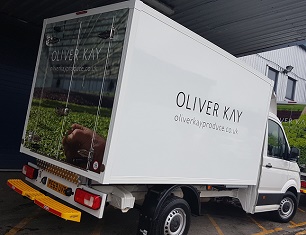
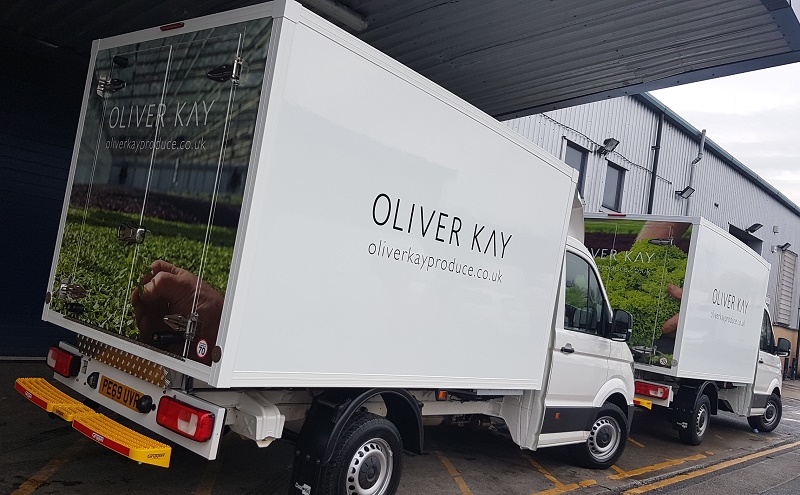
A leading supplier of quality fresh produce has gained 20% extra capacity in its new fleet of chiller vans after working with CoolKit.

Oliver Kay Produce operates a fleet of over 90 refrigerated vehicles and every day 100 drivers deliver fresh fruit and vegetables to customers around the UK.

Nigel Mason, Group Transport Manager, for Oliver Kay Produce, said: “We needed to replace nine of our existing vehicles and felt it was also a good time to assess our carbon footprint and seek ways to be more efficient on fuel and energy.”

Nigel knew exactly who to contact to find out which vehicle could provide them with the best solution and that was CoolKit.

He said: “CoolKit are recognised experts within the industry in the provision of lightweight transport solutions, so I got in touch and talked through my needs with their technical department.

“They understood my need to improve capacity while reducing costs and carbon footprint and returned with a specification fit for purpose.”

That specification was a Volkswagen Crafter chiller box van with a medium wheelbase chassis, offering a payload of 1142kg.

The vehicle design saw the fridge placed under the chassis, in order to improve the aerodynamics of the vehicle and further aerodynamic surroundings, cab deflectors and side wings were to be added in order to maximise fuel efficiency and airflow.

Nigel said: “I was really blown away by the level of detail which went into specifying our vehicles and the payload they offered was the best I’ve ever known.

“Each new van has 20% additional capacity, which stops us from having to swap items from van to van to meet weight restrictions and better still, it means we can condense delivery runs, which also helps cut costs.”

While CoolKit wasn’t required to carry out the livery or telematics on the vans, Nigel was impressed with the levels of professionalism and organisation they demonstrated when working with these third-party teams.

He said: “CoolKit took the details of these organisations and sorted out for them to come to site to carry out installs as part of their own build process.

“It really did help us reduce frustrating downtime and it was huge help taking it out of our hands and sorting out.”

Get the daily refrigeration briefing

One email a day. Trusted by 3,000+ RACHP professionals.

More on Cold Chain

All on Cold Chain →

Insights

Secop's Solar Direct Drive (SDD) System Earns WHO PQS Approval – The Team Behind It
Article

Secop’s Solar Direct Drive (SDD) System Earns WHO PQS Approval – The Team Behind It

Partner's material In March 2026, Secop’s Solar Direct Drive Power Management Module was granted WHO PQS prequalification and officially listed in the WHO Catalogue of Prequalified Immunization Devices. The WHO IMD-PQS (Immunization Devices Performance, Quality and Safety programme) is the global benchmark for cold chain equipment used in immunisation. Being listed in its catalogue is

22 Jun 2026
Case Study - Effect of Louvers or diffusers on air flow distribution and cooling time on a meat log during Chill cycle
Tech Guide

Case Study – Effect of Louvers or diffusers on air flow distribution and cooling time on a meat log during Chill cycle

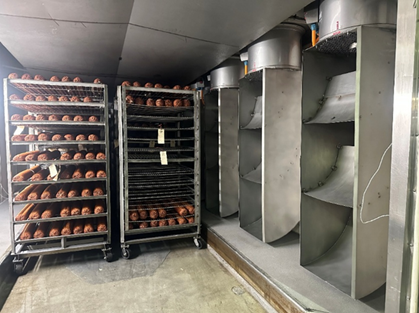
By Kushal Aurangabadkar An experimental analysis was conducted on a cooler space measuring 3.66 m × 6.096 m (12.0 ft × 20.0 ft), equipped with an ammonia refrigeration coil, five 30 cm (12 in.) fans, and five diffusers. The study measured airflow patterns, cooling rates, and heat transfer efficiency in meat storage by testing two configurations:

Kushal Aurangabadkar · 21 Jan 2026
Total Cost of Ownership (TCO) for Modular Refrigeration Systems in Life Sciences Distribution Centers
Tech Guide

Total Cost of Ownership (TCO) for Modular Refrigeration Systems in Life Sciences Distribution Centers

by Ramez Naguib, P.E. Introduction Life sciences distribution centers are under immense pressure to deliver consistent temperature control, comply with increasingly stringent regulations, and optimize operational efficiency. Traditional built-up refrigeration systems often prove cumbersome, costly, and slow to implement. In contrast, modular, factory-assembled refrigeration systems have emerged as a compelling alternative. Drawing on lessons from

Ramez Naguib · 14 Jan 2026
Everything on Cold Chain: 2,061 articles, 2 case studies, 23 insights

Most read this month

All news →