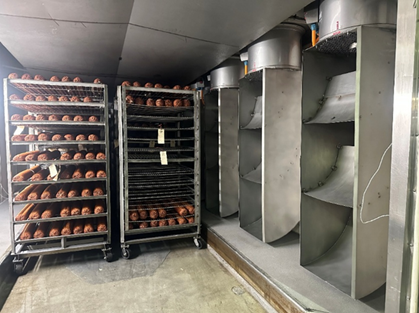
The plan seeks to reduce cooling demand, strengthen the access to cooling services such as cold chains for food and medicine, improve the energy efficiency of appliances, and encourage the use of low-Global Warming Potential refrigerants.
Sustainable approaches to cooling are critical to tackle climate change. Such approaches reduce food loss, enhance access to healthcare and medicines, enable productive work and protect against heat stress, especially important in a country where heat stress leads to an annual GDP loss of at least US$1.12 billion.
“If we are serious about reversing current climate trends, we cannot go about cooling our planet with a business-as-usual approach,” said Dechen Tsering, UNEP Regional Director and Representative for Asia and the Pacific. “As Cambodia’s demand for cooling grows, it has an important opportunity to adopt a new pathway on cooling, showing the possibility and potential of a system-wide approach to cooling that is equitable, efficient, and climate-friendly.”
With a hot and humid climate, demand for space cooling in Cambodia is set to double in the next 20 years. It already accounts for 45 per cent of electricity use nationally. Cambodia’s National Cooling Action Plan is, therefore, an important way to reduce the climate and economic impacts of increased demand for cooling.
“Cambodia is demonstrating her willingness to be a leader in delivering sustainable cooling with the development of a National Cooling Action Plan to help realize her Nationally Determined Contribution and Long-term Strategy for Carbon Neutrality of building a sustainable, green, clean and low-carbon economy,” said H.E. Mr. Say Samal, Minister of Environment, the Royal Government of Cambodia. “I invite Cambodian ministries and relevant stakeholders to join forces to implement this plan as laying the ground for climate-friendly cooling in Cambodia requires strong collaboration.” he added.
Cambodia’s National Cooling Action Plan provides recommendations to guide policymakers and partners to focus and collaborate on strategic actions to deliver sustainable cooling. It focuses on five areas: Building Space Cooling, Food Cold Chain, Health-care Cold Chain, Mobile Air Conditioning, and Process Cooling.
“It is critical that the country mitigates rising cooling-related energy demand and greenhouse gas emissions while protecting the resilience of its energy systems, said Ms. Armida Salsiah Alisjahbana, Executive Secretary of the UN-ESCAP and Under-Secretary General to the United Nations,
The plan is the outcome of national consultations with experts, and technical support from the Alliance for an Energy Efficient Economy and Sustainable Energy for All. The Danish International Development Agency and the Energy Foundation China provided financial support.
Cambodia’s National Cooling Action Plan was officially launched by the Cambodian Environment Deputy Minister and the Department of Climate Change, the General Directorate of Environmental Protection (EPA) of the Ministry of Environment, and the National Council for Sustainable Development.