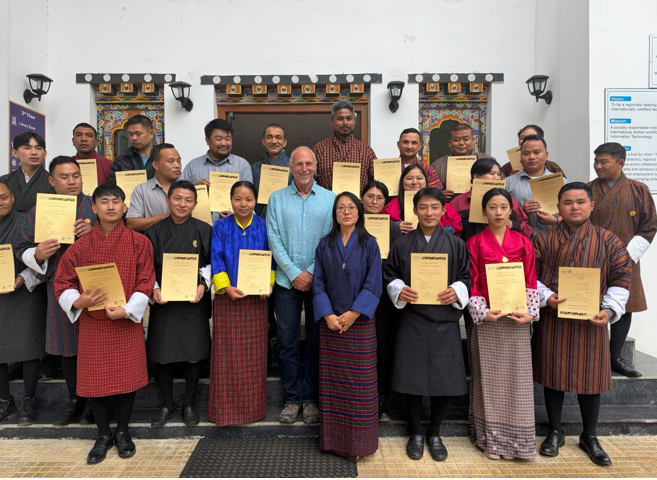
Bhutan and Ecuador are strengthening refrigeration and air-conditioning (RAC) workforce skills and refrigerant management as part of their efforts to implement the Kigali Amendment. Their activities are being highlighted by OzonAction in its “10 Years, 10 Perspectives” series marking the amendment’s 10th anniversary.
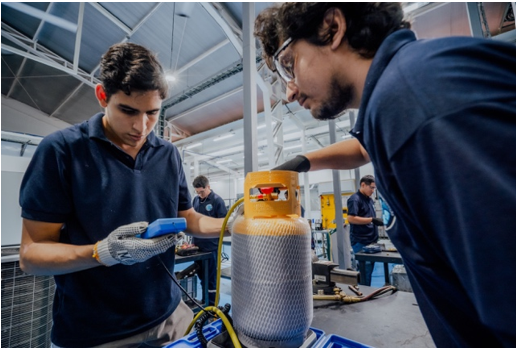
Bhutan’s National Ozone Unit has worked with technical training institutes and the national technical and vocational education and training authority on good servicing practices, refrigerant recovery, leak detection and prevention, energy efficiency, and safe handling of low-GWP and flammable refrigerants. Training centres have also been assessed and supplied with tools and equipment for competency-based education.
In 2024, Bhutan trained 60 RAC servicing technicians from government, civil society and the private sector, while six technical training institute trainers received competency-based assessment training. Another 15 technicians joined a training-of-trainers workshop in early 2026. In September 2026, a four-day workshop trained 21 trainers, assessors and technicians on topics including competency-based training and assessment, energy-auditing practices, good servicing practices and RAC energy efficiency.
Ecuador has combined training-of-trainers programmes with refrigerant recovery and regeneration and the safe handling of lower-GWP alternatives. The Ministry of Economic and Productive Development, through its National Ozone Unit, UNIDO, universities and technical institutions, has supported national training capacity, with dozens of instructors trained and nearly one tonne of HFCs reportedly regenerated.
According to OzonAction, Ecuador’s initiative links workforce development with refrigerant management, circular-economy practices and the transition towards climate-friendly cooling.