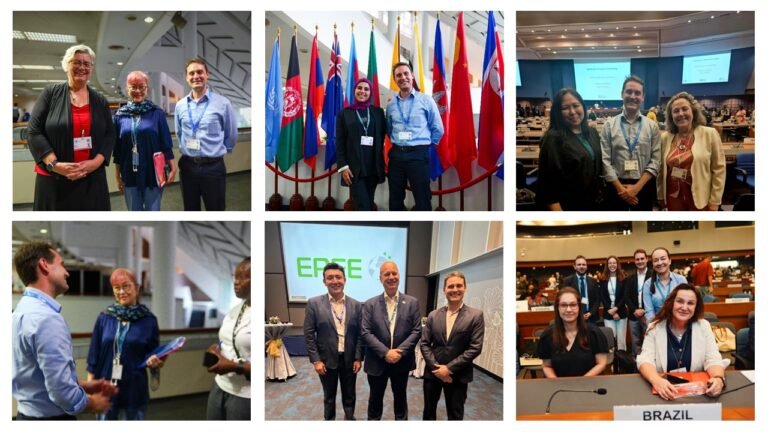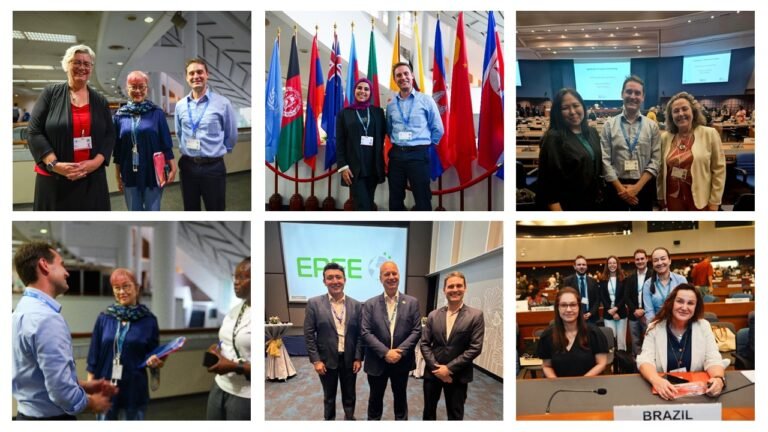
The Brazilian Association of Refrigeration, Air Conditioning, Ventilation and Heating (ABRAVA) participated in the 48th meeting of the Open-ended Working Group of the Parties to the Montreal Protocol (OEWG48), held from July 13 to 17, 2026, in Thailand. Official observer Thiago Pietrobon, ABRAVA’s environmental director, followed negotiations that will inform decisions at the 38th Meeting of the Parties (MOP38).
Discussions advanced on replenishing the Multilateral Fund for 2027–2029, which supports developing countries in implementing the Montreal Protocol and Kigali Amendment. The Technology and Economic Assessment Panel (TEAP) estimated funding needs of US$1.28 billion to US$1.75 billion. Parties requested updated studies covering low-consumption countries, destruction costs for controlled substances, life-cycle refrigerant management and energy efficiency.
Proposals to combat illegal trade included tracking mechanisms, linked databases between countries, harmonized classification systems and requirements to identify the origin of imports. If approved at MOP38, the measures could require greater coordination among Brazilian authorities, including IBAMA, the Federal Revenue Service and the Ministry of Agriculture and Livestock, as well as interoperable licensing and inspection systems.
OEWG48 also approved Steam Plasma Arc technology for destroying ozone-depleting substances and HFCs. A US$9.25 million funding window was approved for three atmospheric-monitoring pilot projects, with another US$1.8 million allocated for continuous-monitoring stations. Brazil is among the priority countries being considered to host a station.
Other discussions covered a possible extension of Halon 1301 use in civil aviation for up to 50 years, national regulatory autonomy for metered-dose inhalers and international debate over PFAS that may affect HVACR equipment components. A proposal to bring N2O under the Montreal Protocol did not advance because the parties failed to reach consensus.
“OEWG48 consolidated important technical and regulatory advances that will have direct effects on the sector in the coming years,” Pietrobon said. “In addition to preparing the way for MOP38 decisions, the meeting reinforced issues such as financing for implementation of the Montreal Protocol, combating illegal trade, refrigerant life-cycle management and environmental monitoring.” MOP38 is scheduled for November 2–6, 2026, in Rwanda.